Author: admin

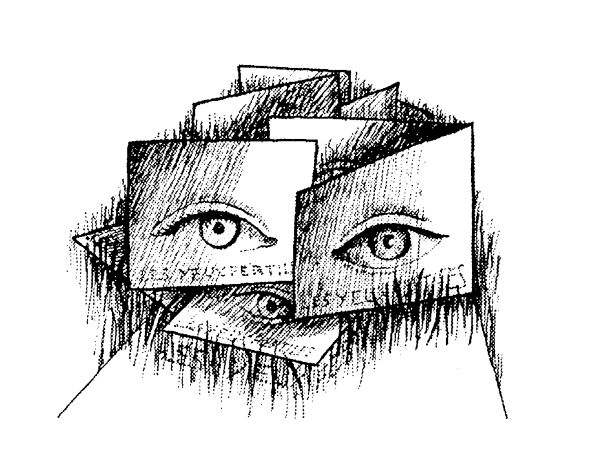
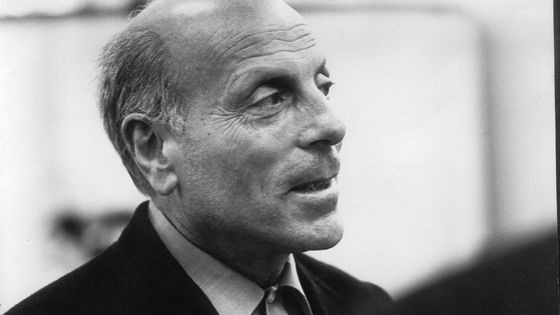
  • Ghérasim Luca

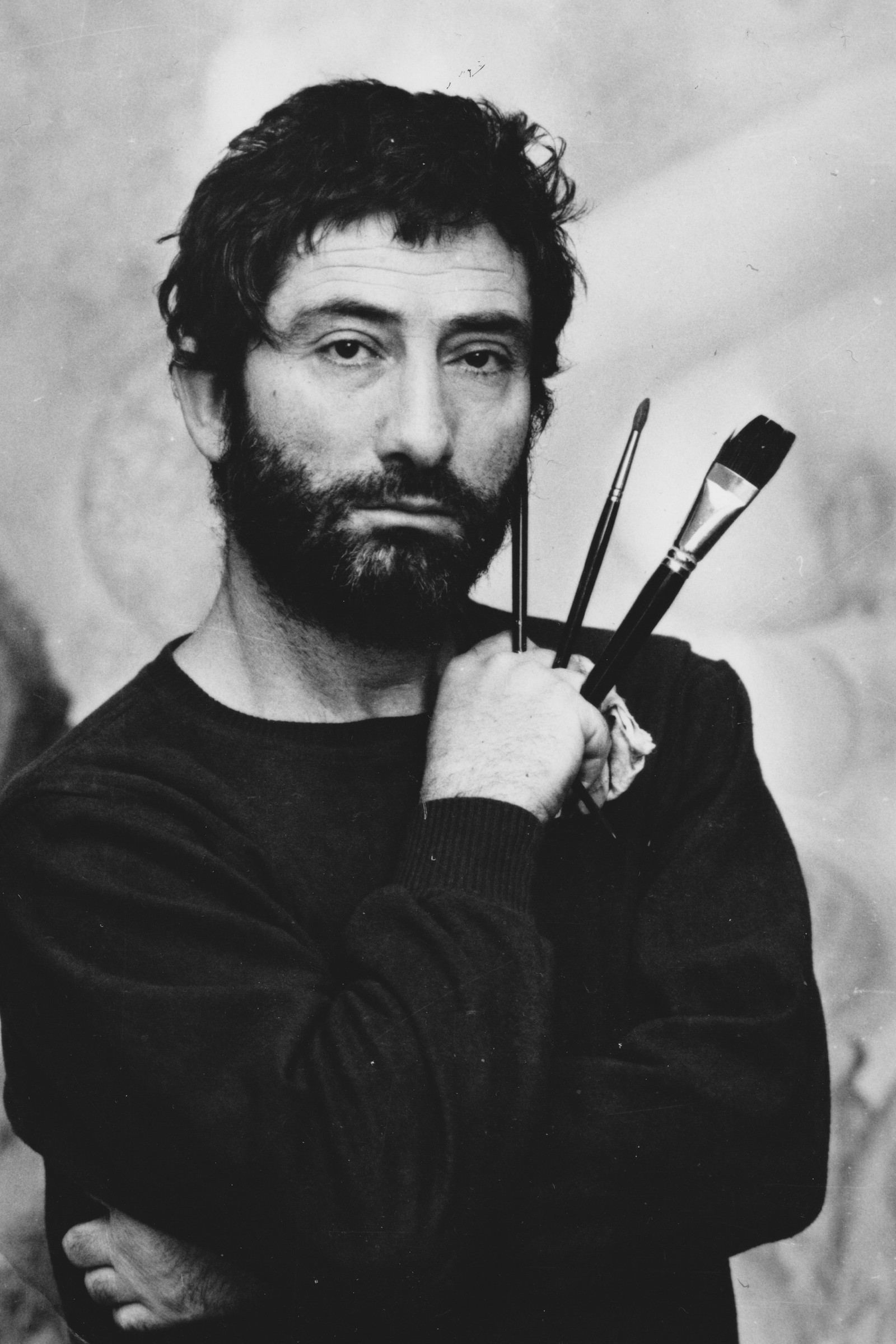
    Ghérasim Luca

    French-language poet and visual artist of Romanian origin, born Salman Locker on 23 July 1913 in Bucharest, died on 9 February 1994 in Paris.

    Life

    The son of a Jewish tailor, Berl Locker, who died in 1914, Ghérasim Luca grew up in Bucharest between Yiddish, Romanian, German and French. From the early 1930s he formed close ties with French artistic circles, in particular the Surrealist group. In Romania he founded the Bucharest Surrealist group with Gellu Naum, Paul Păun, Virgil Teodorescu and Dolfi Trost. In 1945 Le Vampire passif was published in Bucharest.

    Harassed by the regime, he left Romania in 1952, stayed briefly in Israel, then settled in Paris, in Montmartre, where he lived until his death. Stateless from 1952, he only took French nationality at the end of the 1980s, on marrying his long-time partner, the painter Micheline Catti, who illustrated several of his books. He took his own life on 9 February 1994.

    From 1967 his public readings took him to Stockholm, Oslo, Geneva, New York and San Francisco. In 1988 Raoul Sangla’s television portrait, Comment s’en sortir sans sortir, introduced him to a wider audience. Gilles Deleuze, who followed his work from 1972, saw him as the greatest poet of the French language and drew from his work the notion of the “stammering” of language.

    The work

    His poetry undoes syntax and language itself in order to refuse every assignment, political, identity-based or moral. Héros-Limite (Le Soleil Noir, 1953) is one of its major titles.

    As a visual artist, Luca invented the “cubomanias” in 1945: reproductions of paintings or illustrations cut into equal squares, then reassembled into a new image. The name plays both on the role of the square in Cubism and on a mockery of Cubism’s heirs. These collages, which take on Leonardo da Vinci, the van Eyck brothers, Caravaggio and Ingres, owe a debt to Surrealism and to Marcel Duchamp’s L.H.O.O.Q. (1919).

    Exhibitions and collections

    • Beaux-Arts de Paris: Madeleine, autograph manuscript with cut-out images; a cubomania after Holbein’s Madonna of Burgomaster Meyer, acquired in 2019
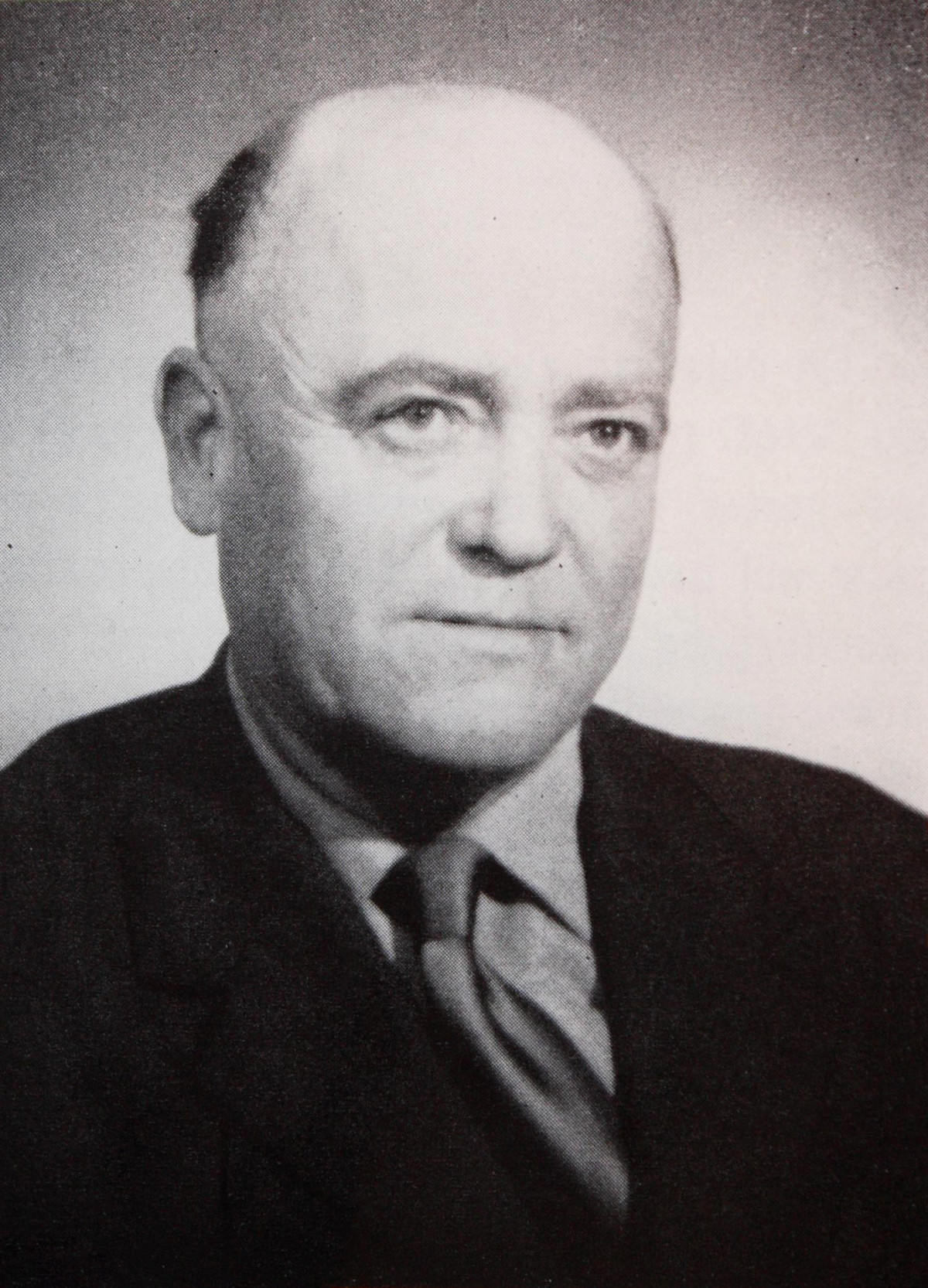
  • Raphaël Lonné

    Raphaël Lonné

    French mediumistic draughtsman, born in 1910 in Montfort-en-Chalosse (Landes), died in 1989 in Bordeaux.

    Life

    The son of sharecroppers in the Landes, Raphaël Lonné left school early and became a postman in his native village. Based in Bordeaux from 1937, he worked in turn as a tram conductor, caretaker-chauffeur and porter at the children’s hospital. After the war he took up a postman’s job again in a small town in his home region.

    In 1950, during an impromptu spiritualist séance at friends’ house, he made his first drawing. No other séance followed, but Lonné carried on alone, at night, convinced that his hand was guided by spirits. In 1963 Jean Dubuffet discovered his work through Dr Gaston Ferdière, a psychiatrist close to the Surrealists. For a long time Lonné refused to sell his drawings.

    The work

    His first drawings combine writing with human or animal figures; over time they became increasingly abstract. Lonné described a process that began almost mechanically, with arabesques that he elaborated without any preconceived idea. Silhouettes, faces, animals and landscapes thus emerge from a disciplined, meticulous line, in graphite, Indian ink, ballpoint, watercolour or felt-tip, most often on small formats.

    The gallery showed a Sans titre of 1964 (ink wash on paper, 20.5 x 30 cm) in its exhibition “Art Brut” (10 June to 23 July 2022).

    Exhibitions and collections

    • “Art spirite, médiumnique, visionnaire”, Halle Saint-Pierre, Paris, 1999-2000
    • “Inner Worlds Outside”, Whitechapel Gallery, London, and Irish Museum of Modern Art, Dublin, 2006
    • “Art brut. Dans l’intimité d’une collection”, Grand Palais, Paris, 2025
    • Collection de l’Art Brut, Lausanne; LaM, Villeneuve-d’Ascq; Musée national d’art moderne, Centre Pompidou (Bruno Decharme donation, 2021); American Folk Art Museum, New York
  • Ljuba

    Ljuba

    Serbian painter, Ljubomir Popović, known as Ljuba, born on 14 October 1934 in Tuzla (Bosnia), died on 12 August 2016 in Belgrade.

    Life

    Born in Tuzla, Ljuba grew up in Valjevo, in Serbia. In Belgrade he attended the Academy of Applied Arts, then the Academy of Fine Arts, where he studied under Marko Čelebonović, Đorđe Andrejević Kun and Milo Milunović. Noticed by Leonid Šejka at the 1959 graduation exhibition, in 1960 he exhibited with the Mediala group.

    In the autumn of 1963 he left Belgrade for good and moved to Paris. There he quickly found the support of gallerists and writers close to Surrealism, and Thessa Herold’s gallery championed his work. In 1971 René de Solier devoted a monograph to him, the first published in France on a Serbian painter. André Pieyre de Mandiargues wrote about him from 1970, and Walerian Borowczyk filmed his work in the short film L’amour monstre de tous les temps (1978).

    The work

    Trained in the academic nude, Ljuba moved away from it very early on:

    “I was always a little unhappy working from life, because I saw more in the model than was there.” (Ljuba)

    His painting, often described as fantastic Surrealism, stages bodies, mostly female, in erotic or unexpected subjects. It draws on Renaissance and Baroque painting and carries a dark vein. Among his major canvases: Les pèlerins d’Emmaüs (1960-1962), L’apparition (1967-1968), La Tentation de saint Antoine (1972), the triptych Hommage à James George Frazer (1976-1978), Le Théâtre de la cruauté (1990).

    Sarane Alexandrian, who devoted a study to him in 2003, wrote: “One can speak of a kind of modern mysticism in Ljuba, because he has a conception of the cosmos, of time and of death that he puts into his painting, and this conception is not scientific but intuitive.”

    The gallery showed his canvas Trois points (1980, oil on canvas, 162 x 130 cm) in the exhibition “Visions” in November 2023.

    Exhibitions and collections

    • Retrospective “Ljuba Popović (1934-2016)”, Gallery of the Serbian Academy of Sciences and Arts, Belgrade, 4 September to 20 October 2019
    • Serbian public collections: Moderna galerija, Valjevo; Museum of Contemporary Art and National Museum, Belgrade; National Museum, Kragujevac

    Looking back at their exhibitions

  • Stanislao Lepri

    Stanislao Lepri

    Italian painter, born on 12 June 1905 in Rome, died in 1980 in Paris.

    Life

    From a family of the Roman aristocracy, Stanislao Lepri grew up in a flat overlooking Piazza Navona. True to family tradition, he embarked on a diplomatic career and became Italian consul in Monte Carlo, then in Brussels.

    In 1942, in Monte Carlo, he met the painter Leonor Fini, who encouraged him to paint. The couple lived first in Rome, then moved to Paris in 1946: Lepri then left diplomacy to devote himself entirely to painting. In the early 1950s the Polish writer Konstanty Jeleński joined them; the three were never to part.

    His paintings, supported notably by the dealers Alexandre Iolas and Jean Charpentier, were shown in Europe, New York and Cairo. Lepri also worked for the stage: he designed the costumes for Armida for the Maggio Musicale Fiorentino in 1950 and created sets for Cyrano de Bergerac’s Voyage aux états de la Lune.

    The work

    His painting composes a strange, metaphysical world in which skeletons, hooded figures, cats, monstrous beasts and putti inherited from the Renaissance meet. It deals with emotions, fears and desires with biting irony. Critics have seen in it the memory of Bernini’s sculptures on Piazza Navona and of the animals in the Villa Borghese zoo, and have invoked Hieronymus Bosch and Giorgio de Chirico.

    The gallery showed his painting Survivre (1977, oil on canvas, 73 x 117 cm) in the exhibition “Visions” in November 2023.

    Exhibitions and collections

    • Museum of Modern Art, New York: Banquet (1945), shown in 1949 in the exhibition devoted to twentieth-century Italian art
    • Musée d’Art moderne de la Ville de Paris; Galleria Nazionale d’Arte Moderna, Rome; Muzeum Sztuki, Łódź
    • Retrospective of forty works, Galleria Tommaso Calabro, Milan, 2023
  • Raphaël Léonardini

    Born on 3 June 1970 in Paris, France, this young man is the grandson of the ceramicist Marc Roussel. His education ended in 1988 at the experimental school of Bonneuil-sur-Marne, a psychoanalytic research centre founded by the psychoanalyst Maud Mannoni. He then held various small jobs, as an ice-cream maker, horticulturist and cook, between 1994 and 1995, before turning to pottery in 1995. In 1997 he began to draw, and he now lives in Haute-Provence.

    His artistic work is varied, including large explosive sheets made with ballpoint pens, felt-tips and coloured pencils, notably “Spectre des roses” in 2005. His subjects draw on science fiction, mythology, medieval imagery and comics. As well as these dynamic works, he also creates more static and orderly sheets, exhibited at the Edgar Poe Museum in 2008.

  • Jacques Le Maréchal

    Jacques Le Maréchal

    French poet, draughtsman, painter and printmaker, born Jacques Moreau in 1928 in Paris, died in 2016 in Paris.

    Life

    Jacques Moreau, known as Le Maréchal, came first to poetry. Close to Surrealism, he remained outside the group; André Breton praised his painting in 1960. He appears in the review Le Surréalisme, même in 1957 and took part in the EROS exhibition (1959), then the International Surrealist Exhibition in Milan (1961). Gaston Bachelard, André Pieyre de Mandiargues and Édouard Glissant also wrote about his work.

    As a printmaker he belongs to the lineage of the “visionary engravers” who claim descent from Rodolphe Bresdin, and he trained Georges Rubel. A catalogue raisonné of his prints was published by Éditions Broutta in 1985.

    The work

    He is best known for his “inextricable drawings” and “transparent paintings”, described as “fantastic and prophetic visions”. He draws in Indian ink and also works in egg tempera, watercolour and gouache.

    Exhibitions and collections

    • 2023: exhibition at the gallery, as part of “Chromatisme”, with the publication of the monograph L’Imperceptible abîme (Éditions Venus d’Ailleurs) and the screening, at the Christine cinema, of the documentary devoted to him by Véronique Faure and Delphine Genest
    • 2024: three works in “At the Sources of Convulsive Beauty” at the gallery, including Les 7 portes de la folie, Indian ink on paper, 30 x 25 cm, and Les 3 Papes, 1971-1975, egg tempera on panel, 58 x 45 cm; article by Louis Janover, “Changer l’angle de la réalité”, in Le Monde diplomatique (November 2024)
    • 2026: “Graver l’imaginaire”, Galerie La Ville A des Arts, Paris (23 March to 5 April), with Yves Doaré, Didier Mazuru, Georges Rubel and others
  • Jacques Lacomblez

    Jacques Lacomblez

    Belgian painter, poet and publisher, born in 1934 in Brussels, a member of the Phases movement.

    Life

    Self-taught, he painted his first Surrealist-minded pictures at fifteen, after discovering Giorgio De Chirico and then Max Ernst; he also admired Kandinsky. His first exhibition took place in Brussels, at the Galerie Saint-Laurent. In the early 1950s he met René Magritte and spent time with the Belgian Surrealists E. L. T. Mesens, Achille Chavée, Marcel Lecomte and Paul Nougé.

    In 1956 he met Édouard Jaguer, the driving force of the review Phases, and established the movement in Belgium; from then on he worked closely on its activities and exhibitions in Europe and the Americas. In Brussels he founded the review Edda, whose five issues appeared from 1958 to 1964, with texts by Camille Bryen, Gherasim Luca, Francis Ponge, Marcel Broodthaers and Julio Cortázar, and the publishing house L’Empreinte et la Nuit. In 1958 Jean-Jacques Lebel introduced him to André Breton. At the instigation of Breton and Marcel Lecomte, he spent a year in south-west France, notably at Montségur. He took part in the International Surrealist Exhibitions in Milan (Galleria Schwarz, 1959) and New York (D’Arcy Galleries, “Surrealist Intrusion in the Enchanters’ Domain”, 1960-1961).

    The work

    A great music lover, he devoted pictorial tributes to Mahler, Sibelius, Xenakis, Feldman, Luigi Nono, Grisey and Ferneyhough, and, in jazz, to Duke Ellington, Thelonious Monk and Ornette Coleman. As a poet he has published in Belgium, France, the Netherlands, Switzerland, Canada and the United States; an anthology of his poems, D’ailleurs le désir, edited by Alain Le Saux, was published by Les Hauts-Fonds (Brest) in 2010. He has illustrated texts by Guy Cabanel, Jorge Camacho, Édouard Jaguer and Franklin Rosemont, and published Achille Chavée.

    Exhibitions and collections

    • 1964: exhibition at the Palais des Beaux-Arts, Brussels; 1983: first retrospective in Belgium, Musée d’Ixelles
    • 2009: retrospective at the Musée d’Art et d’Histoire, Saint-Brieuc; 2014: “Images de 1951 à 2013”, Galerie Quadri, Brussels
    • 2024: “Le surréaliste Jacques Lacomblez en mots et en images”, Bibliotheca Wittockiana, Brussels (18 October to 15 December)
    • Collections: museums of modern art in Brussels, Rome, Warsaw and Poznań; Israel Museum, Jerusalem (Schwarz collection)
    • At the gallery: shown in 2024 in the section “Édouard Jaguer and the international Phases movement” of the exhibition “At the Sources of Convulsive Beauty” (25 October to 30 November)

    Looking back at their exhibitions

  • Slavko Kopač

    Slavko Kopač

    French-Croatian painter, sculptor and poet, born on 21 August 1913 in Vinkovci (Croatia, then Austria-Hungary), died on 23 November 1995 in Paris.

    Life

    In 1933 he entered the Royal Academy of Fine Arts in Zagreb, in the class of Vladimir Becić, graduating in 1937. With a grant from the French government, he arrived in Paris at the end of 1939; the war cut his stay short and he returned in September 1940. He taught drawing in Mostar, then in Zagreb in 1941-1942. In February 1943 he left for Italy and settled in Florence, where he attended Felice Carena’s painting class, studied philosophy and exhibited on several occasions, notably in 1945 at the Galleria Michelangelo.

    Settled in Paris at the end of 1948, he almost immediately met Jean Dubuffet, with whom he worked for many years. He joined the Compagnie de l’art brut and became the first curator of the collection assembled by Dubuffet, whose transfer to Lausanne he organised in 1975-1976. André Breton associated him with the Surrealist circle without his becoming a member: in 1949 Kopač illustrated Breton’s poem Au regard des divinités and in 1954 made a poem-object with him. In 1952 Michel Tapié cited him in Un art autre among the representatives of the Informel.

    The work

    Painter, draughtsman and sculptor, Kopač worked in oil, watercolour, pastel and ink, but also in collage, assemblage, ceramics and the artist’s book, readily mixing heterogeneous materials. In 1951 he published Le Soleil se couche au pays des éléphants, printed on six thin wooden plates. His work explores the female archetype as a generative and protective force (the series of Maternités), and hybrid forms drawn from an archaic imagery nourished by his interest in rock and wall art.

    Exhibitions and collections

    • 1949: first solo exhibition in Paris, Galerie Messages; 1953: Galerie À l’Étoile scellée, Paris
    • 1957: Galerie Alphonse Chave, Vence (78 works); 1985: tribute to Jean Dubuffet, Galerie Alphonse Chave
    • 1977: retrospective at the Modern Gallery, Zagreb; 1981: retrospective at the Paris Art Center; 1996: retrospective at the Hôtel de Ville de Paris (some 200 works)
    • 2025: “Slavko Kopač. Il tesoro nascosto. Art informel, surrealism, art brut”, Accademia delle Arti del Disegno, Florence (13 September to 13 November)
    • At the gallery: shown in “Favourites: Art Brut, Naive Art, Art Singulier” (15 March to 13 April 2024)

    Looking back at their exhibitions

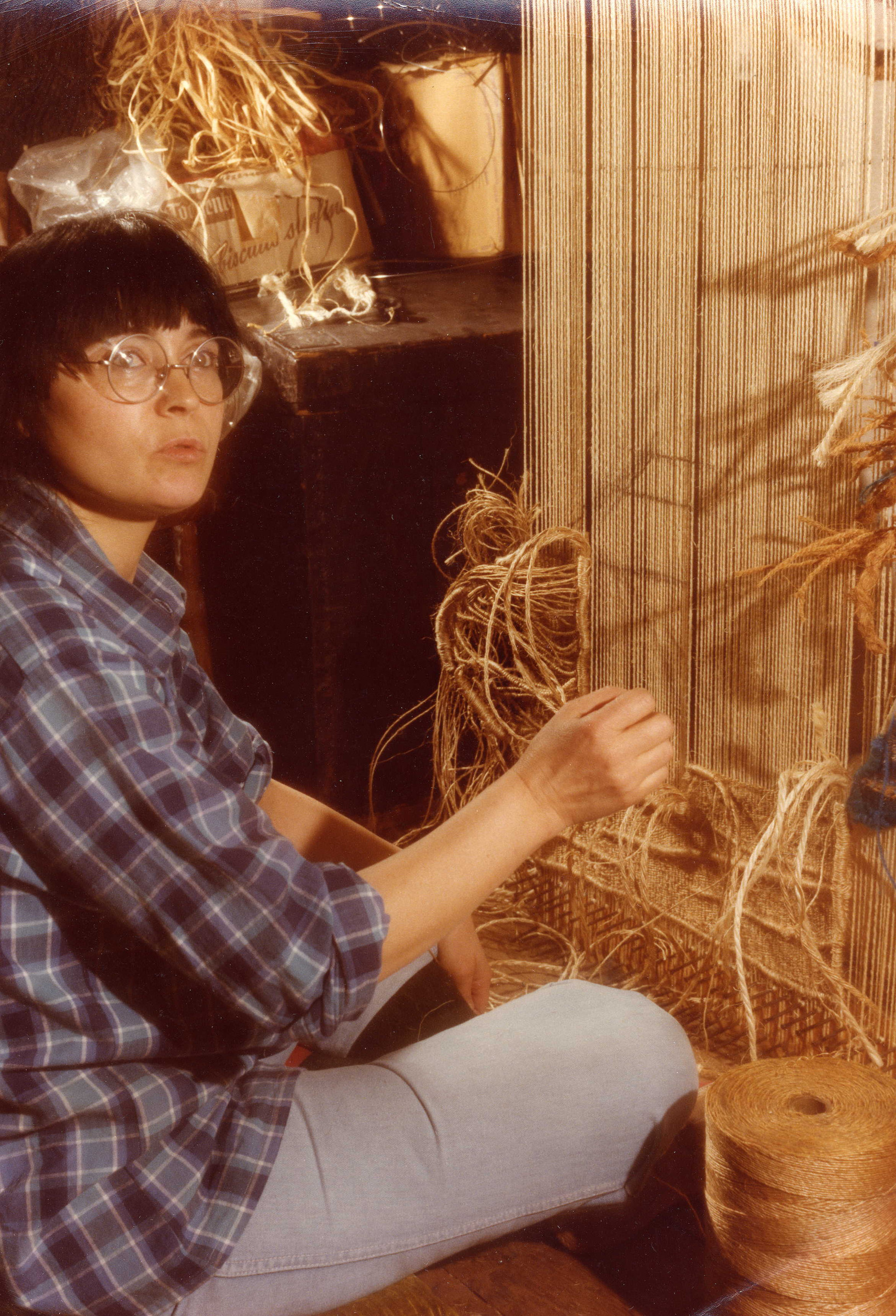
  • Rosemarie Koczy

    Rosemarie Koczy

    German-born draughtswoman, painter and tapestry weaver, naturalised American, born on 5 March 1939 in Recklinghausen (Germany), died on 12 December 2007 in Croton-on-Hudson (New York).

    Life

    According to the account she herself gave of her life, Rosemarie Koczÿ, of Jewish descent, was deported in 1942, at the age of three, with her family, and survived the camps of Traunstein and Ottenhausen; freed in 1945, she was raised by her grandparents, then placed in an orphanage. In November 2017, on the occasion of an exhibition of her works in Recklinghausen, local historians and archivists concluded from the city archives that this account had been invented: neither she nor her parents were Jewish or persecuted, and she was never interned. Her husband contested these conclusions.

    In 1959 she left Germany for Geneva. Admitted in 1961 to the École des arts décoratifs, she graduated with distinction in 1965. She devoted herself at first to tapestry, carried out ethnological research into the textile techniques of Africa and Oceania, and made more than seventy textile works in fifteen years, shown in two Geneva museums in 1970 and 1979. In 1984 she married the composer Louis Pelosi, whom she had met at the MacDowell Colony, and moved to the United States; she became an American citizen in 1989.

    The work

    From the 1970s her work was devoted to the memory of the Holocaust. She then began a sequence of Indian ink drawings entitled I Weave You a Shroud (Je vous tisse un linceul), dedicated to the victims: drawing on the Jewish funeral rite of washing the body and burial in a shroud, she outlined silhouettes of naked bodies with fine lines. She left more than 12,000 pen-and-ink drawings, as well as paintings and sculptures. Her memoirs were published in three volumes, I Weave You a Shroud (2009-2013).

    Exhibitions and collections

    • 1985: she inaugurated the Neuve Invention annexe of the Collection de l’Art Brut, Lausanne
    • 1986: first woman to receive the Francis J. Greenburger Award, presented at the Guggenheim by Thomas Messer
    • 2007: Yad Vashem received her largest sculpture, Deportation of the Children
    • Collection de l’Art Brut, Lausanne (Je vous tisse un linceul, 1988)
  • Émile Josome Hodinos

    French Art Brut draughtsman, born Joseph Ernest Ménétrier in 1853 in Paris, died in 1905 at the Ville-Évrard asylum (Neuilly-sur-Marne).

    Life

    The son of Parisian bakers, he lost his father at eight and was sent to boarding school. In 1869, at sixteen, he was apprenticed to Tasset, a renowned medal engraver. After his military service he spent four years taking drawing and modelling classes at an art school.

    At twenty-three he was committed for “manic excitement” to the Ville-Évrard asylum, on the outskirts of Paris, where he remained until his death. It was there that he took the name Émile Josome Hodinos. He began to draw some ten years after his admission. Most of his drawings have since disappeared.

    The work

    Hodinos drew countless designs for medals, in graphite and Indian ink, often on both sides of sheets of paper intended for biscuit-making. Lacking tools, he used strips of paper as compasses to calculate the proportions of his figures, which he then outlined to obtain “the effect of a medal”. His figurines, mostly female and with exaggerated anatomy, are accompanied by handwritten comments signed with his pseudonym. With their images, exergues, mottoes and ornaments, these dreamed copies of medals form, according to the abcd collection, “a veritable encyclopaedia, an inventory of vices and virtues”, attentive to anatomy, postures, clothing and household objects.

    Exhibitions and collections

    • Collection de l’Art Brut, Lausanne (notably Melpomene and Pieds, jambes, cuisses mouler, 1876-1896); shown in the biennials “Corps” (2017-2018) and “Théâtre” (2019-2020) and in “Art Brut: Frame Work” (2020-2021)
    • abcd collection (Bruno Decharme)
    • At the gallery: shown in the exhibition “Art Brut” (10 June to 23 July 2022)