Author: admin

  • Jean Benoît

    Jean Benoît

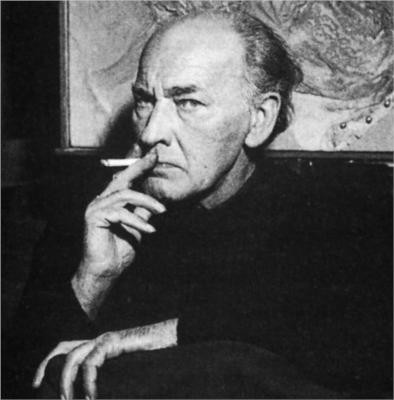
    Canadian Surrealist artist, born on 27 August 1922 in Quebec City, died in August 2010 in Paris.

    Life

    Jean Benoît met Alfred Pellan in 1940 and became his pupil; he helped him make theatre costumes and remained in correspondence with him. At the École des beaux-arts in Montreal he met the painter Mimi Parent. In 1948 he signed the manifesto Prisme d’yeux, married Mimi Parent and moved with her to Paris. From 1949 he took ethnology courses at the Musée de l’Homme, and he was to make many journeys to New Guinea and the Pacific islands.

    His meeting with André Breton in 1959 was decisive: he joined the Surrealist group and shared its activities until it dissolved. In December 1959, at the time of the EROS exhibition, he gave his performance Execution of the Testament of the Marquis de Sade at Joyce Mansour’s home: dressed in a mechanical costume which Mimi Parent stripped from him layer by layer, he ended by branding the word SADE on himself with a red-hot iron. Breton praised his work on several occasions, notably in Le Surréalisme et la peinture.

    The work

    Neither a sculptor nor a painter in the strict sense, Jean Benoît created objects and costumes that condense his vision of the world. In 1996 the Galerie 1900-2000 gave him his first solo exhibition, accompanied by a book by Annie Le Brun.

    In 2024 the gallery showed the costume for the Execution of the Testament of the Marquis de Sade, unseen since 1959, as well as L’Or du temps (1994, mixed media on panel, 200 x 150 cm), a tribute to André Breton and the poets connected with Surrealism, made after the Breton exhibition at the Centre Pompidou in 1991 and shown only once before, at the gallery in 2001. The work bears the inscription: “Qui vive, Qu’il vive, Qu’il survive, Qu’il revive ! Signé : Le fer à conviction”.

    Exhibitions and collections

    • Galerie 1900-2000, Paris, 1996 (first solo exhibition)
    • National Gallery of Canada, Ottawa: tribute to Seurat, 1948, oil on canvas, 175.5 x 127 cm
    • The Hold of the Senses, Galerie Les Yeux Fertiles, Paris, 11 February to 19 March 2022
    • At the Sources of Convulsive Beauty, Galerie Les Yeux Fertiles, 6 September to 19 October 2024, as part of Paris surréaliste
    • The Subversion of Images, Galerie Les Yeux Fertiles, 24 January to 8 March 2025
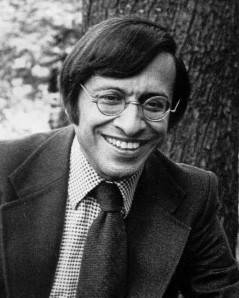
  • Robert Benayoun

    Robert Benayoun

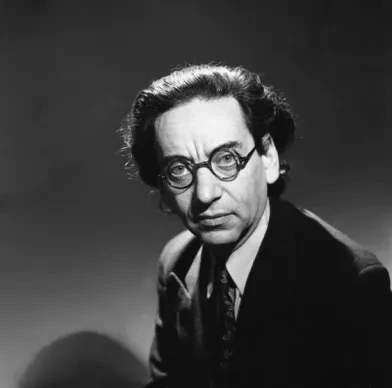
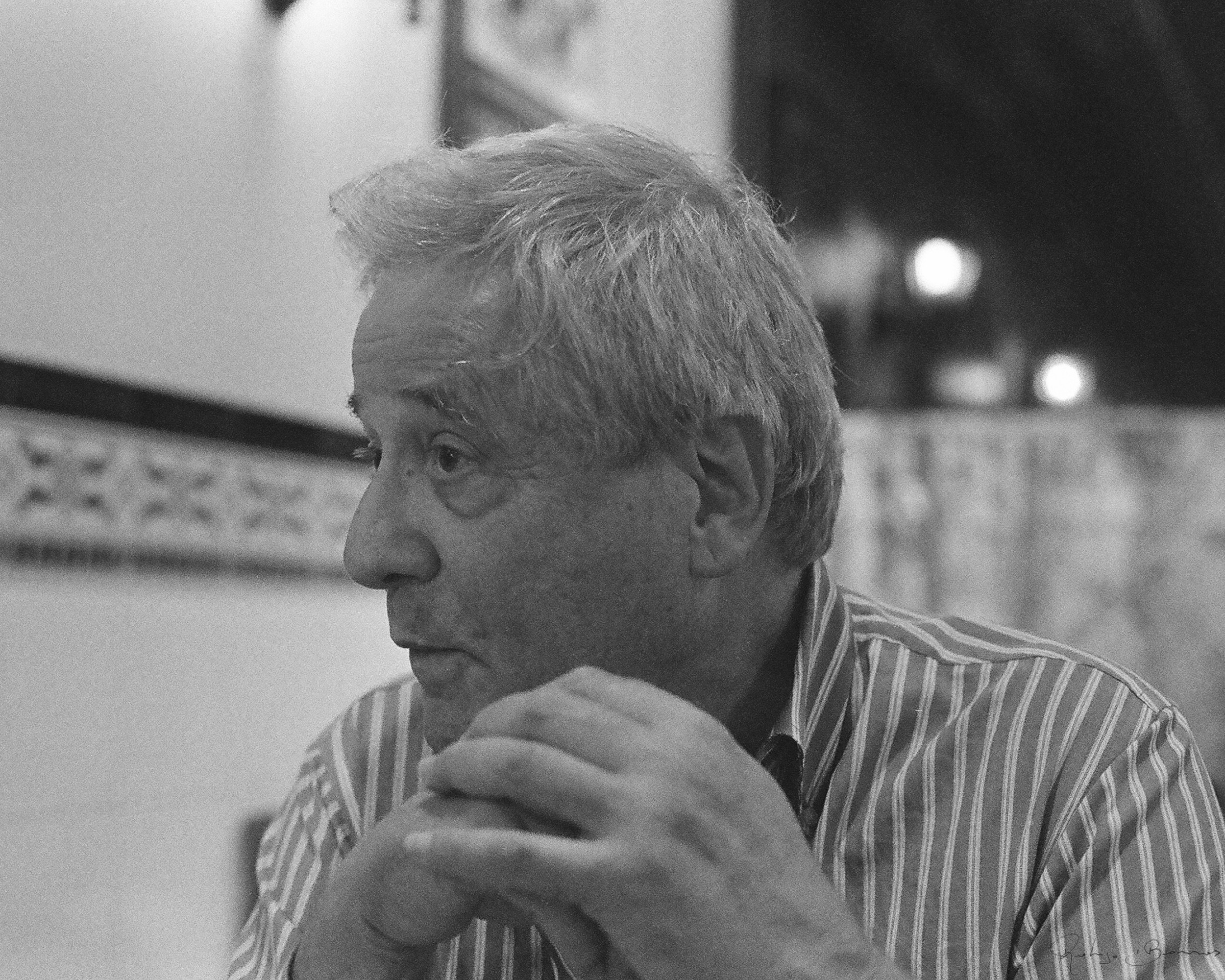
    French writer, film critic, filmmaker and collagist, born on 12 December 1926 in Port-Lyautey (now Kenitra, Morocco), died on 20 October 1996 in Paris.

    Life

    Robert Benayoun joined the Surrealist movement in 1948 and entered André Breton’s inner circle. He contributed essays, poems and collages to the group’s reviews: Médium, Le Surréalisme, même, Bief, La Brèche, L’Archibras.

    In March 1951, with Ado Kyrou, Gérard Legrand and Georges Goldfayn, he founded the Surrealist review L’Âge du cinéma, of which he was editor-in-chief until it folded in 1952. In 1954 he joined the editorial board of Positif, to which he remained attached for more than thirty years, and there waged a long polemic against Cahiers du cinéma and the New Wave, notably with the article “Le roi est nu” (The Emperor Has No Clothes, 1962).

    He turned to directing himself with Paris n’existe pas (1969), selected for the Critics’ Week at the Cannes Film Festival, then Sérieux comme le plaisir (1975), co-written with Jean-Claude Carrière. He is buried in the Montparnasse cemetery.

    The work

    His writings cross Surrealism, humour and nonsense: Anthologie du non-sens (1957), Érotique du surréalisme (1965), Le Nonsense (1977), Les Dingues du nonsense, de Lewis Carroll à Woody Allen (1986). He devoted books to animated film (Le Dessin animé après Walt Disney, 1961) and to filmmakers: John Huston (1966), Jerry Lewis (Bonjour Monsieur Lewis, 1972), Alain Resnais (1980), Buster Keaton (Le Regard de Buster Keaton, 1982).

    Alongside his writing, he practised collage, published in the Surrealist reviews.

    Exhibitions and collections

    • Surrealist Prelude, Galerie Les Yeux Fertiles, Paris, 7 June to 6 July 2024

    At the gallery

  • Hans Bellmer

    Hans Bellmer

    German draughtsman, printmaker, photographer and sculptor, born on 13 March 1902 in Kattowitz (now Katowice, Poland), died on 24 February 1975 in Paris.

    Life

    Hans Bellmer first worked as a draughtsman for his own advertising agency, until 1926. In 1933, in Berlin, he built his first doll, now lost and known through some twenty photographs. He self-published ten of them in 1934 in Die Puppe, a French version of which, La Poupée, appeared in 1936.

    Having come to Paris in 1935, he became friends there with Paul Éluard among others. In 1938, after the Nazis branded his work “degenerate art”, he left Germany for France, where he lived until his death. From September 1939 to May 1940 he was interned as a German national in the Camp des Milles, near Aix-en-Provence; during the war he forged papers for the Resistance.

    In 1954 he met Unica Zürn, who shared his life until her suicide in 1970. They lie together in the same grave in the Père-Lachaise cemetery.

    The work

    The doll, staged in photographic tableaux, is at the heart of his work, which extends into erotic drawings, prints, photographs and paintings. He made the etchings for the 1940 edition of Histoire de l’œil and in 1957 published L’Anatomie de l’image.

    The gallery has shown, among other works, Nu à la feuille (c. 1937, pencil and gouache, double-sided drawing, 29 x 25 cm), in The Hold of the Senses in 2022, then in the gallery’s 25th anniversary exhibition in 2026.

    Exhibitions and collections

    • The Hold of the Senses. Erotic Variations, Galerie Les Yeux Fertiles, Paris, 11 February to 19 March 2022
    • Surrealist Prelude, Galerie Les Yeux Fertiles, 7 June to 6 July 2024
    • The Gallery’s 25th Anniversary, Galerie Les Yeux Fertiles, 22 May to 19 June 2026

    At the gallery

  • André Bauchant

    André Bauchant

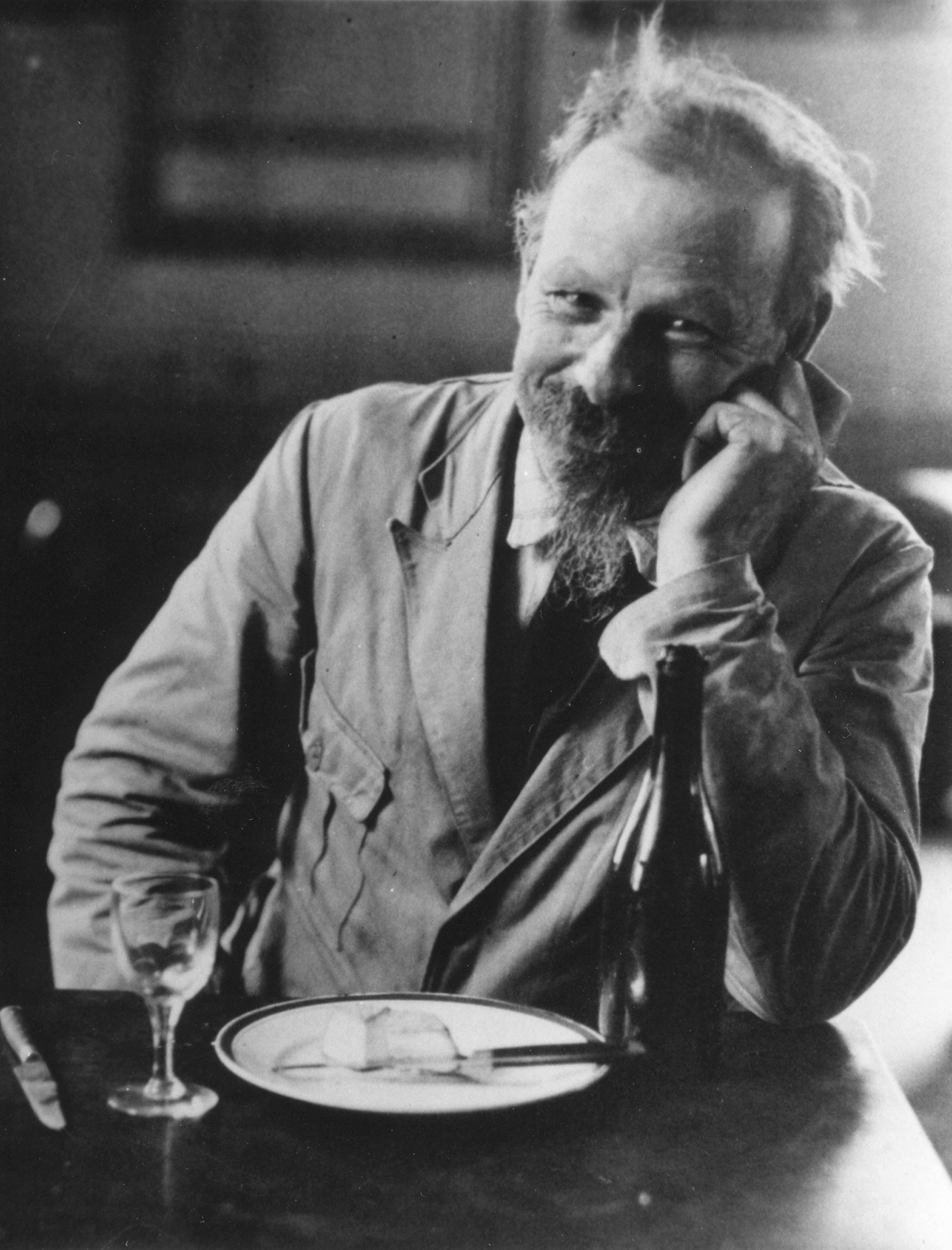
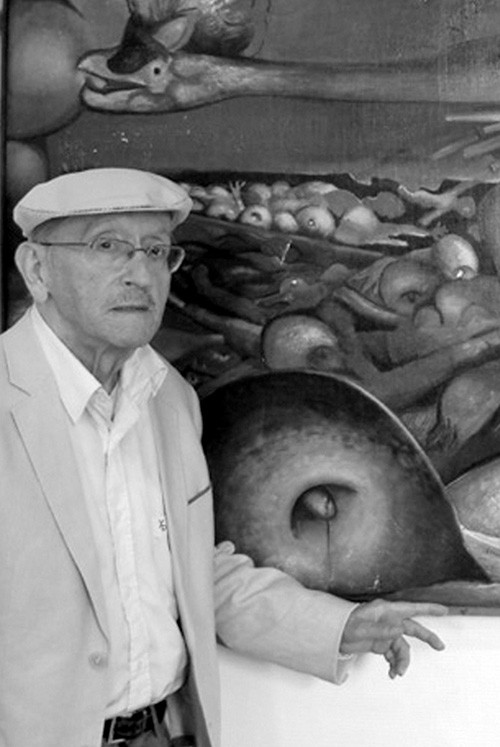
    Self-taught French painter, born in 1873 in Château-Renault (Indre-et-Loire), died on 12 August 1958 in Montoire-sur-le-Loir (Loir-et-Cher).

    Life

    André Bauchant left school at fourteen to work on the family farm, then became a livestock breeder, fruit grower and nurseryman, hence his nickname of “the gardener painter”. Called up during the First World War, he was sent to the Dardanelles, Greece and Turkey. Having passed an examination as a rangefinder operator, he made topographical surveys and panoramic sketches that revealed a talent he had not suspected.

    Demobilised in 1919, at the age of forty-six, he found his farm ruined and his wife, Alphonsine, seriously ill. He withdrew to Auzouer-en-Touraine and began to paint. In 1921 he exhibited at the Salon d’automne; Le Corbusier bought a first canvas from him in 1922. Amédée Ozenfant, Jacques Lipchitz, Jean Lurçat and Serge Diaghilev were among his Parisian supporters.

    Jeanne Bucher gave him his first solo exhibitions in 1927 and 1928; Wilhelm Uhde discovered him there and counted him among the “modern primitives”. In 1928 Diaghilev commissioned him to design the sets for Apollon musagète, to music by Stravinsky, for the Ballets Russes. Now able to live from his painting, he had a house built at Les Tourneboeufs. In 1949 the Galerie Charpentier presented a retrospective of 215 canvases. Weakened by a stroke in December 1956, he painted until September 1957.

    The work

    History paintings, mythological and religious scenes, festivities, portraits, Loire landscapes and still lifes make up his work, with assertive foregrounds, imperfect perspectives and successive planes. From around 1950 he painted mainly flowers and fruit, turning the still life (nature morte) into a “living nature” (nature vive) by showing flowers still planted in the earth. He also designed, on a State commission, a tapestry cartoon for the Gobelins.

    Dina Vierny, who at his request acquired the contents of his studio, organised many exhibitions of his work and in 1997 published his catalogue raisonné.

    Exhibitions and collections

    • Salon d’automne, Paris, 1921
    • Galerie Jeanne Bucher, Paris, 1927 and 1928
    • Les Maîtres populaires de la réalité, Kunsthaus, Zurich, 1937
    • Retrospective, Galerie Charpentier, Paris, 1949
    • Musée d’art et d’archéologie de Senlis: Paysage fleuri, 1955, oil on canvas
    • Favourites: Art Brut, Naive Art, Art Singulier, Galerie Les Yeux Fertiles, Paris, 15 March to 13 April 2024
  • Maurice Baskine

    Maurice Baskine

    Painter, draughtsman and illustrator, born in 1901 in Kharkiv (Russian Empire, now Ukraine), died in 1968 in Paris.

    Life

    Miron Maurice Baskine, known as Maurice Baskine, came to Paris with his family in 1905. In 1933 he discovered occultism and alchemy, which shaped all his work. In 1944 he escaped from the Todt Organisation camp at Martigues, joined the maquis and enlisted in the French Forces of the Interior.

    He began exhibiting in 1945, notably at the Salon des surindépendants. He joined the Surrealist group in 1946. For the exhibition Le Surréalisme en 1947 at the Galerie Maeght he designed the thirteenth altar, L’Athanor, and the same year illustrated André Breton’s Arcane 17. In 1948 he organised the exhibition Comme, for whose catalogue he wrote the preface.

    In 1951 he left the group while remaining close to it, and pursued alone his research into what he called Fantasophy, a pictorial thought nourished by alchemy. His large triptych Fantasophe-Roc ou l’édification de la pierre de Fantasophopolis (5 x 2 m) was shown in 1957 at the Galerie Furstenberg.

    The work

    Hermetically inspired painting, Baskine’s work is built around Fantasophy. For the exhibition Surréalisme (2024), the gallery lent the Centre Pompidou a Sans titre in oil and plaster on panel (116 x 89 cm), from the Arturo Schwarz collection and reproduced in the catalogue.

    After his death, Monique and Jean Saucet, custodians of the works, organised several tributes, including a presentation at the Venice Biennale in 1986 and a retrospective at the Grenier du Chapitre in Cahors in 1990. Most of the holding was given to Cordes-sur-Ciel, which devoted a retrospective to him in 2003.

    Exhibitions and collections

    • Le Surréalisme en 1947, Galerie Maeght, Paris, 1947
    • Le Surréalisme, sources, histoire, affinités, 1964
    • Trésors du surréalisme, Knokke-le-Zoute, 1967
    • Venice Biennale, 1986
    • Surréalisme, Centre Pompidou, 2024 (loan from the gallery)
    • The Gallery’s 25th Anniversary, Galerie Les Yeux Fertiles, 22 May to 19 June 2026
    • Musée national d’art moderne, Centre Pompidou: La Mère folle, 1946-1950, oil on canvas, 86 x 126 cm (gift of Jean Saucet, 2003)
    • Museum of Modern and Contemporary Art, Cordes-sur-Ciel: Fantasophe-Roc and most of the holding
  • Endre Bálint

    Endre Bálint

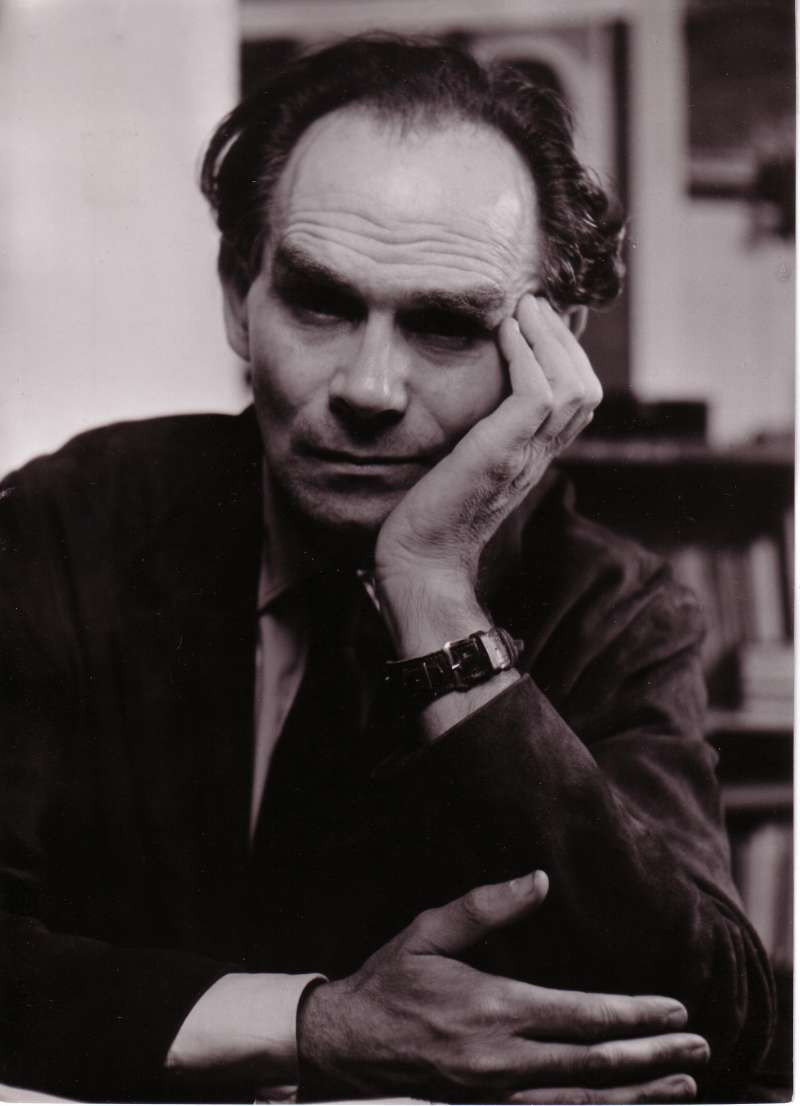
    Hungarian painter and printmaker, born on 27 October 1914 in Budapest, died on 3 May 1986 in Budapest.

    Life

    Endre Bálint grew up in a family of Jewish intellectuals in Budapest; his father, Aladár Bálint, was an art critic. From 1930 to 1934 he studied commercial graphic design at the School of Applied Arts in Budapest, then in 1935 and 1936 attended the private studios of János Vaszary and Vilmos Aba-Novák. There he met Lajos Vajda, with whom he formed a decisive friendship. For a time he was associated with the artists gathered in Szentendre.

    A first three-month stay in Paris, at around twenty, introduced him to modern painting. In 1938 his first solo exhibition, at the Tamás gallery in Budapest, caught the attention of the critic Ernő Kállai. In 1945 he was among the founders of the European School group. In 1947, with André Breton’s help, he took part in Paris in the International Surrealist Exhibition and the Réalités nouvelles salon.

    Later classed among the banned artists, he could no longer exhibit in Hungary until 1956. After the uprising he lived in Paris from 1957 to 1962; there in 1959 he produced a set of more than a thousand illustrations for the Bible. Back in Hungary he gradually gained recognition and, in the last decade of his life, received many honours, including the Kossuth Prize.

    The work

    His early work combines Surrealism, Constructivism and references to Hungarian folk art. His work draws on Dada, Surrealism and abstraction. As well as painting, he practised collage, montage, linocut, plaster engraving (a series devoted to Don Quixote), theatre design and illustration. He also published several volumes of writings and memoirs.

    Exhibitions and collections

    • International Surrealist Exhibition, Paris, 1947
    • Ferenczy Museum, Szentendre (some ten works)
    • Surrealist Prelude, Galerie Les Yeux Fertiles, Paris, 7 June to 6 July 2024

    At the gallery

  • Noviadi Angkasapura

    Noviadi Angkasapura

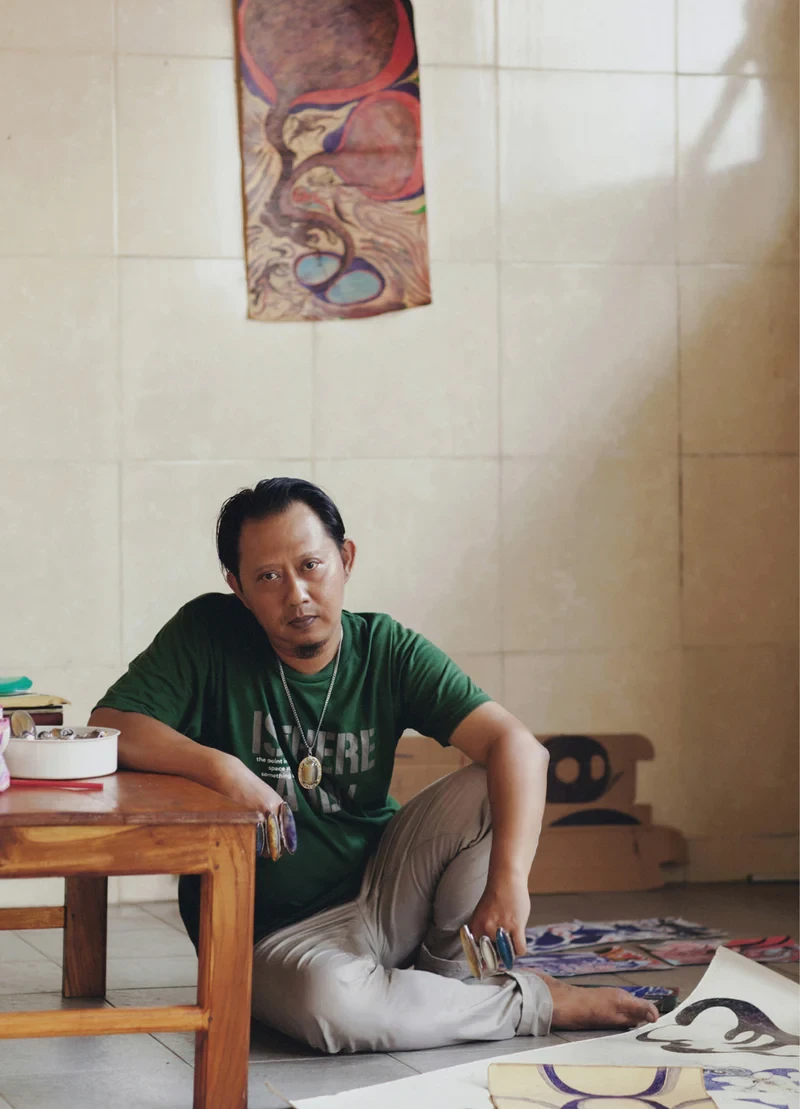
    Indonesian draughtsman, born in 1979 in Jayapura, in Western New Guinea (Indonesia).

    Life

    Noviadi Angkasapura has drawn since childhood, with no artistic training. As a young adult he was visited by a spirit that asked him to draw, around the notions of patience and peace. “It was like a dream, but I wasn’t asleep,” he has said. This spirit also conferred on him the title of Ki Raden Sastro Inggil, which appears on many drawings beside his signature.

    Since 2009 he has lived in Jakarta with his wife and their two children. He is represented by the Henry Boxer Gallery in the United Kingdom and by the Cavin-Morris Gallery in New York, which showed his works at the Outsider Art Fair in Paris in 2013 and devoted a catalogue to him.

    The work

    For Angkasapura, drawing is a prayer and a meditation, within his Muslim faith, and the means of passing on the messages he has received, which he does not claim to interpret. His dense, highly coloured compositions, peopled with figures and enigmatic signs, draw on the Muslim religion, Indonesian iconography and puppet theatre.

    He works in ballpoint pen, felt-tip, graphite, coloured pencils and oil pastel, often on salvaged papers and cardboard. He dreams of founding his own museum, the Angkasapura Raden Sastro Inggil museum, which could hold a million drawings.

    Exhibitions and collections

    • Collection de l’Art Brut, Lausanne
    • abcd / ART BRUT, Bruno Decharme collection
    • Musée national d’art moderne, Centre Pompidou, Paris (Bruno Decharme donation, 2021)
    • Collection of Mediumistic Art (CoMA) of Elmar R. Gruber, Germany
  • Roberto Álvarez Ríos

    Roberto Álvarez Ríos

    Cuban painter and draughtsman, born on 17 September 1932 in Havana, died on 16 December 2015 in Saint-Benoît (Réunion).

    Life

    Roberto Álvarez Ríos trained from 1951 to 1955 at the San Alejandro National School of Fine Arts in Havana. As early as 1955 he exhibited at the 36th Salón de Bellas Artes at the National Museum of Fine Arts in Havana.

    In 1958 he settled in Paris and attended drawing and painting classes at the École nationale supérieure des beaux-arts. The following year he took part in the first Paris Biennale, at the Musée d’Art moderne de la Ville de Paris. In Paris he met Roberto Matta and André Breton, who wished to associate him with the Surrealist movement; he chose to remain independent of any group. He lived and worked at La Ruche.

    The work

    His painting connects with Surrealism through its natural forms and poetic titles, such as Le Blanc d’un univers pour toi regard (1972, oil on canvas), shown at the gallery in 2025. He said he painted a living world, without malice. The El Espacio 23 collection in Miami holds La roue du destin (1971, mixed media on canvas).

    Exhibitions and collections

    • First Paris Biennale, Musée d’Art moderne de la Ville de Paris, 1959
    • Solo exhibition, Galería de Arte Galiano y Concordia, Havana, 1962
    • Petits formats, Espace Altura, Paris, 1994
    • Galerie Foch, Rodez, 2002; Galerie Hang Art, Paris, 2004
    • Latin American Art, Galerie Les Yeux Fertiles, 2022, and A Journey through Latin America, 2025
  • Ramón Alejandro

    Ramón Alejandro

    Cuban painter, draughtsman and printmaker, born on 16 February 1943 in Havana.

    Life

    José Ramón Díaz Alejandro signs his works Ramón Alejandro. He left Cuba young and lived in exile in Argentina and Uruguay before reaching Europe. From 1963 he lived and worked in Paris.

    From 1969 to 1971 he held a fellowship from the Cintas Foundation in New York. His first solo exhibition, entitled Alejandro, took place in 1969 at the Galerie Maya in Brussels; Paris took it up at the Galerie Jacques Desbrière in 1971, then at the Galerie du Dragon in 1987. He later settled in Miami.

    The work

    A painter and draughtsman, Ramón Alejandro is also a printmaker. Among other works, he contributed an etching to Menace de poème, d’éclair, de rien by the Peruvian poet Emilio Adolfo Westphalen (1988).

    Exhibitions and collections

    • Exposición de La Habana, Casa de las Américas, Havana, 1965
    • Mostra grafica latinoamericana, Istituto Italo-Latinoamericano, Rome, 1967
    • FIAC, Grand Palais, Paris, 1984
    • Latin American Art, Galerie Les Yeux Fertiles, Paris, 14 October to 19 November 2022
    • A Journey through Latin America, Galerie Les Yeux Fertiles, Paris, 18 April to 31 May 2025
    • Public collections: Bibliothèque nationale de France; Bibliothèque municipale d’Angers (print room); San Diego Museum of Art