Author: admin

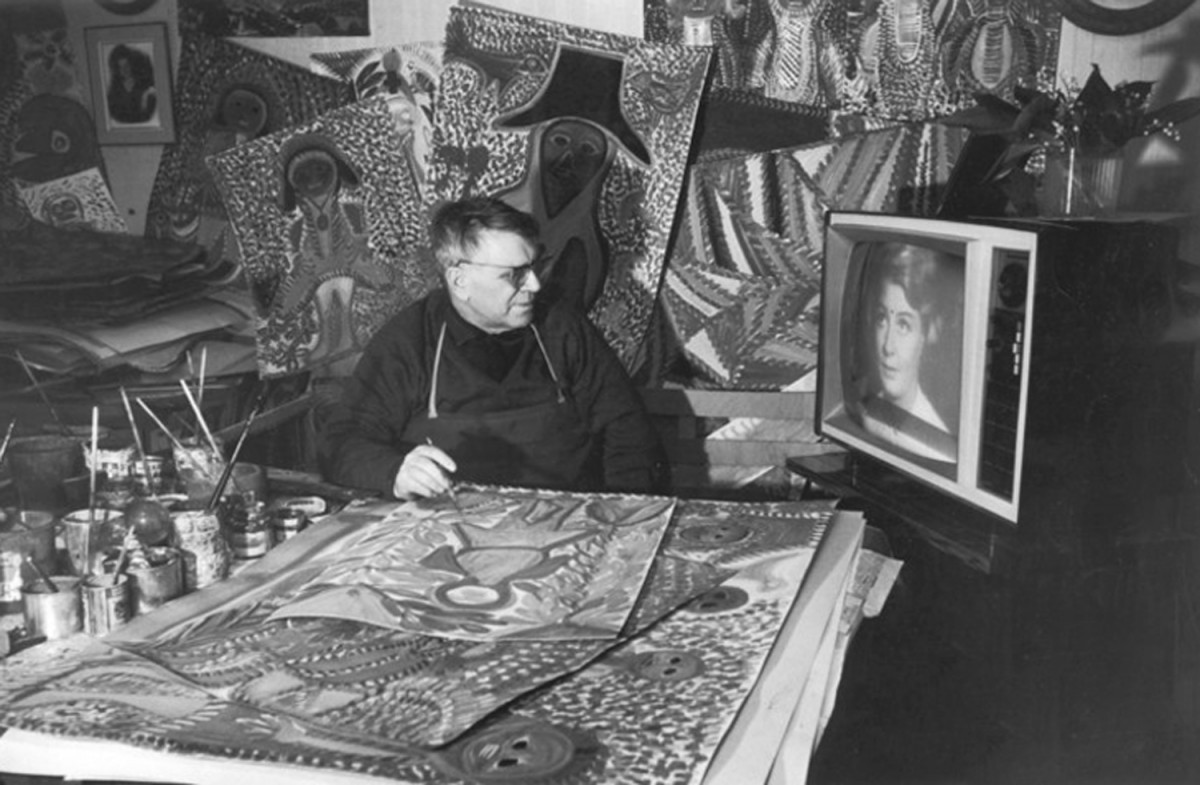
  • Aristide Caillaud

    Aristide Caillaud

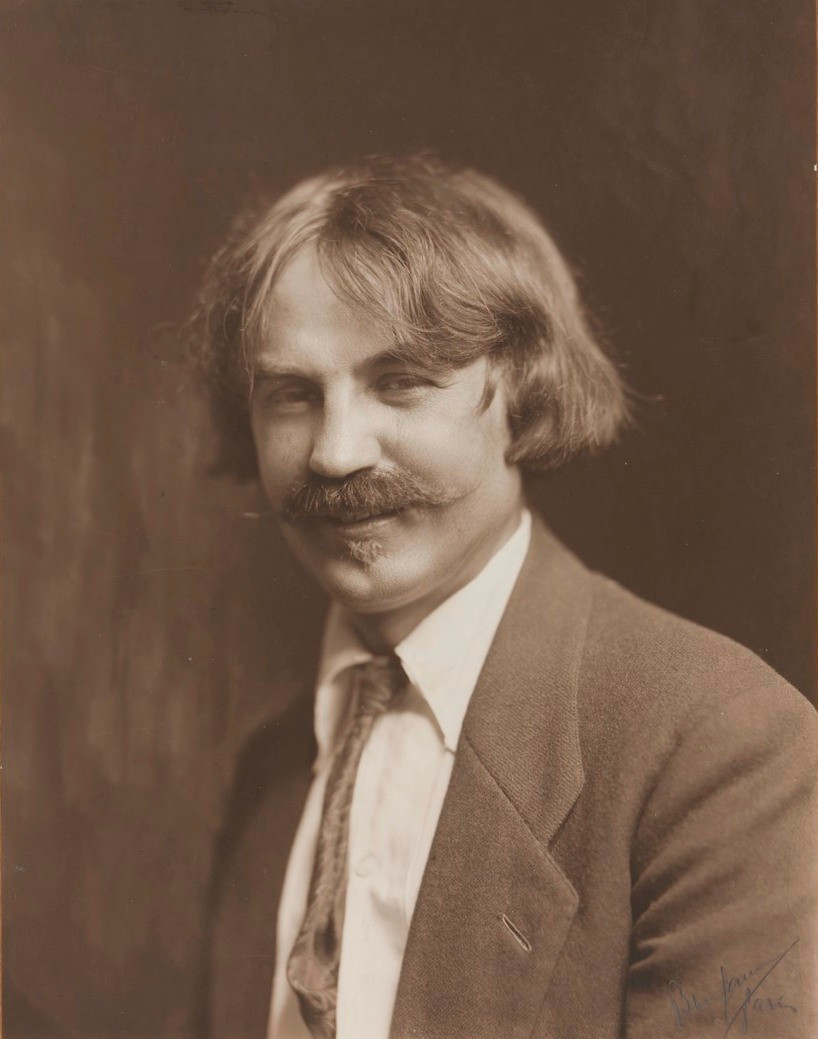
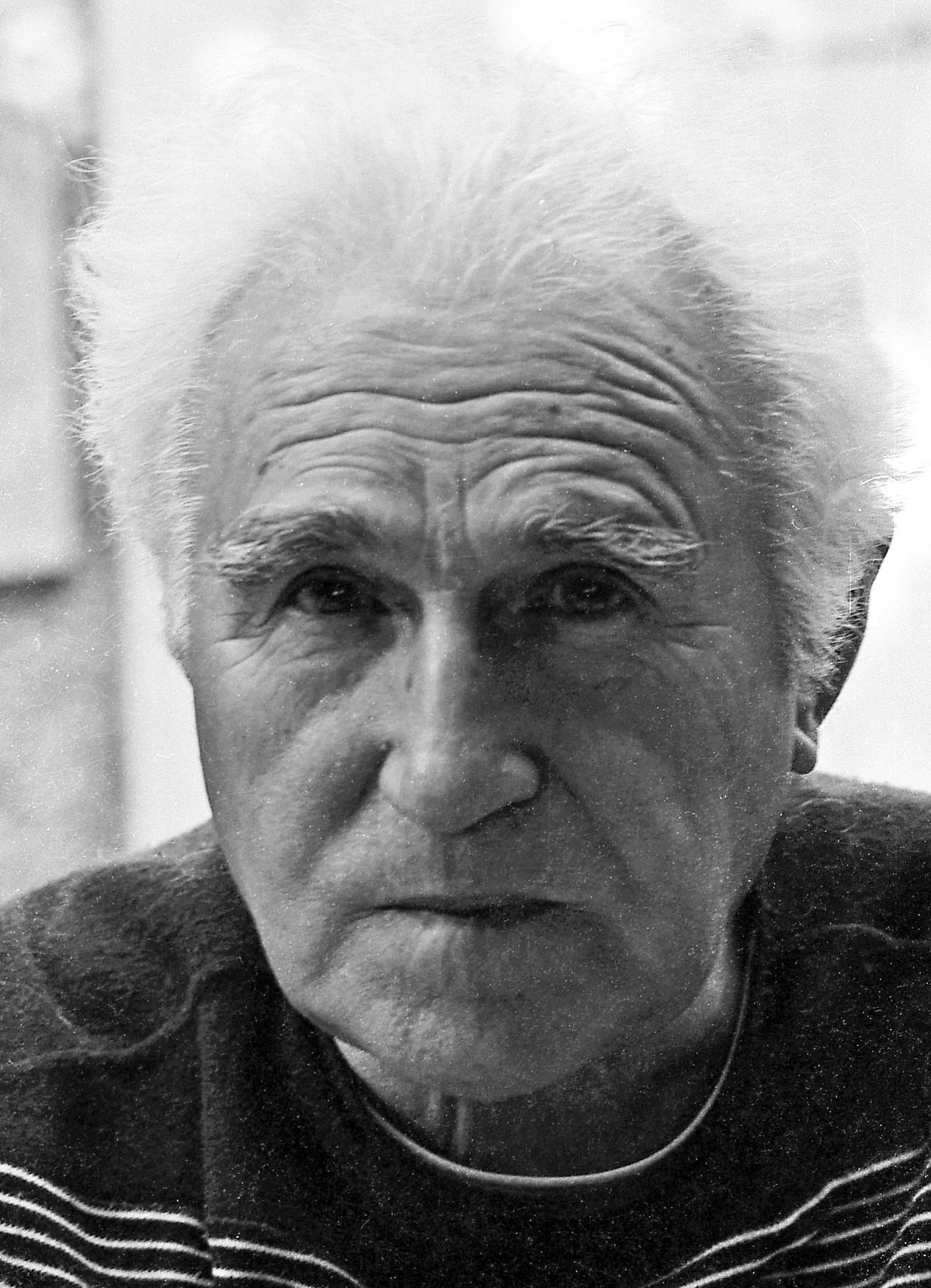
    Self-taught French painter, born in 1902, died on 26 September 1990 in Jaunay-Clan.

    Life

    Aristide Caillaud spent a childhood as a young peasant in Moulins, in the Deux-Sèvres, which shaped his character. It was during the Second World War, as a prisoner of the Germans, that he discovered his talent: he painted his first works on fragments of wooden crates, alongside a fellow prisoner, the master glassmaker Max Ingrand.

    In 1949 he took part in the exhibition L’Art brut organised by Jean Dubuffet at the Galerie René Drouin, then held solo shows in Parisian galleries. André Malraux supported him and had his work shown. Two retrospectives were devoted to him, at the Musée d’Art moderne de la Ville de Paris in 1976 and at the Musée Sainte-Croix in Poitiers in 1978. His uncompromising character and his taste for solitude nonetheless kept him away from society life. He died in his small house in Jaunay-Clan, in Poitou, leaving an abundant body of work.

    The work

    Christian Gendron places his painting between Art Brut and Naive Art: a highly worked body of work born entirely of the imagination. Caillaud said he had no preconceived idea: “the painting makes itself”.

    In 2024 the gallery showed a large Sans titre of 1958-1959 (oil on panel, 174 x 114 cm).

    Exhibitions and collections

    • L’Art brut, Galerie René Drouin, Paris, 1949
    • Retrospective, Musée d’Art moderne de la Ville de Paris, 1976
    • Retrospective, Musée Sainte-Croix, Poitiers, 1978
    • Retrospective, Niort (Hôtel de ville, Pilori, Donjon), 28 June to 24 September 2001, with the book Aristide Caillaud l’enchanteur (Somogy), text by Jacques Lacarrière
    • Favourites: Art Brut, Naive Art, Art Singulier, Galerie Les Yeux Fertiles, Paris, 15 March to 13 April 2024
  • Patrice Cadiou

    Patrice Cadiou

    French sculptor, born in 1947, died in 2015.

    Life

    Patrice Cadiou first trained in classical dance before becoming a sculptor. His meeting with the dealer Gérard Laubie marked a turning point: it opened the doors of Raymond Cordier, the Galerie Keller, the Galerie Ridel and the Musée d’Art moderne de la Ville de Paris.

    The collector Jean-Claude Volot, mayor of Auberive, assembled a group of his works and encouraged him to settle in the Haute-Marne; several of his sculptures are shown at the contemporary art centre of the Abbaye d’Auberive. In 2012 the gallery devoted the exhibition Talismanic Nights to him.

    The work

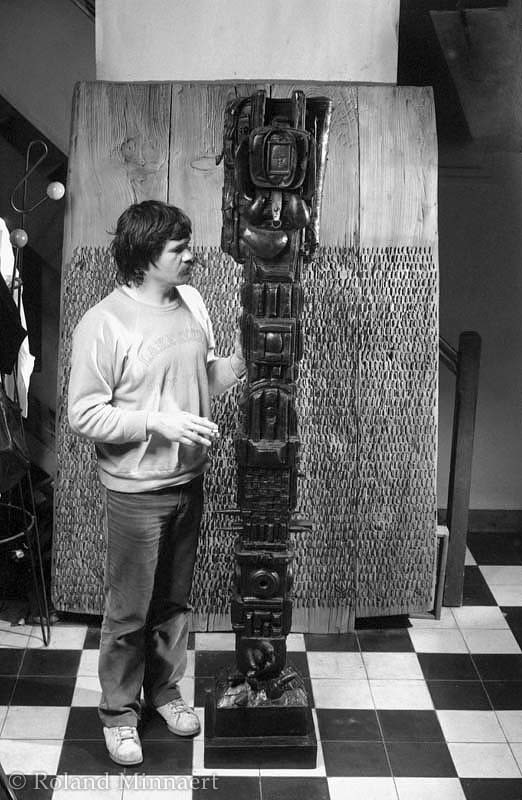
    Cadiou assembled materials found in the rubbish tips near his home: wood, leather, canvas, iron, brass, often with a black patina. His sculptures, which have been likened to Kongo nail fetishes, also include large carved doors.

    “When one of my sculptures has not yet delivered its message, when it does not yet speak to me, I try to listen to it, to modify it so that it reveals its whole secret to me.” Patrice Cadiou, quoted in Esprit singulier : fonds de l’abbaye d’Auberive, Flammarion, 2016, p. 102.

  • Max Bucaille

    Max Bucaille

    French poet, painter, collagist and sculptor, born on 30 June 1906 in Sainte-Croix-Hague, near Cherbourg, died on 1 April 1996 in Créteil.

    Life

    In 1948 Max Bucaille made a collective portrait in collage, Les Surréalistes révolutionnaires en France, which includes Asger Jorn and Robert Jacobsen among others. In 1986 the Galerie 1900-2000 in Paris paid tribute to him with the exhibition Bon anniversaire M. Bucaille.

    The work

    His collages of the 1940s, sometimes dated to the month (XII-47, December 1947), assemble old papers and magazine pages. The 1948 collective portrait combines collage, engravings, cut-out photographs and watercolour on printed paper (26 x 21.2 cm); it is reproduced in the Dictionnaire général du surréalisme et de ses environs (1982).

    Exhibitions and collections

    • Bon anniversaire M. Bucaille, Galerie 1900-2000, Paris, 1986
    • Surrealist Prelude, Galerie Les Yeux Fertiles, Paris, 7 June to 6 July 2024

    At the gallery

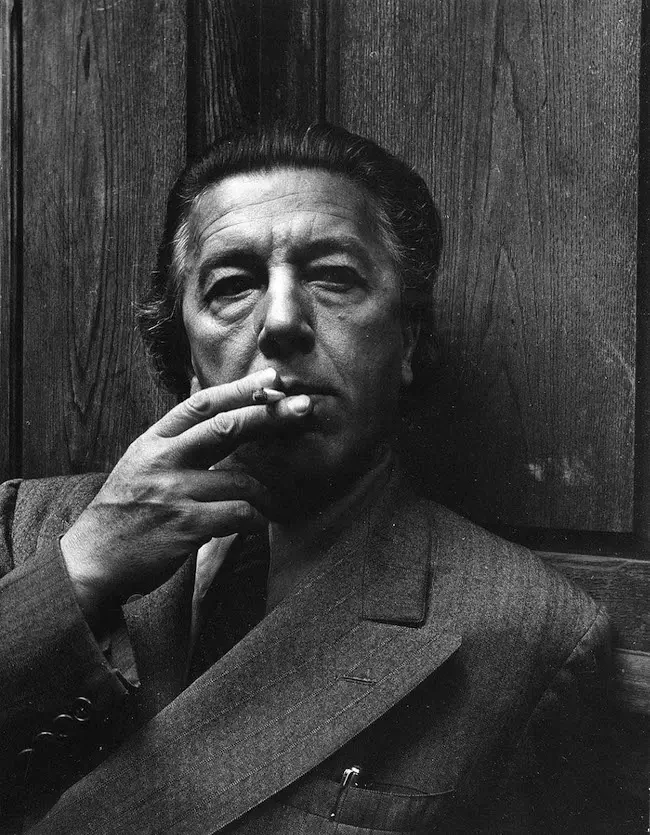
  • André Breton

    André Breton

    French poet and writer, leader and theorist of Surrealism, born on 19 February 1896 in Tinchebray (Orne), died in 1966 in Paris.

    Life

    André Breton came to Pantin at the age of four, where his family lived until 1918. In October 1914 he enrolled at the Faculty of Medicine in Paris. Called up in 1915 as a military nurse, he was posted to Nantes, where in 1916 he met Jacques Vaché, a “decisive encounter”. From July to November 1916 he served at the neuropsychiatric centre in Saint-Dizier, then in 1917 in Dr Babinski’s department at La Pitié. He gave up medicine for good in 1920.

    In March 1919 the first issue of Littérature appeared, which he edited with Louis Aragon and Philippe Soupault; with Soupault he wrote Les Champs magnétiques, published in 1920. The Manifeste du surréalisme appeared on 15 October 1924, followed by Nadja (1928), the Second Manifeste du surréalisme (1930) and L’Amour fou (1937).

    In 1938 he travelled to Mexico, where he met Trotsky. During the war he went into exile in the United States, by way of Martinique, and published Arcane 17 (1944) in New York. Back in Paris on 26 May 1946, he edited, among others, the review La Brèche. Action surréaliste (1961-1967).

    The work

    Beyond his writings, Breton was a discoverer and a collector: as early as 1921 he bought a Tête by Picasso at the first Kahnweiler sale. From 1947 he took a close interest in Art Brut and, with Jean Dubuffet, helped found the Compagnie de l’art brut. He organised or inspired the major international Surrealist exhibitions, from Paris in 1938 to EROS (1959) and L’Écart absolu (1965).

    He himself played the collective game of the exquisite corpse. The gallery lent a Cadavre exquis made in 1929 with Paul and Nusch Éluard (coloured pencils on black paper, 32 x 25 cm, provenance Galleria Schwarz, Milan) to the Surréalisme exhibition at the Centre Pompidou in 2024, where it is reproduced in the catalogue, then to the Hamburger Kunsthalle in 2025.

    Exhibitions and collections

    • Musée national d’art moderne, Centre Pompidou: several exquisite corpses (with Jacqueline Lamba and Yves Tanguy, Nusch Éluard, Valentine Hugo, Greta Knutson), Souvenir du paradis terrestre (1953), La Galvanisation (1959); André Breton archive at the Bibliothèque Kandinsky
    • Surréalisme, Centre Pompidou, 4 September 2024 to 13 January 2025 (loan from the gallery)
    • Rendez-vous des rêves. Surréalisme et romantisme allemand, Hamburger Kunsthalle, June to October 2025 (loan from the gallery)
    • At the Sources of Convulsive Beauty. André Breton the Influencer, Galerie Les Yeux Fertiles, Paris, autumn 2024
    • The Gallery’s 25th Anniversary, Galerie Les Yeux Fertiles, 22 May to 19 June 2026
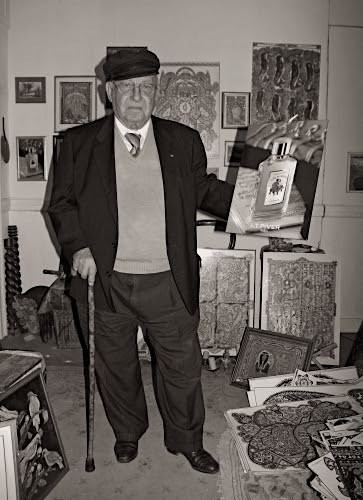
  • Charles Boussion

    Charles Boussion

    French draughtsman, known as Cako, born in 1925 in Biarritz, died on 9 March 2021 in Montpellier.

    Life

    Abandoned as a child by his mother, who came from the aristocracy and was connected to the Spanish crown, Charles Boussion barely knew his father, who disappeared very early. As a child he moved in the circles of the Russian emigration. As a young man he joined the Zazou movement and entered the Resistance during the war.

    In 1946 he married Bernadette Morelon de Beaulieu, then eighteen; they had a daughter, Marie-Hélène. For many years he was a sales representative for L.T. Piver perfumes. A serious car accident plunged him into deep depression, and on emerging from it, at around fifty, supported by his wife, he began to draw.

    The work

    Bernadette was his muse and his model. Boussion endlessly reworked the same photocopied photograph of her, heightening it with gouache, felt-tip, ballpoint and highlighter, and often reworking it again by photocopying the piece anew. She becomes a Madonna, a Virgin and Child, or a mixed-race or Black pin-up, but never white. The central image changes little; it is the ornaments surrounding it that vary.

    These ornaments borrow from the tradition of the icon, Moorish goldsmithing and illumination, mixing Eastern influences, Baroque exuberance, Russian religiosity, travel memories and Basque references. On the back, most works bear handwritten texts, poetic or memorial; Cako is part of his signature. The collector and gallerist Pascal Saumade has assembled more than three thousand of his works.

    Exhibitions and collections

    • Acquisitions 2012-2018, Collection de l’Art Brut, Lausanne, 2018
    • Art Brut : Frame Work, Collection de l’Art Brut, 2021
    • Croyances, Art Brut biennial, Collection de l’Art Brut, 17 December 2021 to 24 April 2022
  • Thérèse Bonnelalbay

    Thérèse Bonnelalbay

    French draughtswoman, born in 1931 in Magalas (Hérault), died in 1980.

    Life

    The daughter of a coal miner, Thérèse Bonnelalbay grew up in a modest milieu. She left for Marseille, where she worked as a nurse. In 1959 she married the schoolteacher Joseph Guglielmi; the couple, deeply committed, attended Communist Party meetings, and they had two children.

    In 1963, during one of these meetings, she began spontaneously drawing in ink on a sheet of paper. Her husband, struck by the forms that emerged, encouraged her to continue. The family later moved to Ivry-sur-Seine. On 16 February 1980 Thérèse Bonnelalbay disappeared; her body was found a month later in the Seine.

    The work

    She worked in pen and Indian ink on white paper, letting her hand run freely. The first drawings, figurative (profiles, plant forms, recognisable motifs), evolved towards abstraction and a network of signs between drawing and writing, suggesting an imaginary alphabet; critics have likened her to Henri Michaux.

    Jean Dubuffet admired her work, and her drawings were included as early as 1967 in the historic exhibition L’Art brut at the Musée des Arts décoratifs in Paris. A feature was devoted to her in fascicle no. 11 of the Collection de l’Art Brut.

    Exhibitions and collections

    • L’Art brut, Musée des Arts décoratifs, Paris, 1967
    • In abstracto #2, Galerie Christian Berst, Paris, 5 March to 30 May 2020
    • Collection de l’Art Brut, Lausanne
    • LaM, Villeneuve-d’Ascq
    • abcd / ART BRUT, Bruno Decharme collection
  • Anselme Boix-Vives

    Anselme Boix-Vives

    Self-taught painter of Spanish origin, born in 1899 in Herbeset (Spain), died in 1969 in Moûtiers (Savoie).

    Life

    Born into a poor family with no access to schooling, Anselme Boix-Vives emigrated to France at eighteen. In 1926 he took over a fruit and vegetable business in Moûtiers, in Savoie, which he ran for most of his life. A committed pacifist, he wrote and published a “peace plan” intended to save the world, which he sent, without success, to General de Gaulle, the Queen of England and the Pope.

    He retired in 1962; his wife died a few months later. His son Michel, remembering the drawings he used to make on the back of the shop’s invoices, encouraged him to paint. A new life began: in seven years, until his death in 1969, he produced more than two thousand works.

    The work

    Gouaches, oils, Ripolin paintings and drawings make up a body of work in bold colours, peopled with kings, chatelaines, lunar figures, personalities of his time, ordinary people and jungle scenes. His quest for universal peace runs through his paintings. From 1964 he exhibited at the Galerie Breteau in Paris, and André Breton reproduced one of his works on the cover of the review La Brèche. Action surréaliste.

    Exhibitions and collections

    • Galerie Breteau, Paris, 1964
    • Uppsala Konstmuseum (Sweden), 25 May to 5 September 2019
    • Art brut. Dans l’intimité d’une collection, Grand Palais, Paris, 20 June to 21 September 2025
    • Musée national d’art moderne, Centre Pompidou (Bruno Decharme donation, 2021): Châtelaine espagnole, 1964, gouache on cardboard; Portrait de M. Simon, 1969; Grande figure, 1969
    • Favourites: Art Brut, Naive Art, Art Singulier, Galerie Les Yeux Fertiles, Paris, 15 March to 13 April 2024
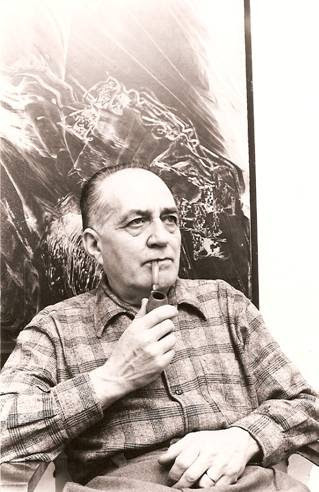
  • Bolesław Biegas

    Bolesław Biegas

    Polish sculptor and painter, born in 1877 in Koziczyn, near Ciechanów, died in 1954 in Paris.

    Life

    Bolesław Biegas, also known in France as Boleslas Biegas, studied at the Academy of Fine Arts in Kraków. Supported by Baron Henryk and Baroness Jadwiga Trutschel, who financed his stay, maintained his studio and paid for the casting of his bronzes, he settled in Paris at the beginning of the twentieth century.

    He exhibited at the Salon des indépendants from 1902; in 1906 Guillaume Apollinaire noticed his paintings there. He found support in the Symbolist circles gathered around the review La Plume, where as early as 1902 Marcel Réja wrote about his sculpture La Terre. In 1908 the Galerie des Artistes modernes gave him his only solo exhibition in a Parisian gallery before the First World War. Little known in his lifetime, he was rediscovered by the Surrealists.

    The work

    His Symbolist sculpture, with sinuous curves close to Art Nouveau, stages visions and allegories: in Le Rêve de Dieu (1905), a grave face and a clenched hand emerge from the base, while a cloud reveals three figures. In painting he developed cycles, such as La Mystique de l’infini, painted around 1923-1929 and shown at Seligmann (1925) and Bernheim-Jeune (1929).

    He bequeathed the contents of his studio to the Société historique et littéraire polonaise in Paris, which entrusted them to the Bolesław Biegas Museum at the Polish Library. A catalogue raisonné is being prepared by Xavier Deryng.

    Exhibitions and collections

    • Salon des indépendants, Paris, from 1902
    • Galerie des Artistes modernes, Paris, 1908
    • Musée des Beaux-Arts de Lyon: Le Rêve de Dieu, 1905, bronze, h. 107 cm (acquired in 1991); plasters on deposit from the Société historique et littéraire polonaise
    • Bolesław Biegas Museum, Polish Library, Paris
    • The Subversion of Images, Galerie Les Yeux Fertiles, Paris, 24 January to 8 March 2025

    At the gallery

  • Guido Biasi

    Italian painter, born in 1933 in Naples, died in 1983 in Paris.

    Life

    Guido Biasi trained at the Academy of Fine Arts in Naples. In 1953, with his friend Mario Colucci, he went to Milan to meet Enrico Baj and drew close to the Nuclear Painting movement. In 1957 he signed the manifesto Per una pittura organica with Colucci, Piero Manzoni and others, and wrote the Albisola Marina manifesto.

    In 1958 he took part in founding Gruppo 58 in Naples and wrote its first manifesto, which linked the group to the Milanese Nuclear movement. From 1958 to 1962 he ran the Neapolitan review Documento Sud, where he published polemical texts against the fashion for the Informel and defended the discarded object, which he saw as “the fantastical revenge of things in revolt”.

    Having settled in Paris in 1960, he became the correspondent of Documento Sud and joined Édouard Jaguer’s Phases movement. He also contributed to the reviews Edda, Direzioni and Front unique, and took part in the Surrealist exhibitions in New York in 1960 and 1961.

    The work

    His painting, subjective and visionary, feeds on his memories; he grouped some of these works under the name Mnemotech. His most important solo exhibition took place in 1965 at the Galleria Levante in Rome. He went on to exhibit at the São Paulo Biennial, the Salon de la jeune peinture, Comparaisons and the Salon de mai, as well as in Frankfurt, Hamburg and Brussels. A retrospective, Opere 1953-1980, was shown in Baronissi in 2010.

    Exhibitions and collections

    • Surrealist exhibitions, New York, 1960 and 1961
    • Galleria Levante, Rome, 1965
    • Galerie Isy Brachot, Brussels, 1973; Galleria Blu, Milan, 1974
    • At the Sources of Convulsive Beauty (section Édouard Jaguer and the Phases movement), Galerie Les Yeux Fertiles, Paris, 25 October to 30 November 2024
  • Pierre Bettencourt

    Pierre Bettencourt

    French writer, printer and artist, born on 28 July 1917 in Saint-Maurice-d’Ételan, died on 13 April 2006 in Stigny (Yonne).

    Life

    After secondary school in Le Havre and Savoie, Pierre Bettencourt attended Paul Valéry’s course in poetics at the Collège de France from 1936 to 1938. In 1941 he acquired a hand press and printed, in the family house then occupied by the Germans, his own texts and unpublished works by Henri Michaux (Tu vas être père), Antonin Artaud (Le Théâtre de Séraphin), Francis Ponge (Le Galet) and Jean Dubuffet (Plukifekler). He signed his erotic writings with the pseudonym Jean Sadinet.

    A great traveller, he journeyed through Africa in 1946 and 1947, Oceania and India in 1951 and 1952, then the Americas, Egypt and Asia. He met Jean Dubuffet in 1947. In June 1962 he married the writer and artist Monique Apple; the following year they settled in Stigny, where he worked until his death.

    The work

    In August 1953, invited by Dubuffet to the south of France to hunt butterflies, he composed small portraits with butterfly wings. At that moment, he said, his life was to rush off in an entirely new direction. In the autumn, for want of butterflies, he gathered flints and bark in the woods and glued them onto plywood to form faces and scenes. So began the series of 388 high reliefs, completed in 1991: on painted grounds, slate, coffee beans, eggshells, stones or pine cones trace figures in which Eros and Thanatos rub shoulders. Le Divin Marquis (1954), no. 6 of this series, made of particularly raw materials, is a historic work.

    Daniel Cordier exhibited and collected him in the 1950s and 1960s. Long kept away from the market, his visual work is matched by a substantial literary output.

    Exhibitions and collections

    • Galerie Daniel Cordier, Paris
    • The Hold of the Senses, Galerie Les Yeux Fertiles, Paris, 2022 (with Le Divin Marquis, 1954, and Le Mystère du temps, 1970, high relief, 124 x 175 cm)
    • Favourites: Art Brut, Naive Art, Art Singulier, Galerie Les Yeux Fertiles, 2024
    • Musée national d’art moderne, Centre Pompidou: La Voie lactée, 1964, assemblage of various materials and paint on plywood, 275 x 154 x 15 cm (Daniel Cordier donation, 1989)
    • Other public collections: Centre national des arts plastiques; Les Abattoirs, Toulouse; Musée de Grenoble; Musée des Beaux-Arts de Rennes; MAMC+ Saint-Étienne; MAMCS Strasbourg; Abbaye d’Auberive; Cérès Franco collection, Montolieu; MAC’s Grand-Hornu (Belgium)