
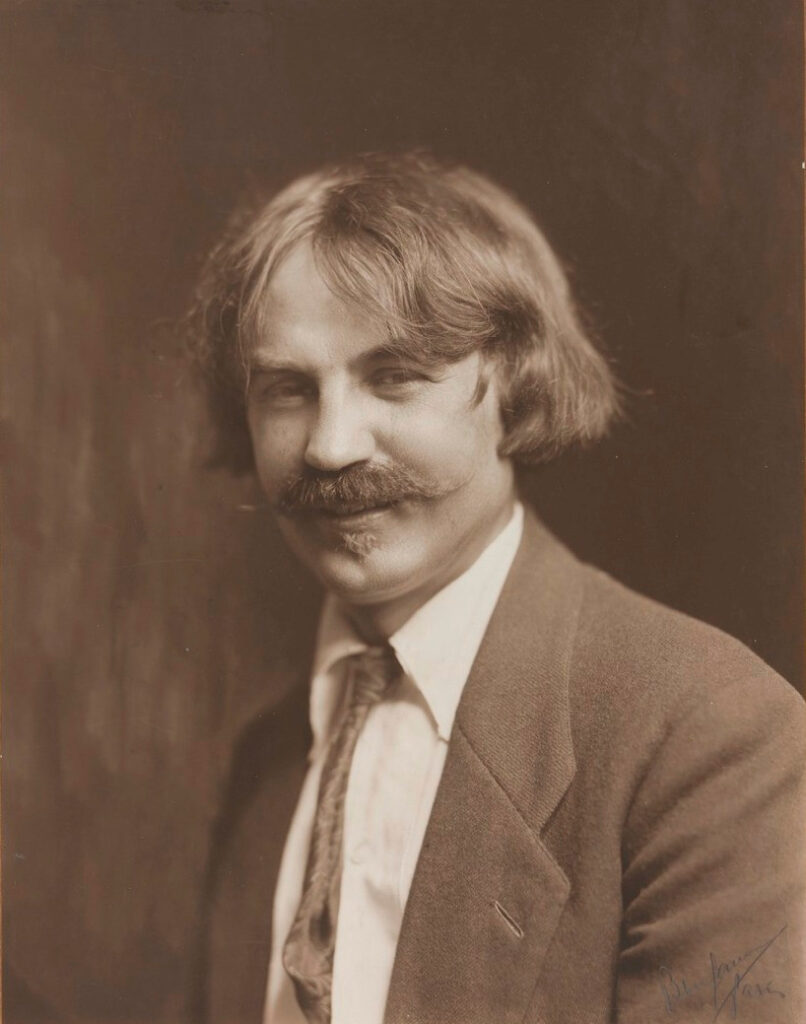
Polish sculptor and painter, born in 1877 in Koziczyn, near Ciechanów, died in 1954 in Paris.
Life
Bolesław Biegas, also known in France as Boleslas Biegas, studied at the Academy of Fine Arts in Kraków. Supported by Baron Henryk and Baroness Jadwiga Trutschel, who financed his stay, maintained his studio and paid for the casting of his bronzes, he settled in Paris at the beginning of the twentieth century.
He exhibited at the Salon des indépendants from 1902; in 1906 Guillaume Apollinaire noticed his paintings there. He found support in the Symbolist circles gathered around the review La Plume, where as early as 1902 Marcel Réja wrote about his sculpture La Terre. In 1908 the Galerie des Artistes modernes gave him his only solo exhibition in a Parisian gallery before the First World War. Little known in his lifetime, he was rediscovered by the Surrealists.
The work
His Symbolist sculpture, with sinuous curves close to Art Nouveau, stages visions and allegories: in Le Rêve de Dieu (1905), a grave face and a clenched hand emerge from the base, while a cloud reveals three figures. In painting he developed cycles, such as La Mystique de l’infini, painted around 1923-1929 and shown at Seligmann (1925) and Bernheim-Jeune (1929).
He bequeathed the contents of his studio to the Société historique et littéraire polonaise in Paris, which entrusted them to the Bolesław Biegas Museum at the Polish Library. A catalogue raisonné is being prepared by Xavier Deryng.
Exhibitions and collections
- Salon des indépendants, Paris, from 1902
- Galerie des Artistes modernes, Paris, 1908
- Musée des Beaux-Arts de Lyon: Le Rêve de Dieu, 1905, bronze, h. 107 cm (acquired in 1991); plasters on deposit from the Société historique et littéraire polonaise
- Bolesław Biegas Museum, Polish Library, Paris
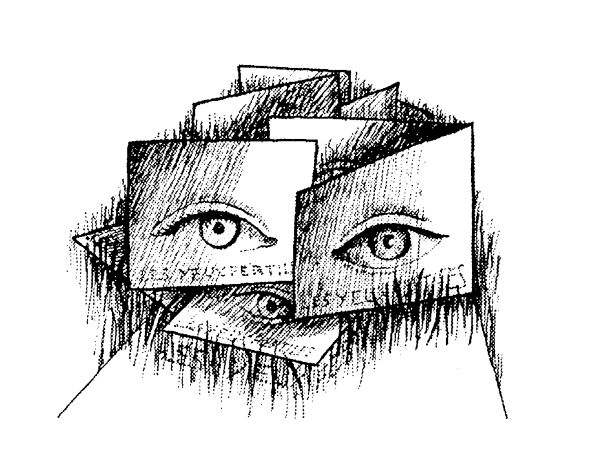
- The Subversion of Images, Galerie Les Yeux Fertiles, Paris, 24 January to 8 March 2025