Author: admin

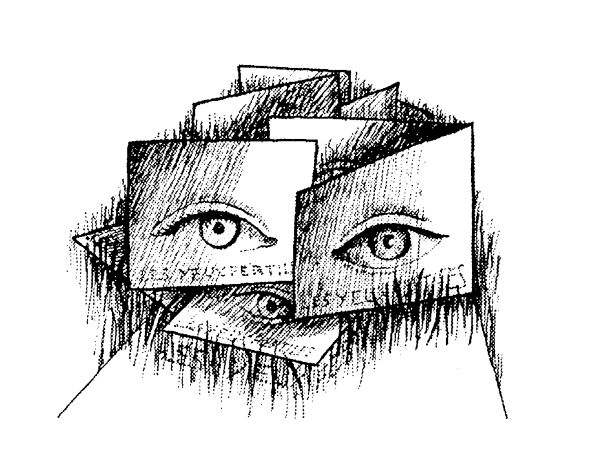
  • Milan Nápravník

    Milan Nápravník

    Czech writer, poet, playwright and visual artist, born on 28 May 1931, died on 27 October 2017.

    Life

    Milan Nápravník belonged to the Czech Surrealist sphere. His life was divided between Czechoslovakia and Germany, and his work spans several fields: poetry, theory, the visual arts and photography. It is the breadth of this work that makes it original, long overlooked by specialists.

    In recent years Czech scholarship has turned its attention to his work: in 2019 the Pštrossova 23 gallery in Prague presented the exhibition “Dno obrazu” (14 June to 13 September), and in October 2021 Masaryk University in Brno devoted an international conference to him in Kutná Hora, accompanied by an exhibition of his visual works at the Galerie Středočeského kraje.

    The gallery showed his work in the exhibition “Surrealist Prelude” (7 June to 6 July 2024).

    Looking back at their exhibitions
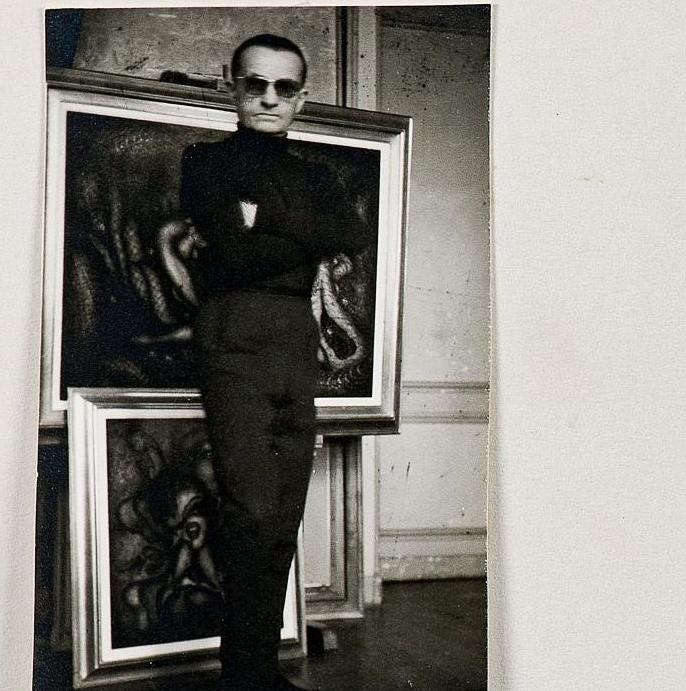
  • Edo Murtić

    Edo Murtić

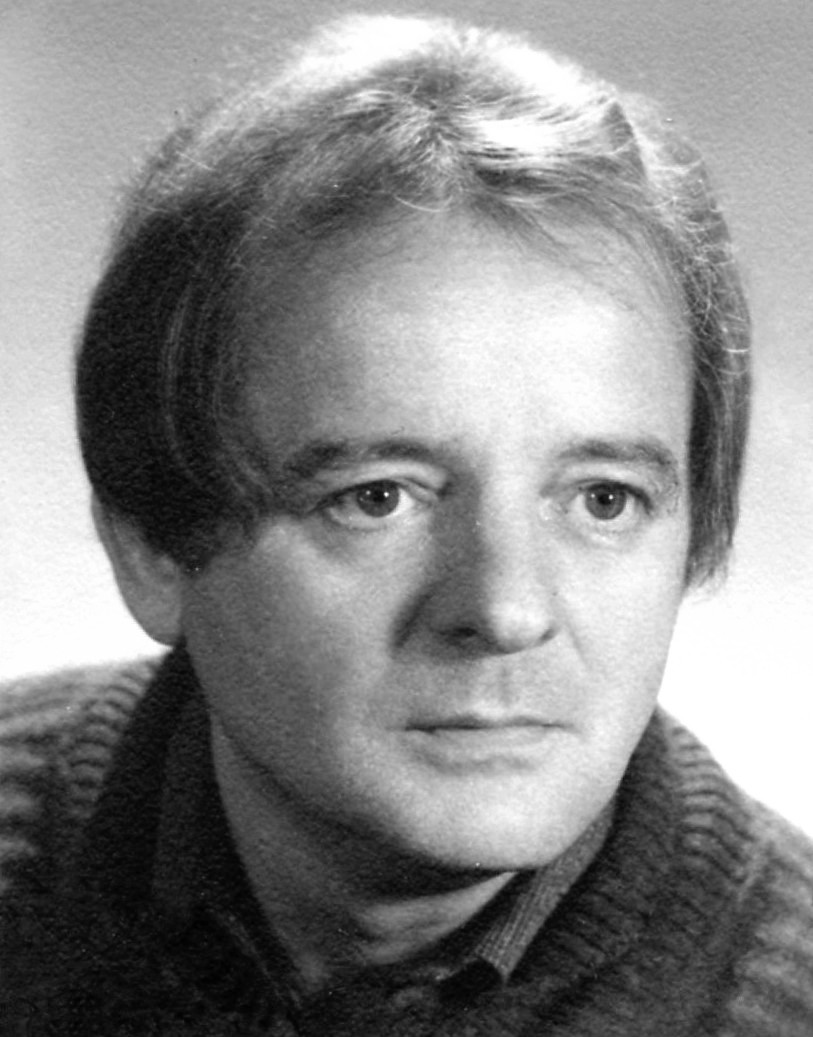
    Croatian painter, born on 4 May 1921 in Velika Pisanica, near Bjelovar, died on 2 January 2005 in Zagreb.

    Life

    Having moved to Zagreb with his family as a child, Edo Murtić attended the school of arts and crafts from 1935 to 1939 and held his first exhibition as early as 1935. In 1939 he entered the Academy of Fine Arts in Zagreb, under Ljubo Babić and Krsto Hegedušić, and in 1940 studied under Petar Dobrović in Belgrade.

    Active in the anti-fascist movement, he joined the liberation forces in the spring of 1944, designing posters and books for them; at that time he illustrated Ivan Goran Kovačić’s poem Jama with lithographs. In 1951 a stay in the United States and Canada introduced him to Abstract Expressionism. His 1953 exhibitions in Zagreb and Belgrade were among the first in the socialist world to show abstract painting.

    A co-founder of the Zagreb group Mart in 1956, in 1958 he took part in the Venice Biennale, the Carnegie Prize in Pittsburgh and documenta in Kassel. A member of the Yugoslav (now Croatian) Academy of Sciences and Arts, he divided his life between Zagreb and Vrsar, in Istria, with his wife, the artist Goranka Vrus Murtić. He donated more than 1,500 works to the City of Zagreb.

    The work

    At first figurative, his painting evolved towards a personal abstraction nourished by his travels in France, Italy and the United States: expressive gesture, lyrical charge, intense colour. In the early 1960s Tachist and Informel accents appeared, with his dark masses sliding over light grounds. Then came the cycles Les Yeux de la peur (1981-1984), Feux (1985-1990), born of a voyage in the southern Adriatic, and Montraker (1992-1995), inspired by a Roman quarry near Vrsar.

    Murtić also designed theatre sets, murals, mosaics (Zagrepčanka building, 1975), tapestries (Vatroslav Lisinski Concert Hall), enamels, sculptures and ceramics.

    Exhibitions and collections

    • Venice Biennale and documenta, Kassel, 1958
    • Retrospective, Moderna galerija, Zagreb, 2003
    • “Kroatische Malerei des 20. Jahrhunderts”, Kunsthistorisches Museum, Vienna, 2004
    • “Murtić 100”, Meštrović Pavilion (HDLU), Zagreb, 25 May to 18 July 2021
    • Museum of Contemporary Art, Zagreb (Murtić donation)
  • Edmund Monsiel

    Edmund Monsiel

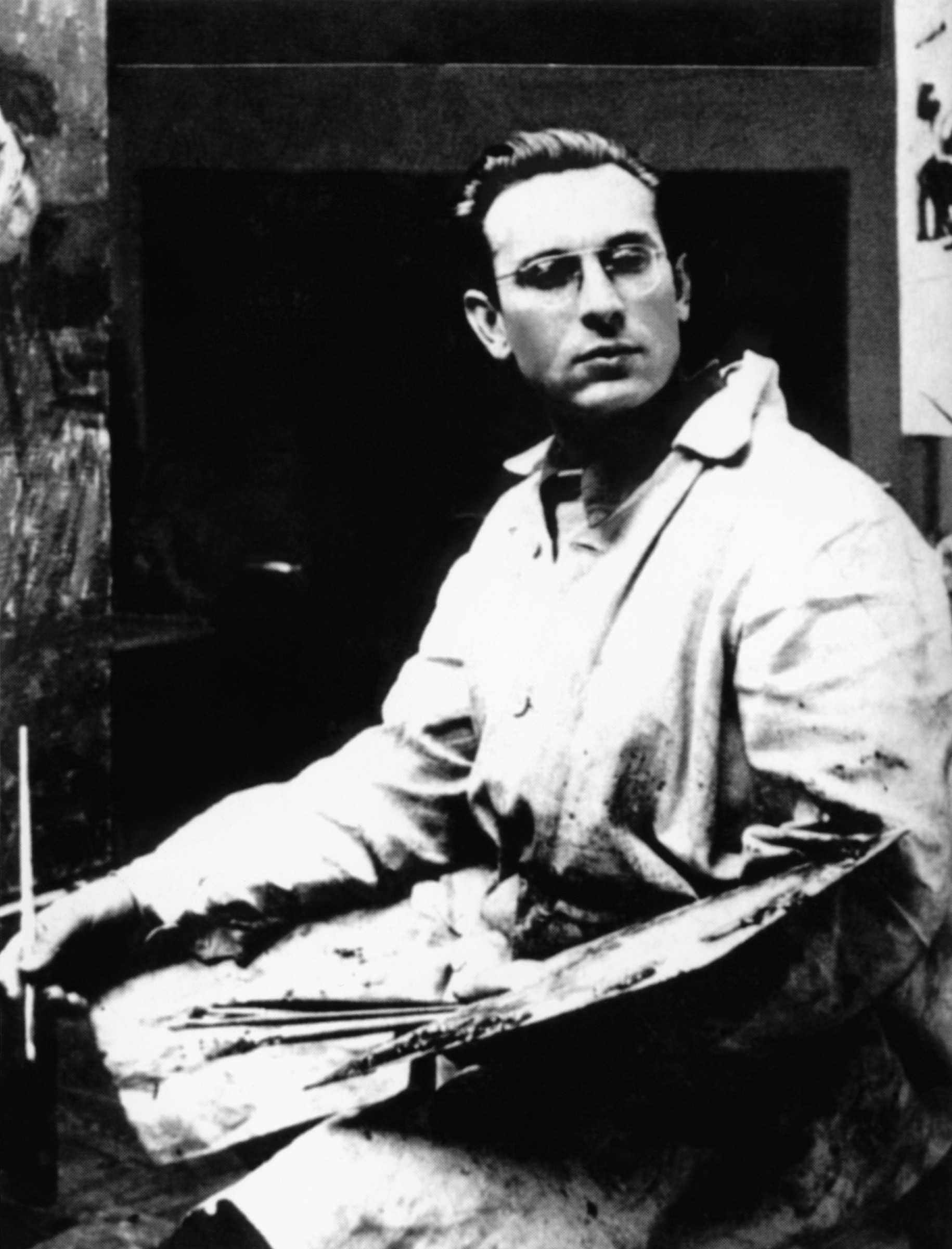
    Polish Art Brut draughtsman, born on 12 November 1897 in Wożuczyn, died on 8 April 1962 in Tomaszów Lubelski.

    Life

    The sixth child of a carpenter, Edmund Monsiel was brought up by an uncle who was an organist. He entered the seminary in Chełm, which he left without a diploma, then helped his mother run a shop before opening his own in Łaszczów. The Germans closed it in 1942.

    On 25 December 1942 he narrowly escaped a reprisal execution in which his brother-in-law and dozens of inhabitants were killed before his eyes. In the spring of 1943 he took refuge in the attic of his brother’s house in Wożuczyn and gradually cut himself off from the world. In the 1950s he lived in an abandoned house, then rented rooms until his death. His neighbours remembered a pious, cultivated and elegant man, one of the first amateur photographers in the region.

    The work

    His first dated drawings go back to Holy Week 1943. After his death his family discovered more than five hundred drawings, some locked in a chest secured by three padlocks. Monsiel worked mainly in hard graphite, sometimes with collage, on scrap sheets, book covers, forms or envelopes.

    His compositions combine popular and religious iconography. They obsessively repeat faces, notably that of a moustachioed man covered in eyes, sometimes by the thousand on a single sheet. Each drawing is signed “EM” and bears a moral maxim.

    The gallery showed a Sans titre of 1947 (mixed media, 15 x 10 cm) in the exhibition “Favourites: Art Brut, Naive Art, Art Singulier” (15 March to 18 April 2024); Monsiel had already been included in its 2022 “Art Brut” exhibition.

    Exhibitions and collections

    • “Inner Worlds Outside”, Whitechapel Gallery, London, and Irish Museum of Modern Art, Dublin, 2006
    • Galeria Gardzienice, Lublin, 15 October to 15 November 2010
    • “Art brut. Dans l’intimité d’une collection”, Grand Palais, Paris, 2025
    • Musée national d’art moderne, Centre Pompidou (Bruno Decharme donation, 2021); Collection de l’Art Brut, Lausanne

    Looking back at their exhibitions
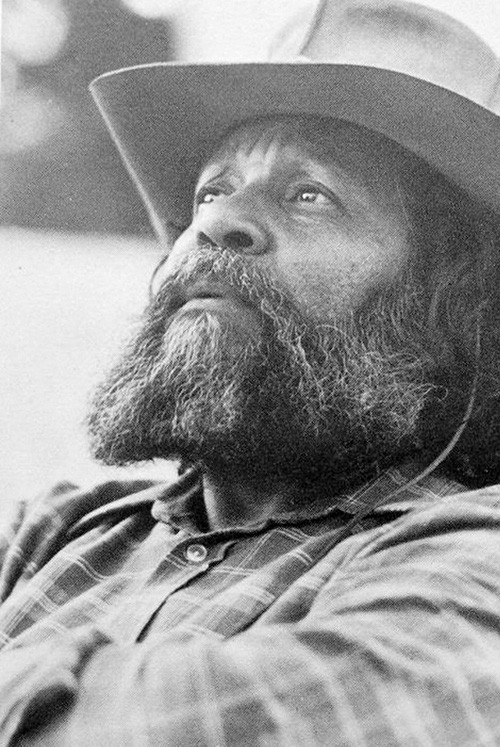
  • Pierre Molinier

    Pierre Molinier

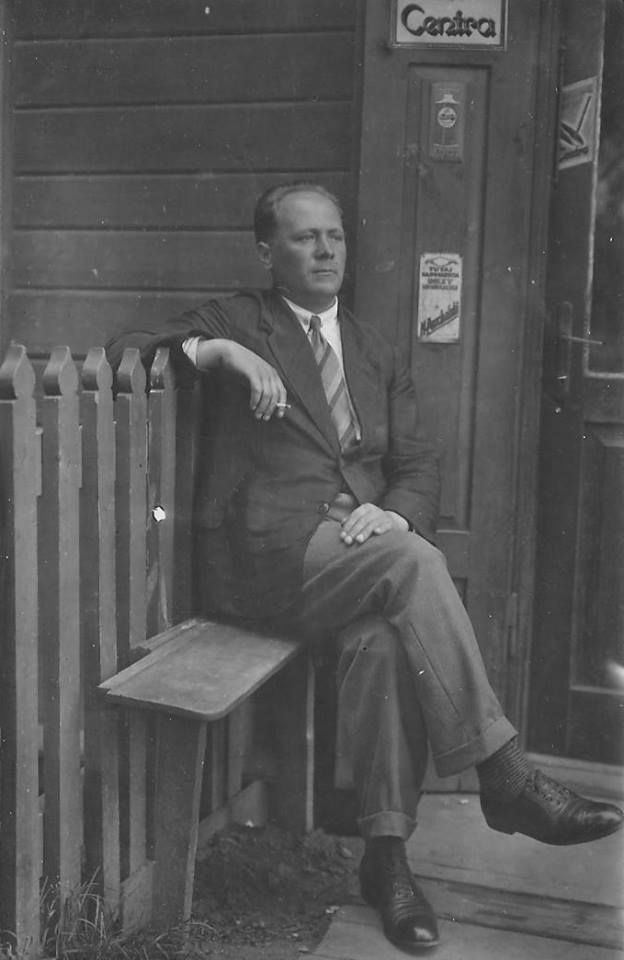
    French painter and photographer, born on 13 April 1900 in Agen, died on 3 March 1976 in Bordeaux.

    Life

    Pierre Molinier trained with his father and the sculptor Pierre Augustin de Fumadelles. He began by painting landscapes and took up photography at the age of eighteen. After his military service (1921-1922) he went to Paris to copy the masters, then settled in Bordeaux, where he spent most of his life. His first solo exhibition took place in 1931 at the Galerie A. Grézy in Bordeaux.

    In 1955 he wrote to André Breton and sent him photographs of his paintings. Breton welcomed him into the Surrealist group: in 1956 the Galerie À l’Étoile scellée gave him an exhibition in Paris, and he took part in the International Surrealist Exhibition of 1959-1960. In 1969 Jean-Jacques Pauvert published L’Art magique de Molinier, with a foreword by Breton. As his health declined, he took his own life in his Bordeaux flat on 3 March 1976.

    The work

    Paintings, photographs and photomontages make up an erotic and transgressive body of work, deliberately provocative. From 1965 Molinier staged himself in his studio-boudoir in Bordeaux: using a remote shutter release and photomontage, he made cross-dressed self-portraits, gathered notably in the series of Cent photographies érotiques (1965-1976).

    The gallery showed an original photographic print, Hanel Sechs ! (18.5 x 14.5 cm), in the exhibition “The Hold of the Senses. Erotic Variations” (11 February to 19 March 2022). Molinier was also included in the exhibition “The Subversion of Images” (24 January to 8 March 2025).

    Exhibitions and collections

    • Centre Pompidou, Paris, 1979-1980; “Scènes de la séduction”, Rencontres d’Arles, 1998
    • “Molinier rose saumon”, FRAC Nouvelle-Aquitaine MÉCA, Bordeaux, 2023
    • Musée national d’art moderne, Centre Pompidou; Centre national des arts plastiques; Musée des Beaux-Arts and CAPC, Bordeaux; Musée d’Art moderne et contemporain de Strasbourg; SFMOMA, San Francisco; Musée de la Photographie, Charleroi

    Looking back at their exhibitions
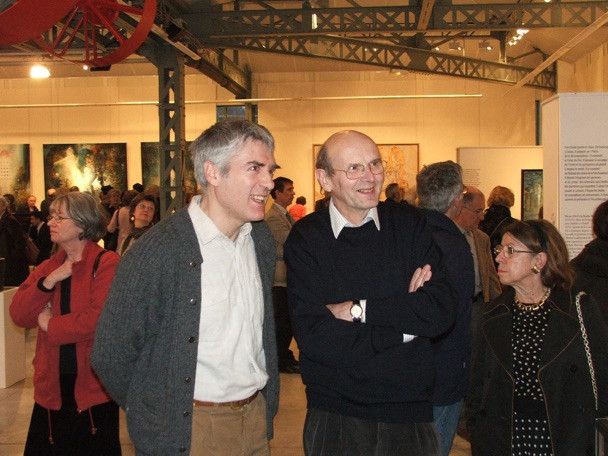
  • Mauro Mejiaz

    Mauro Mejiaz

    Venezuelan painter, naturalised French, born in 1930 in Biscucuy (Venezuela), died in 2000 in Paris.

    Life

    Guided at first by the painter Braulio Salazar, Mauro Mejíaz trained at the Arturo Michelena School of Fine Arts in Valencia (Venezuela), where he first exhibited in 1951, at the Ateneo. Awarded a prize at the Arturo Michelena Salon in 1952, he was appointed professor of sculpture and ceramics in 1955. Under the influence of David Alfaro Siqueiros, he then practised Social Realist painting and in 1961 produced a large mural in Barcelona (Venezuela).

    In 1964 he settled in France, where he lived until his death. From 1965 he took part in the Latin American Salon at the Musée d’Art moderne de la Ville de Paris, then in the Salon de Mai in 1967. He exhibited with Roberto Matta from 1967 and showed his work in Paris, Bonn, Hamburg, Vienna and Barcelona. He received the Arturo Michelena Prize in 1981.

    The work

    Having passed through Social Realism, Impressionism, Cubism and Expressionism, Mejíaz found his language between 1970 and 1975: oil pigments applied with rag and solvent, combined with frottage, giving rise to visionary, almost interplanetary landscapes. Matta’s influence is apparent.

    The gallery showed him in its exhibitions devoted to Latin American art, in 2022 (14 October to 19 November) and in 2025 (“A Journey through Latin America”, 18 April to 31 May), alongside Jorge Camacho, Joaquín Ferrer, Gerardo Chávez, Roberto Álvarez Ríos and Ramón Alejandro.

    Exhibitions and collections

    • Galerie 3+2, Paris, 1968 and 1970; Galerie Art Visionnaire, Paris, 1982
    • Musée d’Art moderne de la Ville de Paris, and public collections in Spain, Uruguay, North Macedonia, Sweden and Venezuela

    Looking back at their exhibitions
  • Didier Mazuru

    Didier Mazuru

    French painter and printmaker, born in 1953 in Paris, based in Stockholm.

    Life

    Didier Mazuru studied architecture at the École des beaux-arts in Paris. In 1976, at the Galerie Bernier, he discovered printmaking; his copperplates are printed at the René Tazé workshop in Paris. The Galerie Bernier gave him his first solo exhibitions, from 1984. Based in Stockholm, he exhibits regularly in France and Sweden.

    Since 2012 he has devoted himself entirely to painting. In 2019 the Fondation Taylor awarded him the Madeleine Couderc painting prize.

    The work

    Coming from printmaking, Mazuru is associated by the gallery with Visionary Art and Surrealism. According to the artist, his catalogue comprises 222 paintings on canvas or panel, 880 drawings and paintings on paper, and 63 copper engravings.

    The gallery devoted the exhibition “The Ineffable” to him (March-April 2023), then “Surrealist Fragmentations” (5 June to 4 July 2025), which included Léda ancienne et moderne (1991, oil on canvas laid down on wood, 162 x 144 cm). It showed “the visionary eye of Didier Mazuru” again in its summer exhibition (10-26 July 2025), then in the gallery’s 25th anniversary exhibition (22 May to 19 June 2026).

    Exhibitions and publications (as listed by the artist)

    Solo exhibitions

    1984 Galerie Bernier, Paris
    1986 Galerie Bernier, Paris
    1986 Galerie Saint-Anne, Montluçon
    1987 Galerie Bernier, Paris
    1987 Galerie L, Saint-Étienne
    1989 Institut Français, Stockholm
    1989 Galerie L, Saint-Étienne
    1990 Galerie Michèle Broutta, Paris
    1990 Galleriet i Holmby, Sweden
    1992 Galleriet i Holmby, Sweden
    1993 Galerie L, Saint-Étienne
    1998 Galerie Michèle Broutta, Paris
    1998 Galerie Jan Linder, Stockholm
    2005 Café Baires, Stockholm
    2006 Galerie Paname, Stockholm
    2008 Galerie Paname, Stockholm
    2010 Galleri Nordens Ljus, Stockholm (March)
    2011 Galleri Duerr, Stockholm
    2016 Solo exhibition of paintings at the classical music festival “O/Modernt”, Stockholm
    2021 Studio/gallery Idungatan, Stockholm, 11 November.

    Group exhibitions:

    1983 Atelier Tazé, Sint-Niklaas, Belgium.
    1984 Maison des arts, Belfort, France
    1984 Galerie Michèle Broutta, Paris.
    1984 Digne-les-Bains Biennial.
    1984 Saalbau-Galerie, Darmstadt.
    1987 École de Médecine, Paris.
    1987 International Contemporary Art Fair, Lyon.
    1988 International Contemporary Art Fair, Stockholm
    1989 International Contemporary Art Fair, Stockholm
    1990 International Contemporary Art Fair, Stockholm
    1990 École de Médecine, Paris.
    1991 International Contemporary Art Fair, Stockholm
    1992 International Contemporary Art Fair, Stockholm
    1992 Museum of Contemporary Art, Chamalières.
    1992 Institut Français, Stockholm
    1992 Galerie Arts Multiples, Metz.
    1994 Centro culturale di esposizione e comunicazione, Venice, Italy
    1996 “Hyllning till Ilmar Laaban”, Liljevalchs Konsthall, Stockholm
    1998 7th Saint-Hilaire-de-Brens Biennial.
    1999 “10 graveurs français”, Galerie Flamingo, Falkenberg, Sweden.
    2002 “Terra grafica”, Galleri infra, Upplands Väsby, Sweden
    2003 “Aqua di colori”, Galleri infra, Upplands Väsby, Sweden
    2004 Grafiska sällskapet, Stockholm.
    2004 “Métal”, prints, sculptures, drawings, Maison des jeunes et de la culture, Dieppe
    2006 Atelier Grognard, “Les visionnaires – Au-delà du surréalisme”, Rueil-Malmaison, France
    2006 “Les visionnaires – Au-delà du surréalisme”, Galerie Michèle Broutta, Paris
    2006 “Corps humains”, Hôtel de ville, Saint-Ouen-l’Aumône.
    2012 Moreh Collection, Museum of Contemporary Art, Chamalières
    2012 “Les visionnaires”, Grafiskkunst der Gegenwart aus Frankreich, Panorama Museum, Germany
    2012 “10 artistes visionnaires”, Galerie Michèle Broutta, Paris
    2014 Surrealist works on paper, Galerie Les Yeux Fertiles, Paris.
    2014 Galleri Duerr, Stockholm
    2014 Affordable Art Fair, Stockholm, with Galleri Duerr
    2016 “Voyage dans l’imaginaire”, Galerie Les Yeux Fertiles, Paris.
    2018 Estampe en Yvelines, 2nd print biennial, La Tannerie, Houdan
    2019 Winner of the Madeleine Couderc painting prize awarded by the Fondation Taylor, Paris

    Publications:

    1983 “L’atelier Tazé”, exhibition catalogue
    1984 “Dédale”, catalogue of the exhibition at the Galerie Bernier
    1984 Catalogue of the Digne-les-Bains Biennial
    1987 Catalogue of the Lyon international fair
    1988 Catalogue of small-format prints, Chamalières
    1988 Catalogue of the Stockholm international contemporary art fair
    1989 Catalogue of the Stockholm international contemporary art fair
    1992 Catalogue of the Stockholm international contemporary art fair
    1991 “L’art visionnaire”, by M. Random, Éditions Philippe Lebaud (pp. 112-113)
    1992 “L’art visionnaire”, catalogue of the exhibition at the Museum of Contemporary Art, Chamalières
    1993 “Le dessin, art des origines”, by Robert Moran, Éditions Fleurus (p. 160)
    1994 “Du fantastique au visionnaire”, exhibition catalogue, Venice (pp. 70-71)
    1996 “La gravure contemporaine”, by M. Solvit, Pierre Zech éd. (pp. 260-261)
    1997 “Dans l’ossuaire des songes”, by D. Mazuru, Éditions C.D.G. Création
    1998 “Hyllning till Ilmar Laaban”, catalogue of the exhibition at the Liljevalchs Konsthall, Stockholm (p. 57)
    1999 Konstvärlden & disajn no. 4 1999, Sweden
    2006 “Les visionnaires – Au-delà du surréalisme”, exhibition catalogue, Atelier Grognard, France
    2012 Exhibition “Visionnaires, Grafiskkunst der Gegenwart aus Frankreich”, Panorama Museum, Germany (pp. 212-227)
    2016 Illustrations for the catalogue of the classical music festival “O/Modernt”, Stockholm
    2018 Catalogue of the exhibition “Estampe en Yvelines”, Houdan
    2021 Grekisk Mytologi i vardags livet 2021 (in Swedish), texts by Véronique Mazuru and Didier Mazuru
    2021 Konst och Identitet (in Swedish)
    2021 Art et Identité, Didier Mazuru, texts and paintings
    2022 Struktur (in Swedish)
    2022 Structure, Didier Mazuru, texts and paintings
    2022 Arbre de vie, Didier Mazuru, texts and paintings
    2023 Cheminement intérieur, Didier Mazuru, texts and paintings
    2023 Ineffable, Didier Mazuru, paintings 2015 – 2022, Venus d’ailleurs éditeurs


    Articles:

    1984 Les nouvelles de l’estampe no. 75 (p. 23)
    1986 Les nouvelles de l’estampe no. 86
    1986 Les cahiers de la galerie Ste-Anne
    1989 Cultural programme of the Institut Français de Stockholm, September
    1990 Artension no. 13, January-February
    1990 Skånska Dagbladet, 24 April, Sweden
    1998 Pariscope, January
    1998 La Gazette des arts plastiques et décoratifs no. 6, February
    1998 Art & Métiers du livre no. 207
    1998 Arts Actualités Magazine no. 82, February
    1998 Résidences Décoration no. 20, March-April
    1999 Svenska Dagbladet, 7 November, Sweden
    2014 Text by D. Mazuru: catalogue of Doaré’s engraved work
    2014 Art & Métiers du livre no. 300, article by D. Mazuru on Doaré
    2019 Fondation Taylor: 2019 catalogue (p. 41)

    To date he has produced 222 paintings on canvas or panel, catalogued H1 to H222, 880 drawings and paintings on paper and card, catalogued D1 to D880, 63 copper engravings with many proofs heightened or entirely reworked in ink, watercolour or acrylic, and some ten sketchbooks.

    Stockholm 2023

  • Mayo

    Mayo

    Painter and film costume designer, Antoine Malliarakis, known as Mayo, born on 15 February 1905 in Port Said (Egypt), died on 1 October 1990 in Seine-Port (Seine-et-Marne).

    Life

    The son of a Greek engineer on the Suez Canal and a French mother, Mayo went to school in Ismailia, then with the Jesuits in Alexandria. He kept a Greek passport all his life, but his culture was French. Having come to Paris in the early 1920s to study architecture, he entered the Beaux-Arts and turned to painting. In Montparnasse he mixed with Man Ray, Robert Desnos, Tristan Tzara, Francis Picabia, Foujita and Kiki de Montparnasse.

    In 1927 René Crevel introduced him to André Breton, but Mayo declined to join the Surrealist group. He contributed to the review Le Grand Jeu of his friend Roger Gilbert-Lecomte, stayed in Berlin in 1928 and in 1929 exhibited with Giorgio de Chirico at the Galerie des Quatre Chemins. During his stays in Egypt he took part in the Cairo group Art et Liberté, founded in 1938 by Georges Henein, and illustrated texts by Edmond Jabès among others.

    On Jacques Prévert’s recommendation he designed the costumes for Marcel Carné’s Children of Paradise. He then worked for some twenty years for film and theatre, before returning entirely to painting in the early 1960s. In 1966 he settled in Rome, on via Margutta. Suffering from an eye disease, he returned to France in the 1980s. He was made a Commandeur des Arts et des Lettres in 1986.

    The work

    Without attaching himself to any group, Mayo developed a personal style between realism, Surrealism and poetry. His first Parisian canvases show massive figures, often drawn from his circle; several works of the 1930s bear the mark of the Popular Front and the Spanish Civil War. He learned printmaking at Stanley William Hayter’s Atelier 17. In Rome he painted the ancient ruins of his “Roman period” and metamorphoses inspired by Ovid.

    The gallery showed his work in the exhibition “Surrealist Prelude” (7 June to 6 July 2024).

    Exhibitions and collections

    • “Mayo, retour d’Italie”, Musée des Arts décoratifs, Paris, 1986
    • “Surrealism Beyond Borders”, Metropolitan Museum of Art, New York (2021), and Tate Modern, London (2022)
    • Centre Pompidou, Paris; Kunstsammlung Nordrhein-Westfalen, Düsseldorf; Mathaf, Doha; Dalloul Art Foundation, Beirut

    Looking back at their exhibitions
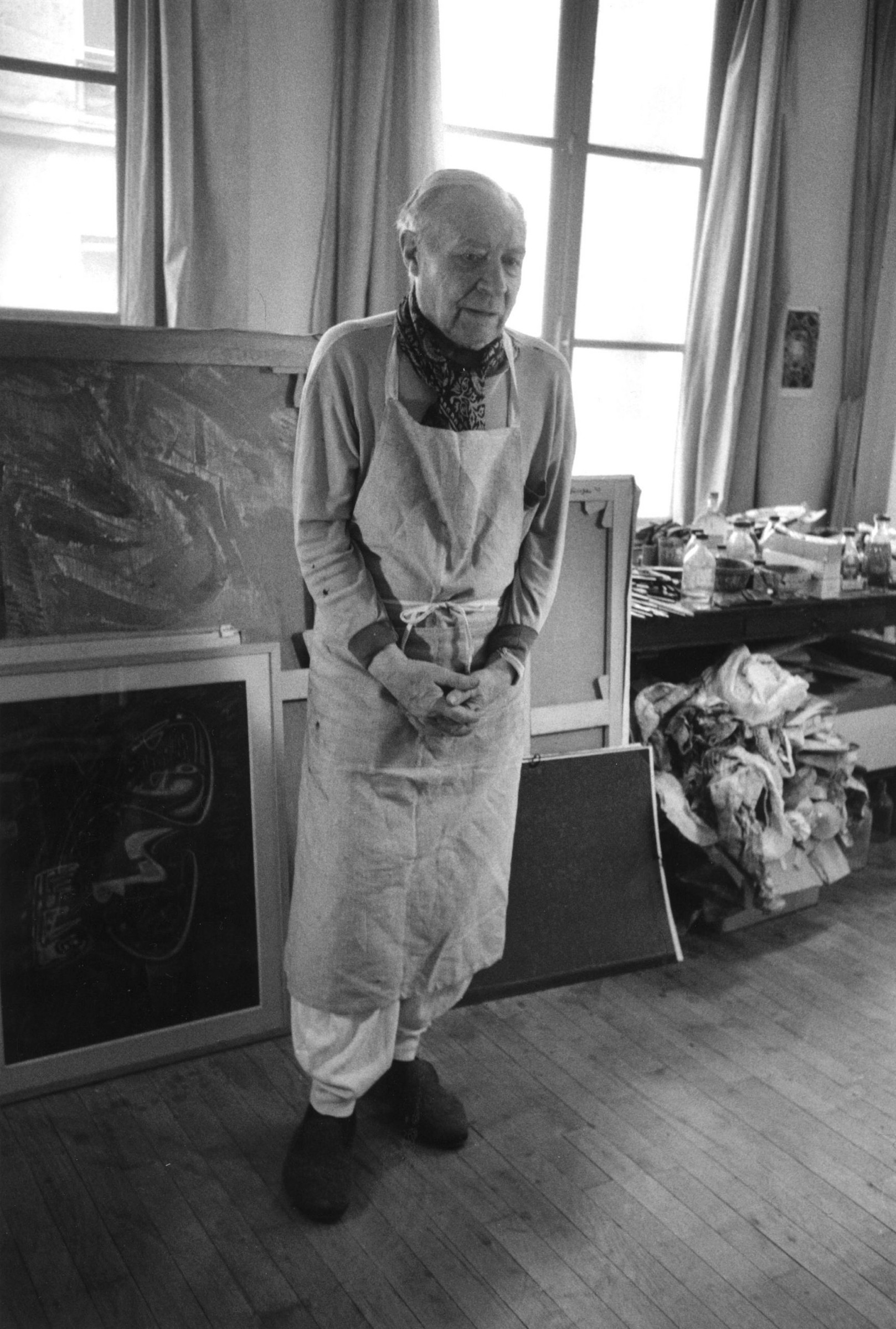
  • André Masson

    André Masson

    French painter, draughtsman and printmaker, born on 4 January 1896 in Balagny-sur-Thérain (Oise), died on 28 October 1987 in Paris.

    Life

    André Masson trained in Brussels from 1907 to 1912, at the Académie royale des beaux-arts and the École des arts décoratifs, then in 1912 entered the École nationale supérieure des beaux-arts in Paris, in the studio of Paul Baudoüin. A volunteer in 1915, he was seriously wounded in the chest in 1917 at the Chemin des Dames and discharged in 1918.

    In the early 1920s his studio at 45 rue Blomet became a meeting place for painters and writers. In the autumn of 1922 he met the dealer Daniel-Henry Kahnweiler. He joined the Surrealist group in 1924, the year of the Manifeste, then broke with it in 1929. He lived in Spain from 1934 to the end of 1936 and, with Georges Bataille, conceived the review Acéphale, which he illustrated.

    On 31 March 1941 he sailed from Marseille for the United States; he lived for four years in Connecticut, near Lake Waramaug, before returning to France in 1945. In 1947 he settled at Le Tholonet, near Aix-en-Provence. In 1965 André Malraux entrusted him with the ceiling of the Théâtre de l’Odéon.

    The work

    Masson made his first automatic drawings in the winter of 1923, even before automatic writing had been theorised, and became the leading practitioner of the method among the Surrealists. From 1927 to 1929 he developed his sand paintings, which carried automatism into painting. His works of the late 1920s and the 1930s deal with violence, eroticism and the metamorphosis of bodies, through biomorphic forms close to abstraction.

    “The authentic artist must find for himself the movement towards myth.” (André Masson, “Peindre est une gageure”, Les Cahiers du Sud, 1941)

    The gallery showed his gouache Rue Saint-Denis (c. 1955, 32 x 50 cm, certificate from the Comité Masson) in the exhibition “Surrealist Prelude” (7 June to 6 July 2024).

    Exhibitions and collections

    • Retrospectives in Basel (1950) and New York (1976)
    • “André Masson. Il n’y a pas de monde achevé”, Centre Pompidou-Metz, 29 March to 2 September 2024

    Looking back at their exhibitions

  • Georges Malkine

    Georges Malkine

    French painter and actor, born on 10 October 1898 in Paris, died on 22 March 1970 in Paris.

    Life

    A friend of Robert Desnos and Louis Aragon, Georges Malkine belonged to the first Surrealist group. In the 1924 Manifeste du surréalisme, André Breton names him among those who have “performed acts of absolute Surrealism”: he is the only painter on the list. He designed the letterhead of La Révolution surréaliste and published texts in the review in 1924 and 1925. In 1927 his canvases were shown at the Galerie surréaliste.

    He stopped painting in 1933. Between 1933 and 1939 he appeared in some twenty films, alongside Jean Gabin and Michèle Morgan, among others. After the war he married Sonia Malkine and moved with her to the United States in 1948, first to Brooklyn, then to Woodstock (New York State), where he began painting again. He lived there for some twenty years.

    In 1966 the Galerie Mona Lisa in Paris devoted a retrospective to him, and he received the prize of the William and Norma Copley Foundation. His novel À bord du violon de mer, written and illustrated by him in 1950, was published in 1977, after his death. Patrick Waldberg devoted a book to him in 1970.

    The work

    Malkine painted some 500 works, mostly in the 1920s, the early 1930s and the 1960s. His canvases of 1926, such as L’Orage and La Nuit d’amour, are among the most reproduced of Surrealism; the latter has been seen as a prefiguration of Lyrical Abstraction.

    From 1966 he undertook the series of “Demeures” (Dwellings): metaphorical portraits of great creators, depicted as buildings that express their character or their work. The gallery lent one of them to the Centre Pompidou, Demeure de Lewis Carroll (1966, oil on canvas board, 60 x 73 cm), shown in the Alice room of the exhibition “Surréalisme” (2024-2025), before it entered a private Parisian collection.

    Exhibitions and collections

    • Galerie surréaliste, Paris, 1927
    • Retrospective, Galerie Mona Lisa, Paris, 1966
    • “Surréalisme”, Centre Pompidou, Paris, 2024-2025 (loan from the gallery)
    • Archives of American Art, Smithsonian Institution: Georges Malkine papers
  • Émile Malespine

    French psychiatrist, writer, painter and publisher, born in 1892 in Nancy, died in Paris (in 1952 or 1953 depending on the source).

    Life

    Émile Malespine studied botany, medicine, physiology and psychology. A doctor during the First World War, he then opened a practice in Lyon while completing a doctorate in psychiatry.

    His travels to Switzerland and Paris brought him into contact with Jean Arp, Filippo Tommaso Marinetti, André Breton and Tristan Tzara. From 1922 to 1928 he edited in Lyon the review Manomètre, inspired by Zenit and Der Sturm, which placed him at the heart of exchanges between the European avant-gardes. He also founded the Théâtre expérimental du Donjon.

    A man of many activities, he was at once a doctor, poet, theorist, art critic, painter, a man of the theatre, cinema and radio, and a furniture designer. From 1924 he made avant-garde short films, Jeux d’ombre and Jeux arborescents.