Author: admin

  • Ursula Schultze-Bluhm

    Ursula Schultze-Bluhm

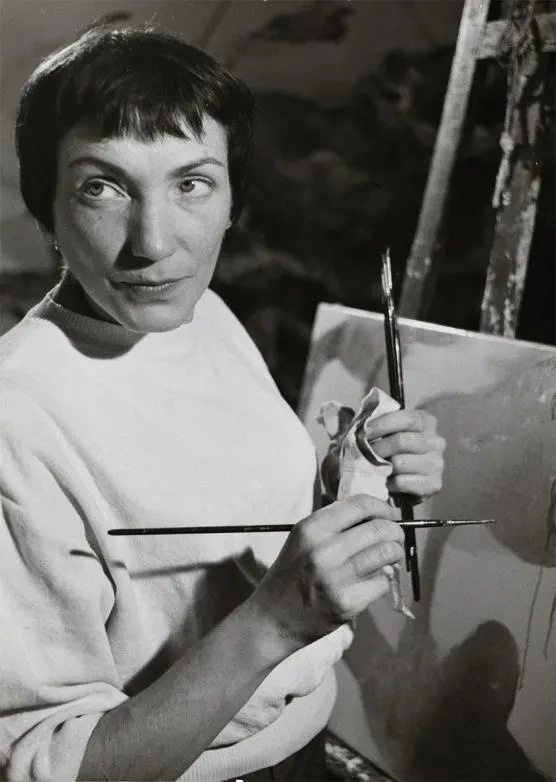
    German painter, draughtswoman and poet, known as Ursula, born on 17 November 1921 in Mittenwalde (Brandenburg), died on 9 April 1999 in Cologne.

    Life

    The daughter of Erwin Bluhm, Ursula worked at the Amerika-Haus in Frankfurt, where in 1949 she met the painter Bernard Schultze, whom she married in 1955. She began painting and writing in 1950, starting from the abstraction of Willi Baumeister, then found a personal path between naive painting, Art Brut and the Informel. For almost fifty years the couple shared the same studio, each following their own path.

    In 1954 she met Jean Dubuffet, with whom she formed a lasting friendship; her works entered the Collection de l’Art Brut in Lausanne. Self-taught, she nonetheless remains unclassifiable: in 1961, in the review La Brèche, André Breton linked her work to “the automatism of mediums”. She took part in documenta 6 in Kassel in 1977. Settled in Cologne with her husband, she lived there until her death.

    The work

    Ursula made ink drawings, large paintings and, from the late 1950s, assemblages in soft materials, notably fur, studded with drawing pins and razor blades; around 1970 she also created installations occupying space, then called “environments”. Her sinuous compositions, built up from patterns of dots and lines, are peopled with beings that dance, fly and metamorphose (Andrew Russeth, The New York Times, 16 May 2023).

    “The image is lodged in my mind and waits to be released into the outside world, onto the canvas.” (Ursula)

    Exhibitions and collections

    • Collection de l’Art Brut, Lausanne; Nationalgalerie, Berlin; Staatliche Kunstsammlungen, Dresden; Museum für Moderne Kunst, Frankfurt am Main; Musée national d’art moderne, Centre Pompidou, Paris.
    • documenta 6, Kassel, 1977.
    • Ursula: That’s Me. So What?, first major retrospective, Museum Ludwig, Cologne, 2023, curated by Stephan Diederich; the gallery lent five works.
    • It’s Me, Ursula! Paintings, Drawings, Boxes, with Yolande Fièvre, Galerie Les Yeux Fertiles, 14 March to 12 April 2025.
    • Monograph and catalogue raisonné: Evelyn Weiss, Ursula, Hirmer, 2007.
    Looking back at their exhibitions

  • Bernard Schultze

    Bernard Schultze

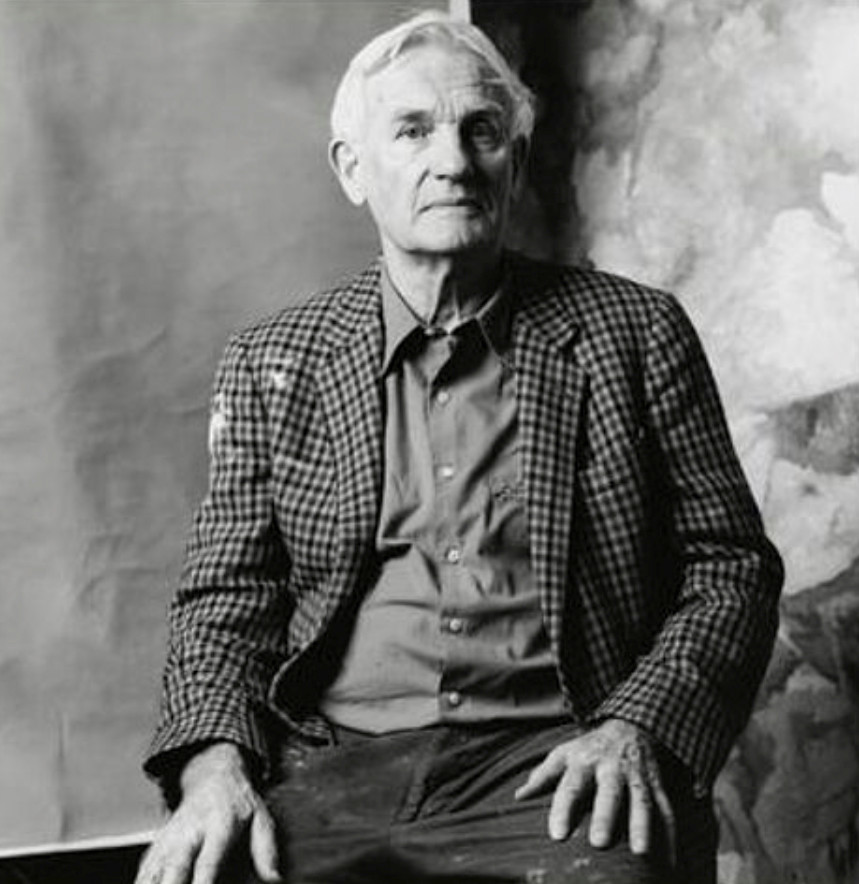
    German painter, draughtsman and sculptor, born on 31 May 1915 in Schneidemühl (now Piła, Poland), died on 14 April 2005 in Cologne.

    Life

    Bernard Schultze grew up in Berlin, where from 1934 to 1939 he studied at the Hochschule für Kunsterziehung, notably under Willy Jaeckel, before attending the Düsseldorf Academy of Fine Arts. Called up, he fought in Russia and Africa; all his earlier works were lost in the bombing of Berlin in 1944. After two years as a refugee in Flensburg, he settled in Frankfurt in 1947.

    In 1949 he met the painter Ursula Bluhm, whom he married in 1955; under the name Ursula, she was to share his studio for almost fifty years. A first stay in Paris in 1951, where he discovered André Masson, Wols and Jean-Paul Riopelle, proved decisive: he painted his first Informel canvases. In December 1952, in Frankfurt, he founded the Quadriga group with Karl Otto Götz, Otto Greis and Heinz Kreutz.

    The Galerie Daniel Cordier exhibited him in Paris in 1958 and 1962. In 1964 he installed a room of Migofs at documenta III in Kassel. He received the art prize of the City of Cologne (1969), joined the Academy of Arts in Berlin (1972) and won the Lovis Corinth Prize (1986). A major retrospective toured Germany in 1980 and 1981. From 1995 he divided his time between Paris and Cologne.

    The work

    At first gestural and Informel, nourished by André Breton’s interest in the unconscious, his painting took on relief: plastic elements from 1954, straw, rags and string around 1957. The works then left the stretcher and hung from frameworks of wire mesh or branches. From 1961 came the “Migofs”, assemblages and collages which he later developed in bronze and in coloured plastic figures.

    The 1970s brought oils and watercolours with zoomorphic figures and pastel-toned landscapes; the 1980s and 1990s, very large canvases (up to 15 m²), the “tabuskri” (1991), bronzes and etchings. The painted sculptures and mobiles shown at Chaumont-sur-Loire in 2023 play on fluorescent greens, oranges, reds and blues.

    Exhibitions and collections

    • Museum Ludwig (Cologne), Tate (London), Museum of Modern Art (New York); Villa Hammerschmidt (Bonn).
    • Works on paper, Albertina, Vienna, 1984.
    • Painted sculptures and mobiles, 2023 art season of the Domaine de Chaumont-sur-Loire.
    • The Galerie Les Yeux Fertiles 25th anniversary exhibition, 22 May to 19 June 2026, with a Sans titre (1957, mixed media on paper laid down on canvas, 42 x 60 cm, reproduced in B. Schultze, Hirmer, 1991, p. 246).

    Looking back at their exhibitions

  • Fabian Sanchez

    Peruvian sculptor, born in 1934 in Ayacucho (Peru), died on 9 April 2020. Based in Paris from 1965.

    Life

    Fabián Sánchez studied painting at the National School of Fine Arts in Lima and, from 1960 to 1968, took part in painting exhibitions in Peru and abroad. He settled in Paris in 1965 and worked there until the end of his life.

    In 1969 he abandoned the flat surface for three-dimensional works in wood, polyester and metal. A self-taught sculptor, he devoted himself to the study of morphological structures and the construction of automata. From 1971 his animated works were shown in exhibitions devoted to art and technology, Surrealist art and contemporary sculpture. He was honoured by the Académie des beaux-arts.

    The work

    It all began with a salvaged sewing machine: from sewing-machine parts, Sánchez built anthropomorphic forms driven by a “plastic-mechanical animation”. The object recalls the chance meeting of a sewing machine and an umbrella on a dissecting table, Lautréamont’s image which the Surrealists had made a watchword.

    “In every worn mechanism he sensed a story to tell. In every abandoned cog he perceived a beauty to reveal.” (Ludvina Sánchez, his daughter, 2024)

    Exhibitions and collections

    • Les Machines sentimentales, Centre Georges Pompidou, Paris; Énergie et mouvement, Reims; Mécanic’Art, Annecy; Robots en liberté, CNIT, La Défense.
    • FIAC, Grand Palais (1977, 1980, 1994); 4th Paris Biennale; 39th Venice Biennale; 4th Medellín Biennial.
    • Amérique latine et surréalisme, Museum Bochum; Surrealism: Two Private Eyes, Solomon R. Guggenheim Museum, New York.
    • Fabián Sánchez, Anthropomorphic Machines, posthumous exhibition, Galerie Les Yeux Fertiles, 6 December 2024 to 9 January 2025, third part of “At the Sources of Convulsive Beauty” (Paris surréaliste, with the Comité des galeries d’art and the Centre Pompidou), with Excelsior (c. 1977, animated sculpture, 158 x 53 x 80 cm) and Ingau Ingau (c. 1998, animated sound sculpture, 44 x 17 x 16 cm).
    • The Subversion of Images, Galerie Les Yeux Fertiles, January to March 2025.
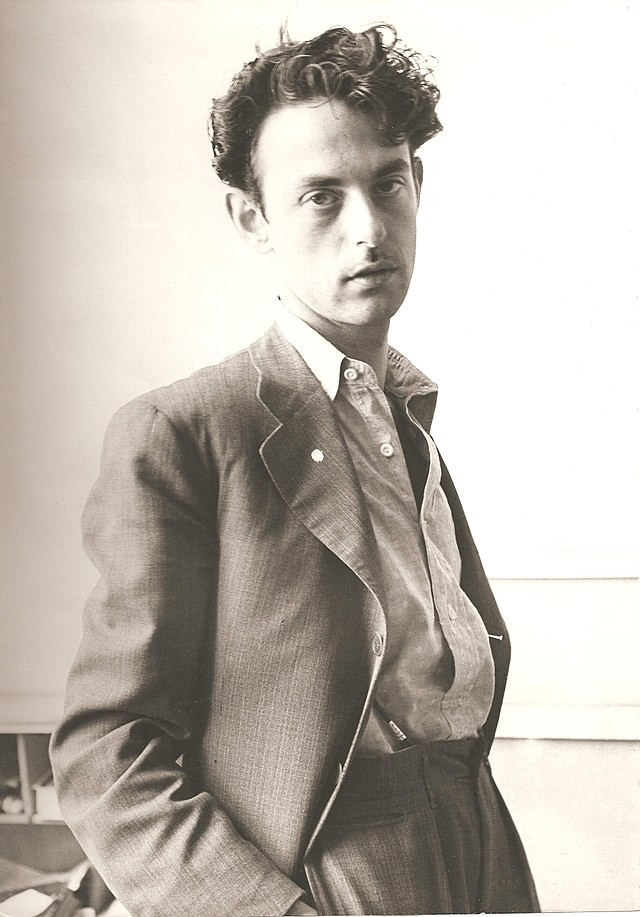
  • Bernard Saby

    Bernard Saby

    French painter and draughtsman, born in 1925 in Paris, died in 1975 in Paris.

    Life

    After preparatory classes in mathematics in Lyon, where he met Pierre Boulez, Bernard Saby turned to musical composition. With Boulez he studied under René Leibowitz and moved towards serial music. He wrote for the Revue du Domaine musical, whose cover he also designed, and in post-war Paris spent time with Pierre Joffroy, Armand Gatti and Henri Michaux.

    In 1956 Michaux published in Misérable Miracle a text by Saby, “L’image privilégiée”, an account of his experience of mescaline. Saby exhibited at the Galerie du Dragon (1955 to 1958, then 1974) and the Galerie de L’Œil (1963, with a text by Michel Butor, 1965, 1967), as well as at the Salon de Mai. In 1965 he was included in the exhibition “Le Surréalisme et l’art fantastique” at the 8th São Paulo Biennial.

    Eleven years after his death, in 1986, the Musée d’Art moderne de la Ville de Paris devoted a retrospective to him, curated by André Berne-Joffroy. Stéphane Gatti (died 2025) later did much to bring his work back to light.

    The work

    Oils, gouaches, charcoals, washes: Saby’s abstraction draws on his serial research, his experiences with mescaline and hashish, and his study of lichens and ancient Chinese texts. He told Alain Jouffroy he wanted to “build a trap for fascination” and to practise a “painting of the possible”.

    “One day a depth began to appear in my paintings, and I went into it, I threw myself headlong into exploring it.” (Bernard Saby, conversations with Michel Butor, 1963)

    Patrick Waldberg saw him as the most fearless “skirter of abysses” of his generation; Pierre Boulez, as a personality “torn between the forces of irrationality” and the need to order them. Claude Roy summed it up: “One must be Klee, Wols, Saby or nothing!”

    Exhibitions and collections

    • Musée national d’art moderne, Centre Pompidou: five drawings acquired in 2012 from the gallery’s exhibition devoted to his drawings, including a Sans titre (1951, charcoal on paper, 76 x 108 cm).
    • Musée d’Art moderne de la Ville de Paris: acquisitions at the time of the 1986 retrospective, then two more in 2008.
    • Château de Rochechouart, contemporary art centre of the Haute-Vienne (gift of J. de la Casinière); Musée de l’Hospice Saint-Roch, Issoudun (Zao Wou-ki donation); Musée Unterlinden, Colmar (Person donation).
    • Seventh exhibition at the Galerie Les Yeux Fertiles, 13 March to 18 April 2026, in tribute to the artist and to Stéphane Gatti, including a Sans titre (c. 1955, black casein gouache, 65 x 81 cm) and a Sans titre (1966, oil on canvas, 97 x 130 cm).
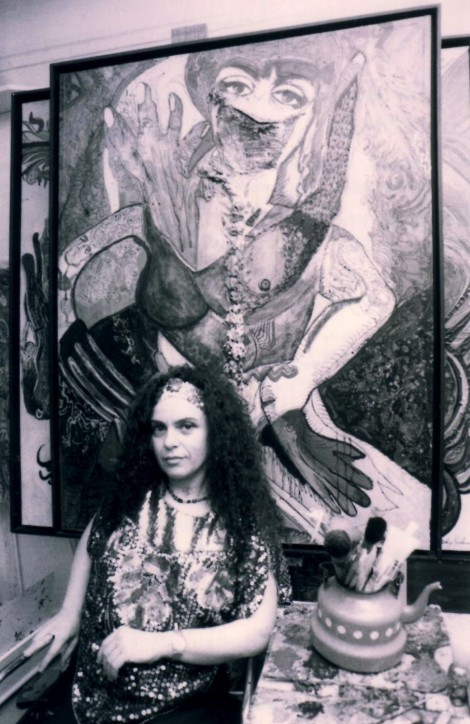
  • Ody Saban

    Ody Saban

    Visual artist born in 1953 in Istanbul, based in Paris since the late 1970s.

    Life

    Ody Saban was born into a Jewish family in Istanbul and grew up between Judaeo-Spanish (Ladino) and Turkish. In 1969 she left for Israel, where she studied at an art school in Haifa, then spent a long time in the United States before settling in Paris. There she attended classes at the École nationale supérieure des beaux-arts intermittently, while living mostly outside the official circuits.

    In 1983 she co-founded the artists’ collective Art Cloche, of which she was the only woman; after the eviction of the squat where it was based, she founded Art Cloche 2, an all-female group.

    The work

    Drawings, paintings, lithographs, performances, calligraphed or screen-printed poems and artists’ books make up her work. In it she brings back a sign of her own invention, the kus, an imaginary letter inspired by the vulva, and crosses feminism, mythology, the Kabbalah, eroticism and references to the Mother Goddess of the Neolithic site of Çatalhöyük. The review Raw Vision links her approach to Surrealist and Lacanian explorations of the unconscious.

    “Ody Saban’s latest series of paintings depicts large flying ships that connect her to revolutionary utopia and celebrate, in her own erotic and loving way, the theme of emigration. Ody Saban draws in Indian ink on silk paper and papers from the Far East, and practises watercolour and painting (oil and acrylic). These kinds of embroideries in warm colours recall miniatures, but also the cosmopolitan world with which she remains imbued. Her drawings evoke loving eroticism, and each sheet is filled with entanglements of bodies, faces and flowers, thus expressing female fullness. If she identifies with Lilith, the accursed woman, it is the better to fight misogyny, but also to reveal the magic that emanates from her world, charged with fantastic dreaminess.”

    Exhibitions and collections

    • Tender Gatherings of Women and Other Wonders, Galerie Les Yeux Fertiles, September 2022, with a talk led by Thomas Mordant on 22 September 2022.

    Looking back at their exhibitions

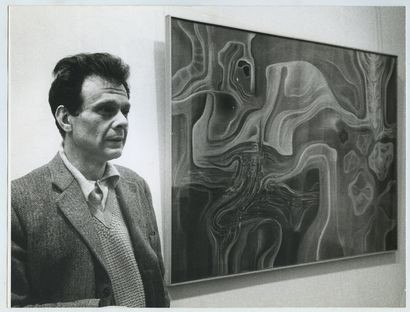
  • Endre Rozsda

    Endre Rozsda

    Hungarian-born painter, naturalised French, born on 18 November 1913 in Mohács (Hungary), died in September 1999 in Paris.

    Life

    Endre Rozsda trained at the independent school of the painter Vilmos Aba-Novák. His first solo exhibition, at the Tamás gallery in Budapest in 1936, attracted notice: the Museum of Fine Arts in Budapest bought a canvas from him. Yet a concert by Béla Bartók led him to question his Post-Impressionist manner.

    In 1938 he settled in Paris with the sculptor Lajos Barta and attended classes at the École du Louvre. He discovered Surrealism and became friends with Árpád Szenes, Maria Helena Vieira da Silva, Françoise Gilot, Max Ernst and Alberto Giacometti. The German occupation forced him to return to Budapest in 1943. After the war he was among the founders of the European School, a group dissolved in 1948 under the Communist regime; from then on he could only paint in secret, without exhibiting.

    After the crushing of the 1956 revolution he returned to France for good. In 1957 Simone Collinet’s gallery on place de Furstenberg gave him an exhibition whose catalogue was prefaced by André Breton. In 1961 he took part in the International Surrealist Exhibition organised by Breton at the Galleria Schwarz in Milan, and in 1964 he received the Copley Prize, awarded by a jury that included Hans Arp, Max Ernst, Man Ray and Marcel Duchamp. Naturalised French in 1970, in 1979 he set up his studio at the Bateau-Lavoir, where he worked until his death. He is buried in the Montmartre cemetery.

    The work

    Rozsda’s painting feeds on time and memory, as he himself wrote:

    “From my memories and from light I weave a dense fabric, and I gaze at it until it comes alive, returns my gaze and rises up before me. It is time that I want to seize, to order, to weigh. Time, the many-coloured and luminous oblivion; out of pleasures and sufferings, time makes its pearls. Around them I braid the ivy of my memories. I do not want to judge or to explain, but to understand. I lay my head on time and listen to what it tells me.” (Endre Rozsda)

    Exhibitions and collections

    • Museum of Fine Arts, Budapest (purchase in 1936).
    • Musée des Beaux-Arts de Dijon: Amour sacré, amour profane (1947).
    • Musée national d’art moderne, Centre Pompidou: Promenade d’Erzsébet (1946), selected in 2025 to enter the national collections.
    • Hungarian Museum of Photography: bequest of his photographs and negatives.
    • Retrospective at the Musée des Beaux-Arts de Quimper, June to November 2027.
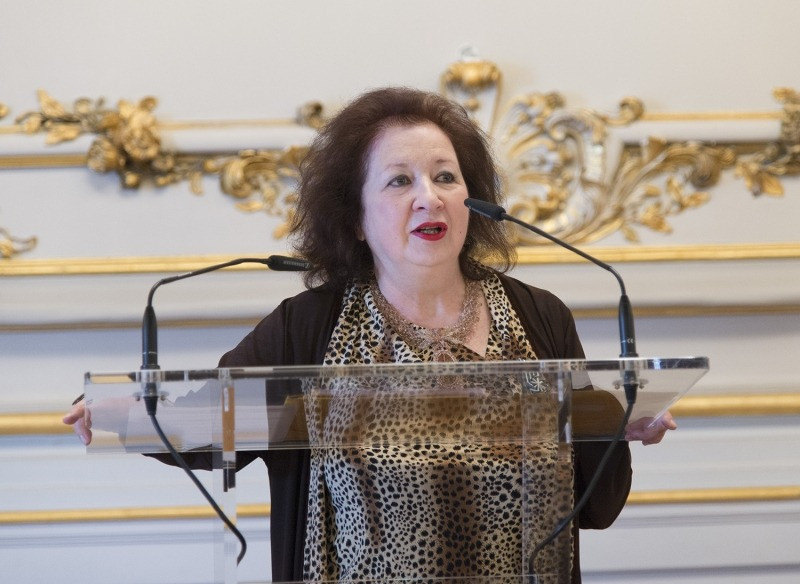
  • Josette Rispal

    Josette Rispal

    French sculptor and visual artist, born in 1946 in Aurillac (Cantal). She lives and works in Paris.

    Life

    The daughter of the gallerist Antonin Rispal and Joséphine Ajalbert, Josette Rispal grew up in Paris. Self-taught, she made her first light-masks in 1977. From 1980 to 1983 she lived in New York, where she made collages with Jean Dupuy. From 1981, with Henri-Hugues Lejeune, she lived partly in Venice, where she began working with glass and met Egidio Costantini.

    In 1983 the Salon national des arts presented her “house of Light Masks” at the Grand Palais. In 1992 she made her first stained-glass window with the Ateliers Loire; Les Jardiniers (1993), a sculpture in slab glass heightened with grisaille and enamel, was shown at the SAGA fair at the Grand Palais in 1993.

    She has received several commissions: Cascade de lumière, a 16-metre sculpture inaugurated on 15 October 1994 at the entrance to the Puymorens tunnel; a cross, a tabernacle, Stations of the Cross and candlesticks for the church of Saint-Pierre-du-Gros-Caillou in Paris; a sculpture in reinforced concrete and glass for the motorway linking Clermont-Ferrand to Périgueux.

    In 2005 a group of Art Nouveau furniture and objects from the Antonin Rispal gallery entered the Musée d’Orsay by donation, which published it in 2006 (Un ensemble Art nouveau : la donation Rispal). Josette Rispal is a Chevalier of the Légion d’honneur (2009) and an Officier des Arts et des Lettres (2014).

    The work

    Since 1975 Josette Rispal has worked in bronze, iron, terracotta and Murano glass. Light holds a central place in her work. Like her friend Chomo, whom she met in July 1984 in his Village d’Art préludien at Achères-la-Forêt, she seeks to turn discarded things into works of art. She became his accomplice and patron, and in 1991 organised an exhibition for him throughout Milly-la-Forêt.

    Exhibitions and collections

    • Obsidians in Motion, Galerie Les Yeux Fertiles, 2014.
    • Constellation Rispal, Galerie Les Yeux Fertiles, 1 December 2018 to 12 January 2019.
    • Josette Rispal and Chomo, Galerie Les Yeux Fertiles, in collaboration with Maître Aymeric Rouillac, 27 November 2025 to 8 January 2026, including Témoins de l’Humanité (2013-2015, brushed metal and Murano glass, from 160 to 207 cm).
  • Maurice Rapin

    Maurice Rapin

    French painter, poet and theorist, born in 1927 in Paris, died in 2000.

    Life

    Drawn to painting very early on, Maurice Rapin studied mathematics and biology to earn a living. An admirer of René Magritte, he kept up a long correspondence with him.

    He exhibited at L’Étoile scellée, the gallery run by André Breton, and belonged to the Surrealist group from 1952 to 1954; he distanced himself from it by rejecting Charles Estienne’s theses on Tachism, and broke with Breton in 1958. He contributed to the reviews Médium (1953), Temps mêlés (Verviers) and Gradiva (Brussels). Within the group he met the painter Mirabelle Dors, whom he married in 1954.

    With her, Jacqueline and Jean-Pierre Duprey, Clovis Trouille and Magritte, he founded the Tendance populaire surréaliste, which he led from 1957 to 1978: publications, exhibitions and political statements. The couple, settled in Vélizy-Villacoublay, published the movement’s collective works from 1971 to 1980. In 1978 Rapin created the Salon Figuration critique association with Mirabelle Dors and Yak Rivais. He is buried in the small Bercy cemetery in Paris.

    The work

    Painter and poet, Rapin pursued creative work and theoretical reflection side by side within his groups. Among his known works is a Sans titre of 1964, watercolour and felt-tip on paper (28 x 38 cm).

  • Gaston Puel

    Gaston Puel

    French poet and publisher, born on 6 March 1924 in Castres (Tarn), died in 2013.

    Life

    At the Liberation, Gaston Puel met Joë Bousquet, André Breton and René Char, with whom he corresponded. He took part in the activities of the Surrealist group from 1947, then drew away from it in 1950 while remaining on good terms with Breton.

    As much a typographer as a poet, he set up his own printing workshop and in 1961 founded the Éditions de La Fenêtre ardente. There he published Pierre Albert-Birot, Joë Bousquet, René Char, Pierre-André Benoit, Jean Grenier, Pierre Gabriel and Jean Malrieu, and launched a collection of artists’ books with contributions from Jean Arp, Max Ernst, Joan Miró, Jean Dubuffet, Raoul Ubac and Staritsky.

    In 1971, at the University of Maryland in the United States, he led two seminars, one devoted to René Char, the other to Claude Simon.

    The work

    Gaston Puel is the author of some thirty collections of poems and several essays, including a study of Lucien Becker published in 1962 in Seghers’ “Poètes d’aujourd’hui” series. His poetry received the Prix Max-Jacob. Part of his archive is held at the Bibliothèque littéraire Jacques Doucet in Paris.

  • Mario Prassinos

    Mario Prassinos

    Greek-born French painter and tapestry designer, born on 30 July 1916 in Constantinople, died on 23 October 1985.

    Life

    From a Greek family of Constantinople, Mario Prassinos came to France in 1922, after the expulsion of the Greeks from Turkey, with his parents and his sister Gisèle, the future writer. He studied at the Lycée Condorcet, the École des langues orientales and then the Faculty of Letters in Paris, rather than the Beaux-Arts; he spent a brief period in the studio of the painter Clément Serveau.

    It was through Gisèle Prassinos, whose poems appeared in reviews from 1934, notably Minotaure, that he came close to the Surrealists. He attended the meetings at the café on place Blanche and met Paul Éluard, André Breton, Salvador Dalí, Man Ray, Max Ernst and Marcel Duchamp. He painted in a Surrealist vein from 1932 to 1936 (La Bataille de Fontenoy, 1937; Guerrier grenouille, 1938) and first exhibited in 1938, at the Galerie Billiet-Pierre Vorms.

    A volunteer in 1940, seriously wounded, he received the Croix de guerre, then helped Allied soldiers leave occupied France. He became friends with Raymond Queneau, who introduced him at Gallimard, and with Albert Camus. Naturalised French in 1949, in 1951 he settled in Eygalières, in the Alpilles.

    The work

    From 1949 Prassinos also devoted himself to tapestry (Les Troupeaux, 1949); his first pieces, shown at a reception at Gallimard, made his name. He worked for the stage, notably the sets for the Macbeth staged by Jean Vilar in Avignon in 1954.

    A non-figurative painter at the end of the 1950s (Meltem, 1959, oil on canvas, 260 x 190 cm), he also made portraits (Bessie Smith, his grandfather Prétextat) and landscapes of the Alpilles, such as the series of inks Colline à Eygalières (1976).

    Exhibitions and collections

    • Mario Prassinos donation to the State, shown since 1986 in the chapel of Notre-Dame-de-Pitié in Saint-Rémy-de-Provence.
    • Works in the collections of the Musée national d’art moderne (Paris), the Stedelijk Museum (Amsterdam), the Kunsthalle Bremen, the Victoria and Albert Museum (London), the Museum of Modern Art and the Metropolitan Museum of Art (New York), and the Art Institute of Chicago.
    • Chevalier of the Légion d’honneur (1966), Officier des Arts et des Lettres (1980).

    Looking back at their exhibitions