Author: admin

  • Virginia Tentindo

    Virginia Tentindo

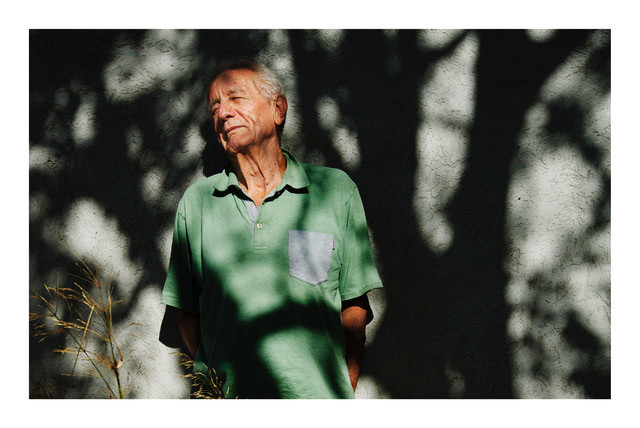
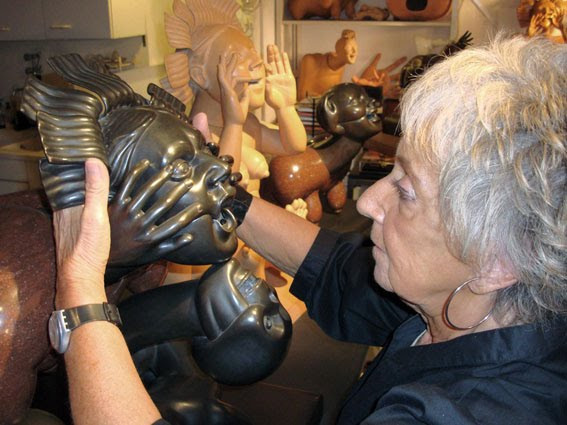
    Argentine sculptor based in France, born in 1931 in Buenos Aires.

    I met Virginia Tentindo in 1997, when I joined the editorial board of the review Supérieur Inconnu, of which she was a member. I remember, on my first visit to her studio, in the company of Sarane Alexandrian, being struck by the convulsive beauty of this art, in direct contact with the Marvellous. Virginia always welcomed us with rare generosity and a thoroughly Argentine hospitality, like a “priestess of Tierra del Fuego” in her dreamlike sanctuary of terracottas, bronzes and marbles, her fauna and flora, all of it born of a most fertile imagination. In 1986 the Surrealist writer José Pierre described this studio as “the factory of the gods”. Virginia Tentindo’s sculptures, at once sensual and terrible, combine feline heads with the bodies of men and women, whose legs merge into a single one, long and flexible as a snake. These “humanimals”, as Sarane Alexandrian calls them, look like carnivorous plants. They are not hybrids of the kind made by artists given to easy unusual effects, for Virginia’s originality lies precisely in not making arbitrary assemblages. Julio Cortázar could thus write (in Voyage vers un temps pluriel) that with Virginia Tentindo “everything is or may be mandrake, Gorgon, hermaphrodite, phallic rite, hierogamy and why not epiphany”. For nothing is given on a single level, and the multiplicity of essences is, in several of her sculptures, like an invitation to come closer and touch; one then discovers that these pieces neither began nor ended at their visual outline, but that touch is there to open a second, low door. Tentindo’s art is never appearance but always interiority. It is as though, Cortázar writes again, “nature then questions its persistent monotony and seeks through art something more than the imitation Oscar Wilde assigns to it, a renewal capable of tearing us away from genetic routine. There, everything is substitution, completion and opening towards new constellations of forms.”

    Life

    Virginia Tentindo exhibited her first sculptures at sixteen and opened her own gallery in Buenos Aires at eighteen. She took part in the activities of the Buenos Aires Surrealist group and spent time with the Argentine Surrealists Juan Andralis, Julio Silva and Víctor Chab, disciples of the painter Juan Batlle Planas.

    Having settled in Paris in 1953, she joined the Paris Surrealist group and worked as a layout artist, graphic designer and book illustrator. For the cinema she recreated the Coronation of Napoleon in figurines for Abel Gance’s Austerlitz and made the doll burned by the heroine of Nelly Kaplan’s La Fiancée du pirate.

    She returned fully to sculpture in the 1970s and has since worked between her studios at the Bateau-Lavoir in Montmartre and in Pietrasanta, Tuscany. In 2011 a conference, “Chimères surréalistes”, was devoted to her in Florence, and Fabrice Maze dedicated the film Minimes innocences to her.

    The work

    Bronze, terracotta, ceramics, marble: her sculptures, sometimes large, mobile or transformable, stage myths, gods, demons and chimeras, under the sign of eroticism and dream. She also creates jewellery, made between 1978 and 1995 by lost-wax casting and reproducing her large pieces in miniature, as well as book-objects. Her Mandragore (1983) served as the trophy of the 36th Cannes Film Festival.

    El fuego! That is Virginia Tentindo: the tango of the Fire of life and passion; the Fire of desire and poetry; the Fire of metamorphosis and that of the alchemist who brings forth from his Athanor emotional gold in terracotta: an October Cat or a Lioness of the Earth-Moon days.

    Exhibitions and collections

    • Exhibitions in Bochum (1993), at the opening of the Musée de l’Érotisme in Paris (1997), in Venice (2006) and in Tokyo (2016), among others.
    • Nouveau Musée National de Monaco: Ci-gît le verbe (2020, sculpture) and Pour que l’histoire recommence (1980, drawing), acquired in 2022 after the exhibition Monaco-Alexandrie, le grand détour; jewellery shown at the Joya fair, Monte Carlo, 13 to 16 November 2025.
    • The Galerie Les Yeux Fertiles 25th anniversary exhibition, 22 May to 19 June 2026.
    Looking back at their exhibitions

  • Claude Tarnaud

    Claude Tarnaud

    French poet and painter, born on 27 May 1922 in Maisons-Laffitte (Yvelines), died on 3 June 1991 in Avignon.

    Life

    During the Second World War, Claude Tarnaud discovered Surrealism and jazz, which helped him break free from a stifling mother. He then wrote the Journal du scorpion, a manuscript now lost. In 1946 he co-founded the review La Révolution la nuit with Yves Bonnefoy and Jaroslav Serpan, soon distanced himself from it, and met André Breton. He was then living in Paris with Claudine Merlin, known as Eaudine.

    A member of the Surrealist group from 1946 to 1948, close to Victor Brauner and Stanislas Rodanski, he took part in the 1947 International Surrealist Exhibition and in 1948 co-founded the review Néon with Rodanski, Sarane Alexandrian, Jindřich Heisler and Véra Hérold. He left the group the same year, during the Matta-Brauner affair, disagreeing with the expulsion of Roberto Matta.

    In 1951 he married Henriette de Champrel, known as Gibbsy, who would illustrate several of his texts, and settled in Geneva as a translator for the UN. His postings then took him to Mogadishu (1953-1959), Addis Ababa, New Delhi and New York, where he lived from 1959 to 1962; there in 1961, with Marcel Duchamp, he organised the exhibition Surrealist Intrusion in the Enchanters’ Domain at the D’Arcy Gallery, and in 1966 he helped bring about the Chicago Surrealist group, around Franklin and Penelope Rosemont. From 1953 to 1966 he took part in Édouard Jaguer’s Phases movement; with François Di Dio he edited the review Positions. He left the UN and in 1969 settled in Salignan, near Apt.

    The work

    A poet, Tarnaud was also a visual artist and maker of picture-objects. His first book, The Whiteclad Gambler, was self-published in Geneva in 1952. It was followed by, among others, La Forme réfléchie (Le Soleil noir, 1954, preface by Ghérasim Luca), Orpalée (1965, lithographs by Jean-Pierre Vielfaure), Les Cendres de l’eau (1974, drawings by Jacques Lacomblez) and, posthumously, L’Aventure de la Marie-Jeanne ou le Journal indien (2000, drawings by Jorge Camacho). He contributed to the reviews Edda, La Brèche, Phases and Supérieur Inconnu.

    Exhibitions and collections

    • André Breton archive: manuscript L’Iris tournoyant (16-17 February 1948) and letters from Tarnaud to Breton.
    • Donc te voilà nyctalope !, retrospective, Paris, 2009.
    • Surrealist Prelude, Galerie Les Yeux Fertiles, 7 June to 6 July 2024.

    Looking back at their exhibitions

  • Jan Švankmajer

    Jan Švankmajer

    Czech animation filmmaker and visual artist, born on 4 September 1934 in Prague.

    Life

    Jan Švankmajer studied stage design at the Higher School of Applied Arts in Prague (1950-1954), then directing and stage design in the puppetry department of the Theatre Faculty of the Academy of Performing Arts (1954-1958). After the Theatre of Masks, around 1962 he joined the Laterna Magika, where until 1964 he ran the black-light theatre company. His first film, The Last Trick, dates from 1964.

    He married Eva Dvořáková, the painter Eva Švankmajerová, with whom in 1970 he joined the Czechoslovak Surrealist group led by Vratislav Effenberger. From 1972 to 1979 he was banned from filming for refusing to give way over the editing of The Castle of Otranto, and worked at the Barrandov studios as a designer and special-effects maker. In 1991, with Jaromír Kallista, he founded the Athanor studio in a former cinema in Knovíz. Eva Švankmajerová died in 2005, shortly before the release of Lunacy.

    The work

    After many short films, including Dimensions of Dialogue, awarded the Golden Bear in Berlin and the Grand Prix at Annecy in 1983, he made his feature films: Alice (1988), Faust (1994), Conspirators of Pleasure (1996), Little Otik (2000), Lunacy (2005), Surviving Life (2010) and Insect (2018).

    In his visual work, collage has been central since the 1960s (the Svank-meyers Bilderlexikon, begun in the early 1970s). From 1974 he carried out tactile experiments, which he summed up in 1983 in a book circulated in samizdat, Touching and Imagination; tactile objects became one of the major parts of his work.

    Exhibitions and collections

    • Crystal Globe of the Karlovy Vary festival for his contribution to world cinema (2009).
    • The Subversion of Images, Galerie Les Yeux Fertiles, January to March 2025, with a Sans titre (2009, collage made from material for the film Surviving Life, 45 x 54 cm).

    Looking back at their exhibitions

  • Max Walter Svanberg

    Max Walter Svanberg

    Swedish painter, printmaker and illustrator, born in February 1912 in Malmö, died on 28 May 1994.

    Life

    Max Walter Svanberg first dreamed of becoming a violin maker. In 1929 he joined the advertising studio of the Palladium cinema in Malmö, attended the Skånska Målarskolan in 1931 and 1932, then, having been turned down by the Royal Academy of Fine Arts in Stockholm in 1933, Otte Sköld’s painting school. Struck by polio in the autumn of 1934, he first exhibited in 1935, at Ekström’s in Stockholm. In 1940 he married Gunni Sjöström, his companion since 1931, who died in 1982.

    In 1943 he exhibited with the Minotaur group at Malmö town hall, then founded the Imaginists group (Imaginisterna) with C. O. Hultén and Anders Österlin, for which he wrote declarations in 1949 and 1950. André Breton discovered his work in 1953: in 1954 issue no. 3 of the review Médium, which he illustrated, opened with Breton’s “Hommage à Max Walter Svanberg”, and in 1955 the Galerie À l’Étoile scellée exhibited him with a preface by Breton. He appeared in L’Art magique (1957), took part in the International Surrealist Exhibitions in Paris (Galerie Daniel Cordier, 1959), New York (1960) and Milan (1961), and only met Breton in 1964.

    He represented Sweden at the 8th São Paulo Biennial in 1965. He received the Prince Eugen Medal (1965), joined the Royal Swedish Academy of Fine Arts (1968) and received the Légion d’honneur in 1969.

    The work

    The female body, intermingled with plant and animal elements, is the central motif of his work. A painter, notably in gouache, he made prints from 1945, published an album of eight lithographs in 1950 and practised collage (a suite exhibited in 1964). He illustrated Rimbaud’s Illuminations (1958) and in 1970 designed the sets and costumes for Molière’s Le Misanthrope at the Royal Dramatic Theatre in Stockholm.

    Exhibitions and collections

    • Moderna Museet and Nationalmuseum (Stockholm), Malmö Museum, Göteborgs Konstmuseum; Tate Modern and British Museum (London); Museum of Modern Art (New York); National Gallery of Art (Washington).
    • Retrospective at the Göteborgs Konsthall (1967); memorial exhibitions at the Nationalmuseum and the Malmö Konstmuseum (1995); centenary in 2012.
    • Surrealist Prelude, Galerie Les Yeux Fertiles, 7 June to 6 July 2024, with a Sans titre (1960, gouache on paper, 45 x 37.5 cm).

    Looking back at their exhibitions

  • Ugo Sterpini

    Ugo Sterpini

    Italian painter, born in 1927 in Rome, died in October 2000 in Cavriago (Reggio Emilia).

    Life

    Trained at the Accademia del Nudo, Ugo Sterpini drew close to the abstract research of the Forma 1 group and took part in the international exhibitions of the Art Club of Rome. In 1951 he was included in Arte astratta e concreta in Italia at the Galleria Nazionale d’Arte Moderna in Rome, then joined the Origine group. He exhibited at the 8th Rome Quadriennale (1959) and, in 1962, at the Galleria La Nuova Pesa, in a solo exhibition conceived by Enrico Crispolti.

    André Breton welcomed him into the Surrealist movement. In 1964, with Fabio De Sanctis, he founded the Officina Undici, which produced Surrealist furniture until 1966. He also worked for the theatre in Rome and for cinema, notably with Elio Petri (A Quiet Place in the Country, 1968; Todo modo). In 1977, in Reggio Emilia, he came into contact with Fluxus through Rosanna Chiessi.

    The work

    After the cycle of Iterazioni cromatiche of the early 1950s, which broke with post-Cubist abstraction, then the Liste di simbolismi and the Sabbie (1955), Sterpini returned in 1959 to a highly material figuration. Then came the cycles of the Giardini and the Fantasia femminile (1966). From 1967 assemblage dominated (plastic objects, paintings in relief, drawings), and a character inspired by Max Ernst, the Pesce mummia (mummy fish), occupied his work until the end of the 1970s. The 1980s were marked by a cycle devoted to Pulcinella.

    Exhibitions and collections

    • CSAC, Centre for Communication Studies and Archives, University of Parma: gift of the artist (1998) and his heirs (2002).
    • Surrealist Prelude, Galerie Les Yeux Fertiles, 7 June to 6 July 2024.

    Looking back at their exhibitions

  • Sol (Solange Lantier)

    Self-taught French draughtswoman, Solange Lantier, known as Sol, whose known work dates from the second half of the 1970s.

    Life

    With her husband, Solange Lantier ran in turn a restaurant, a tobacconist’s and a general store. When he was struck by paralysis, she devoted herself to him for many years.

    Her drawings were shown several times at the Atelier Jacob, and in 1978 she took part in the exhibition Les Singuliers de l’art at the Musée d’Art moderne de la Ville de Paris. Jean Dubuffet acquired several of her drawings for the Collection de l’Art Brut. An article was devoted to her in the Fascicule de l’Art Brut no. 10.

    The work

    Sol combined dry pastel, coloured pencil, ink, wash and varnish, on cardboard or paper. Her titles, sometimes inscribed on the sheet, set the tone: Un cauchemar (1978), Personnages sur fond bleu (1979), Les autres se reposent, moi je travaille, Où sont-ils.

    Exhibitions and collections

    • Collection de l’Art Brut, Lausanne.
    • LaM, Villeneuve-d’Ascq: some twenty drawings dated 1976 to 1980, L’Aracine donation (1999), including Un cauchemar (1978, dry pastel, wash, ink and varnish on laid paper, 50 x 32.6 cm) and Personnages sur fond bleu (1979, dry pastel, coloured pencil, ink and varnish on cardboard, 65 x 50 cm).
    • Les Singuliers de l’art, Musée d’Art moderne de la Ville de Paris, 1978.
  • Lewis Smith

    Lewis Smith

    Self-taught American draughtsman, born in 1907 in Ohio (United States), died in 1998.

    Life

    Lewis Smith began drawing in 1920. His father, Howard E. Smith, worked for a railroad company, which gave him a pass to travel free by train: he criss-crossed Ohio and the rest of the country, recording what he saw in notebooks and drawings. Four small diaries, kept from 1904 to 1941 (the oldest by his father, the other three by him), are held in the archives of the American Folk Art Museum in New York.

    He lived and drew in solitude, to the point of painting his figures even on the walls of his house, barn and outbuildings, in rural Ohio. He did not show his work in his lifetime; New York’s American Primitive Gallery made it known after his death, at the end of the 1990s.

    The work

    Smith drew in graphite and coloured pencils on salvaged supports: grocery bags, flattened cardboard, biscuit boxes, often on both sides and sometimes incorporating the printed brand names. He depicted locomotives and railway details, alleys, counters and diners, and above all tall, muscular women, as boxers or wrestlers, inspired by the sporting contests he attended on his travels. Passionate about current affairs, he also collected newspapers, objects, documents and photographs relating to the American railroad.

    Exhibitions and collections

    • Collection de l’Art Brut, Lausanne (notably School to school and Free 4 all, room 123); 3rd Art Brut Biennial, Corps, 17 November 2017 to 29 April 2018.
    • American Folk Art Museum, New York (archive: Lewis Smith’s diaries).
  • Sir L

    Sir L

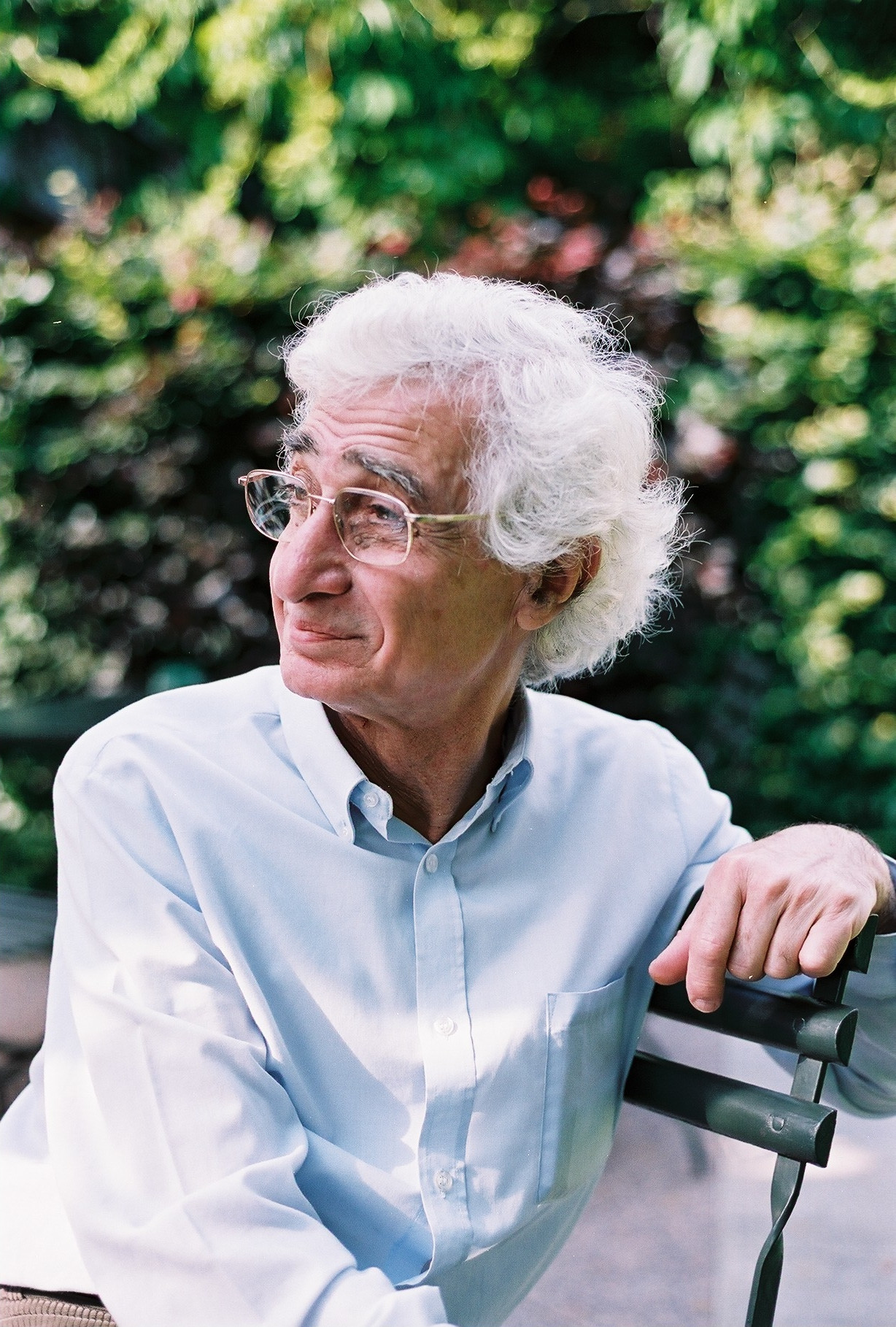
    French painter, draughtsman, pastellist and lithographer of Armenian origin, born Levon Aradian in 1932 in Beirut, died in Paris.

    Life

    Sir L. was born into an Armenian family in Beirut. His father, a survivor of the Armenian genocide, had enlisted in 1915 in the French Army of the Orient; his mother was born in New York. Taught by the Jesuits at the French lycée in Beirut, he came to Paris in 1951 to study at the Sorbonne.

    In the 1950s he moved in the literary and artistic circles of Saint-Germain-des-Prés, walked across France and Europe, took odd jobs and posed as a model at the École des beaux-arts. He passed through the studios of Jean Lurçat, Fernand Léger, Ossip Zadkine, Chana Orloff and Germaine Richier, as well as the Académie Julian. In 1972 he devoted himself entirely to drawing and painting.

    He exhibited at the Salon d’automne, Comparaisons, the Salon de mai, Figuration critique and the Salon de Montrouge. In the 1970s, at the Salon de la Jeune Peinture, he brought together the groups “La Peinture pour qui ?”, “Imaginaires de peintres et imageries populaires”, “Crises” and “Classicismes et Réalismes”. In the 1980s he gathered some fifty figurative painters around the “New Classicism” (Nouveau Classicisme).

    In 1990 he organised Couleurs de la vie, an exhibition of a hundred international artists in memory of the victims of the Armenian genocide and the genocides of the twentieth century, shown at the Bibliothèque nationale de France and then in Europe, notably in Madrid and at the National Gallery in Prague, at the invitation of Václav Havel.

    The work

    The New Classicism championed by Sir L. advocates a popular figurative painting, accessible to all, founded on feelings and fundamental emotions. His work celebrates the beauty of the world, of women and of nature, and holds art to be an antidote to contemporary horrors. He also designed artist’s rugs, shown at the 2005 World Expo in Aichi (Japan).

    Exhibitions and collections

    • More than three hundred group exhibitions and some thirty solo exhibitions.
    • Bibliothèque nationale de France; Musée de l’Érotisme, Paris; Musée Saint-Vic, Saint-Amand-Montrond.
  • Jean-Claude Silbermann

    Jean-Claude Silbermann

    French poet, painter and sculptor, born in 1935 in Boulogne-Billancourt.

    Life

    At school, a philosophy teacher introduced Jean-Claude Silbermann to psychoanalysis and Surrealism; at around eighteen, reading Apollinaire’s Alcools made him decide to become a poet. He published his first collection in 1959 and took part in the activities of the Surrealist group until it dissolved in 1969. He co-edited the review Bief (1958-1960) and contributed to La Brèche and L’Archibras. He signed the Declaration of the 121 (1960), the manifesto Pour un demain joueur (1967) and the Prague Platform (1968).

    In 1962, on the advice of the painter Pierre Jaouën, he took up drawing and made his first “signs” (enseignes) in cut-out wood. His first exhibition, Enseignes sournoises (Sly Signs), took place in 1964 at the Galerie Mona Lisa in Paris, with a preface by André Breton. In 1965 he took part in L’Écart absolu, the eleventh International Surrealist Exhibition, at the Galerie de L’Œil, with Sauve qui peut, and designed the exhibition’s central totem, Le Consommateur.

    He then took part in the activities of the Phases movement. He has taught at several national art schools (Bourges, Nice, Limoges, Cergy-Pontoise). His works have been shown notably at MAMCO in Geneva, in Prague, Stockholm and Brest, and at the Centre Pompidou.

    The work

    Poetry, drawing in ink or pencil, songs, prints, objects: Silbermann’s work moves between disciplines. His sly signs are, according to Alain Joubert, images painted “automatically”, cut out of wood and seemingly floating on the wall. Dream and the unconscious remain its guiding thread.

    “Poetic evidence stands at the crossroads of three roads: poetry, love, freedom. There stands Silbermann.” (André Breton)

    Exhibitions and collections

    • La Voyante (1961, oil on canvas, 46 x 61 cm; formerly in the collections of André Breton and Arturo Schwarz), lent by the gallery to the exhibition Surréalisme at the Centre Pompidou (4 September 2024 to 13 January 2025), acquired in 2025 by the Musée national d’art moderne.
    • Hold-Up !, La Banque, musée des Cultures et du Paysage, Hyères, 25 March to 4 June 2023.

    Looking back at their exhibitions

  • Christine Sefolosha

    Christine Sefolosha

    Swiss painter and printmaker, born in 1955 in the Montreux area (Vaud).

    Life

    Born into a Swiss German family settled near Montreux, Christine Sefolosha drew from childhood, often at night during chronic bouts of insomnia. A horsewoman, she competed in shows and developed a deep affinity with animals; it was through horses that she met a veterinarian specialising in equine medicine.

    In 1976, at twenty-one, she followed him to South Africa, his native country, and settled in Johannesburg. There she took up drawing and painting again and, by assisting her husband, learned the anatomy of the animals he treated. In 1982 she divorced and married the South African musician Patrick Sefolosha; faced with the apartheid laws forbidding relationships between Black and white people, the couple left the country for Switzerland, where two sons were born, among them the basketball player Thabo Sefolosha. After her parents’ death, settled in her childhood home, she began painting again from her memories of Africa. In 2000 she founded Quai 1-L’Atelier in the former waiting room of Montreux station.

    The work

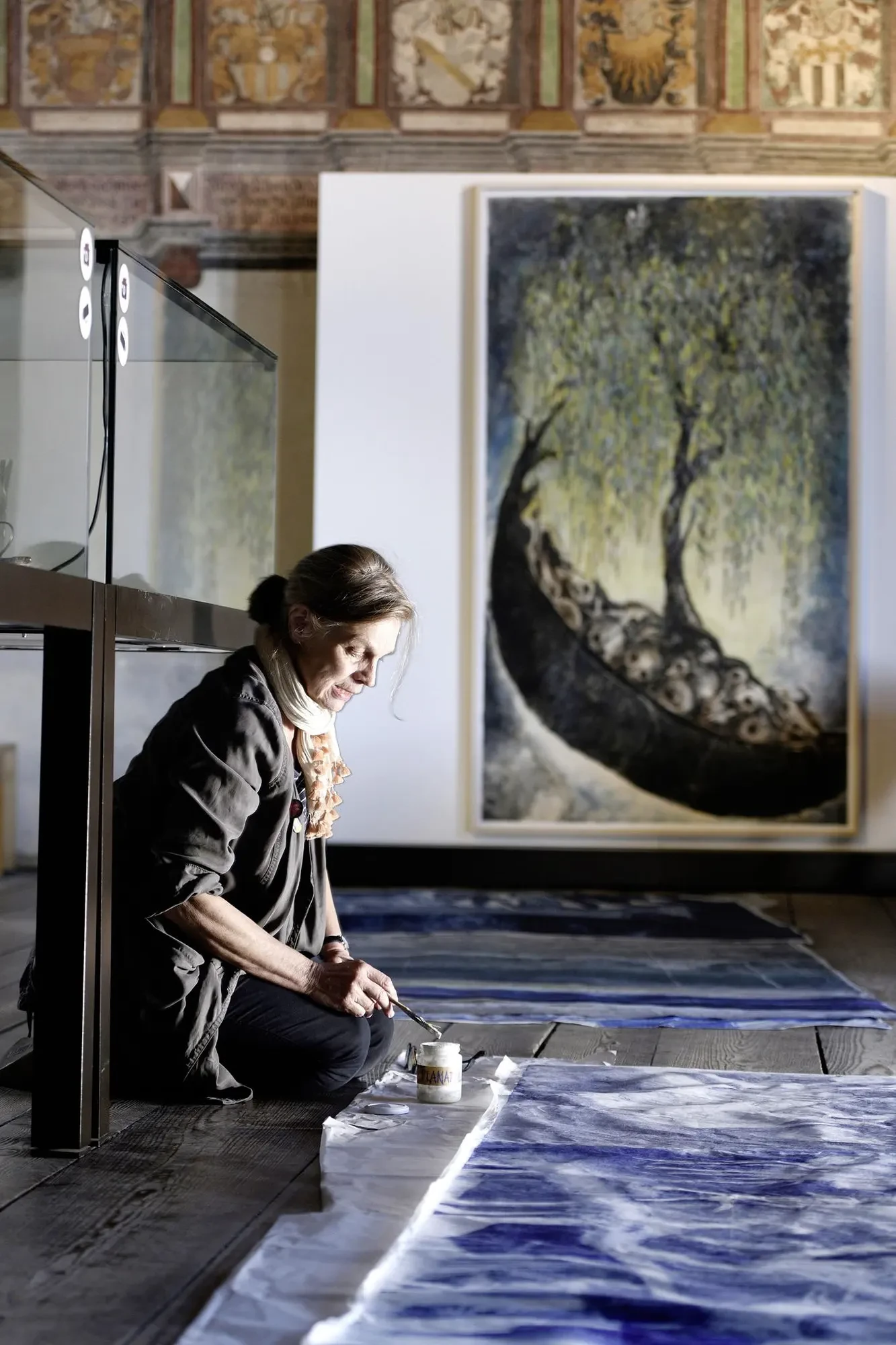
    As much a printmaker as a painter, Christine Sefolosha often works on the floor, spreading dark pigments mixed with earth and tar by hand over large canvases or heavy papers. She also practises monotype, notably in the studio of the printer Raymond Meyer in Lutry. The totemic animal dominates her work.

    “An atmosphere emerges from them that hovers between gentleness and terror, an atmosphere arising from the deep layers of a sensibility that stages visions of two opposing continents.” (Roger Cardinal)

    Exhibitions and collections

    • Les Yeux ouverts, Halle Saint-Pierre, Paris, 2007; Vaisseaux fantômes (2010-2011) and Waldszenen (2014), Galerie Polad-Hardouin, Paris.
    • Larguer les amarres, Château de Chillon, 29 August to 24 November 2019.
    • L’Étoffe des rêves, Halle Saint-Pierre, Paris, until August 2026.
    • Musée Jenisch and Nestlé Collection, Vevey; American Folk Art Museum, New York (Audrey B. Heckler collection).
    • Publications: Timeless Wanderer (2015, preface by Roger Cardinal); The Hidden Art (SkiraRizzoli, texts by Colin Rhodes, Valérie Rousseau and Jane Kallir).