Author: admin

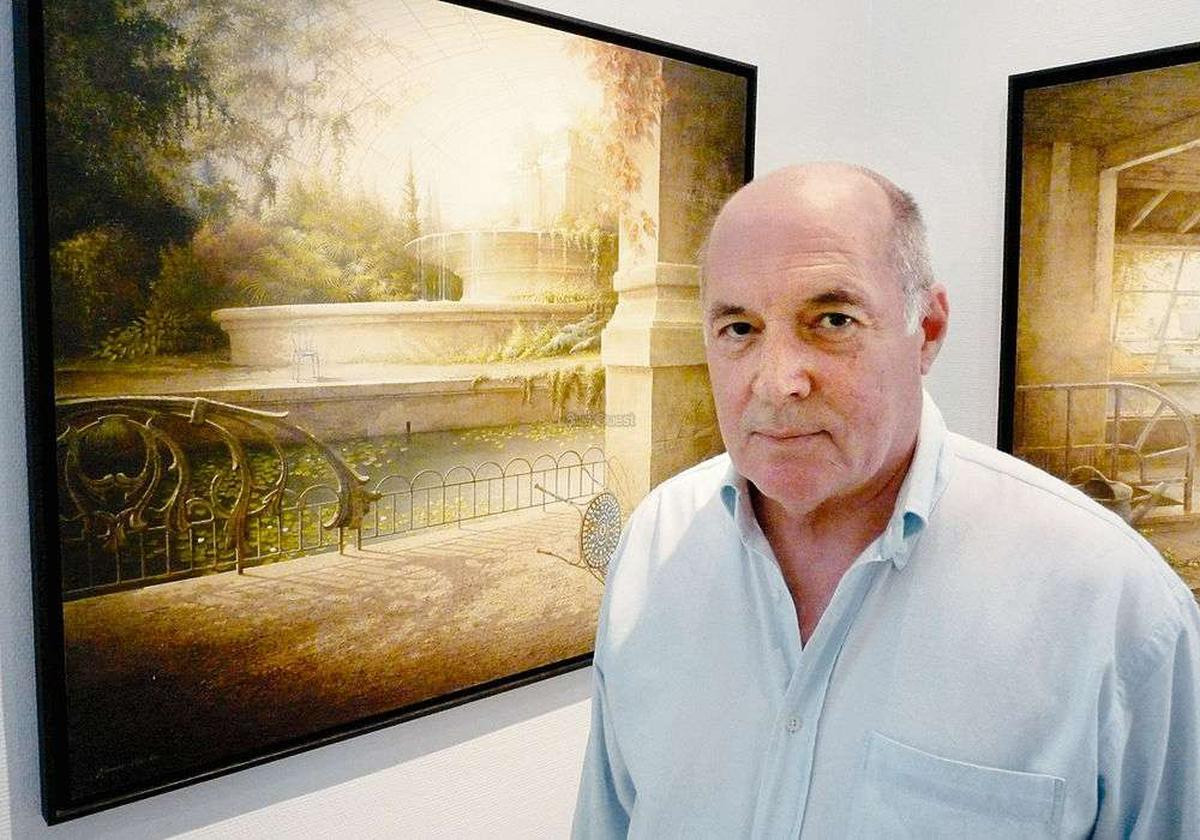
  • Jean-Marie Poumeyrol

    Jean-Marie Poumeyrol

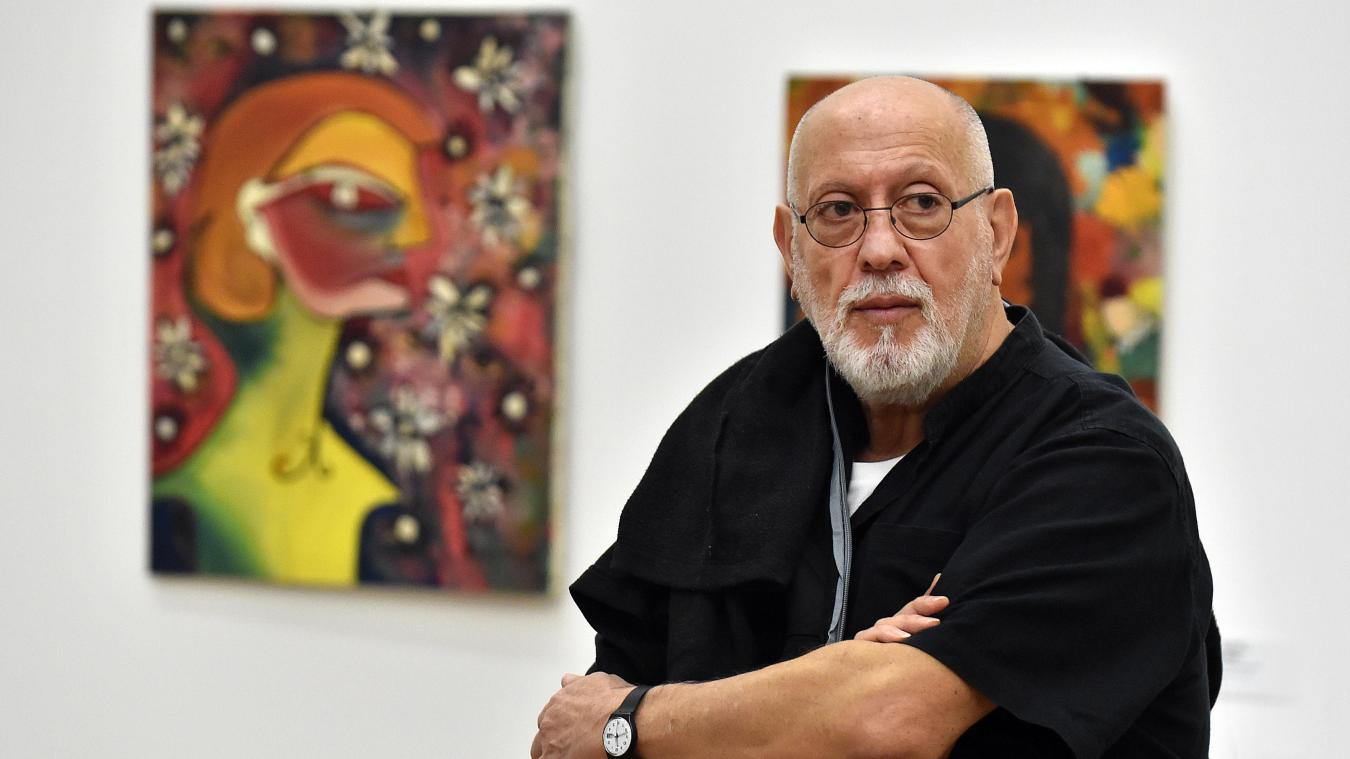
    French painter, born in 1946 in Libourne (Gironde). He lives in Pau.

    Life

    An observant child, Jean-Marie Poumeyrol took private drawing lessons at his mother’s instigation. At sixteen he entered the École des beaux-arts in Bordeaux, as its youngest pupil at the time; he graduated in painting in 1968 and in printmaking in 1969.

    His paintings have been acquired by national museums. He has also designed theatre sets: Faust I et II and Ghetto at the Théâtre national de Saint-Étienne, Les apparences sont trompeuses at the Théâtre du Rond-Point in Paris.

    The work

    Jean-Marie Poumeyrol is associated with Fantastic Realism and visionary painting. His first works, in the 1970s, are erotic and marked by Surrealism.

    He went on to paint enclosed, aged, timeless interiors peopled with enigmatic objects. Gradually his gaze turned outwards: abandoned military or industrial architecture.

    He works in acrylic on panel or paper, with a smooth, meticulous, slowly elaborated finish. His paintings are composed in the studio, from memory and imagination, never from life: he speaks of “transfigured reality”. Locks, bunkers of the Atlantic Wall, the Bordeaux submarine base, bathing establishments, forts, basins: nature reclaims human constructions, a theme he calls the “imprisoned landscape”. Memory, time, precariousness and vanity run through the whole.

    Publications

    • Dessins de Jean-Marie Poumeyrol, Éric Losfeld; monographs published by Ramsay and Natiris.
    • Michèle Heng, Poumeyrol, Atlantica, 2001; Poumeyrol, Marges, Atlantica, 2009.
    • Poumeyrol. Réalité transfigurée, Panorama Museum, 2015.
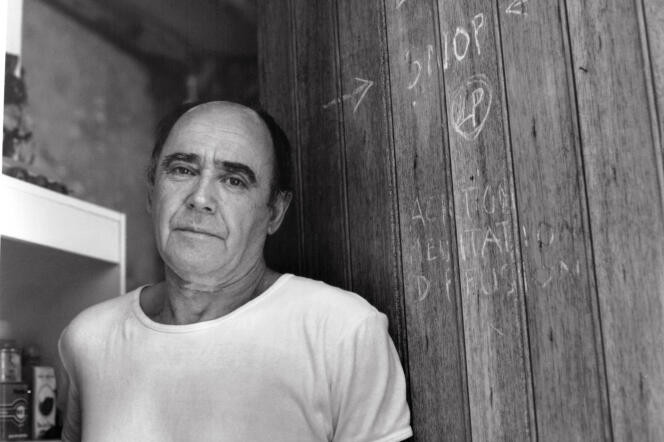
  • Manou Pouderoux

    Looking back at their exhibitions

  • Louis Pons

    Louis Pons

    French draughtsman and maker of assemblages, born on 30 April 1927 in Marseille, died on 12 January 2021.

    Life

    After the École des Chartreux in Marseille, Louis Pons trained as a fitter at the École des métiers d’Endoume, without ever practising the trade. At the Liberation he drew for the Marseille newspapers born of the Resistance. At twenty-one he spent a year and a half at the Hauteville sanatorium.

    He then lived in villages of Haute-Provence, the Alpes-Maritimes, the Bouches-du-Rhône and the Var: Montfroc, Simiane-la-Rotonde, Vence, Saint-Paul-de-Vence, Aix-en-Provence, Antibes, Sillans-la-Cascade. The works of Joë Bousquet and Louis Soutter, like Lichtenberg’s aphorisms, confirmed him in his vocation. He settled in Paris in 1973.

    Alphonse Chave, in Vence, exhibited him from 1952; then came the Galerie Le Point Cardinal (1969-1983), followed by the Galerie Claude Bernard in Paris (1984-2003). Agnès Varda filmed him in The Gleaners and I.

    The work

    Between 1948 and 1969 Pons made some two thousand drawings in Indian ink, made of interwoven, superimposed lines from which ambiguous beings emerge, half-human, half-animal or plant. In 1959 he composed his first assemblages, reliefs built from discarded objects, shown in 1962 at Alphonse Chave’s. Where others see a heap of rubbish, he saw a reservoir of possibilities. His work oscillates between nightmare and fantasy, often tempered by humour.

    “Art should shut people up.” (Louis Pons, “Louis Pons par Louis Pons”, 1983)

    The gallery presents Grands docks (1998, mixed media, 182 x 126 cm), a large format chosen for the poster of the 2023 retrospective and reproduced in its catalogue, shown in the exhibition “Favourites: Art Brut, Naive Art, Art Singulier” (15 March to 18 April 2024).

    Exhibitions and collections

    • “Louis Pons, braconnier de l’art”, Musée Hébert, La Tronche, 2013
    • Retrospective, Lympia, departmental cultural centre, Nice, then Marseille, 2023 (Silvana catalogue)

    Looking back at their exhibitions

  • Luboš Plný

    Luboš Plný

    Czech draughtsman and visual artist, born on 4 November 1961 in Česká Lípa. He lives and works in Prague.

    Life

    The only son of two Czechoslovak railway employees, Luboš Plný drew from childhood and developed a passion for anatomy, to the point of dissecting dead animals. He trained as an electrician. After his military service, in 1983, he suffered from depression, sleep disorders and hallucinations; he was diagnosed with simple schizophrenia and hospitalised.

    Having moved to Prague in 1989, he twice failed the entrance examination for the Academy of Fine Arts. That same year he began to pose there as a model, an activity he pursued for six years as an artistic project. In 2000 the rector, Jiří T. Kotalík, conferred on him the title, invented by Plný himself, of “academic model”; since then he has signed his works with a stamp bearing this title. “I realised I would rather be the best model than a mediocre artist,” he has said. He has also worked as a painter of toy soldiers, a second-hand bookseller and a gallery attendant, and in 2004 trained as a gravedigger.

    The work

    Plný explores the human body, and first of all his own, through horizontal, vertical or lateral sections close to tomography, in coloured ink, acrylic and collage. His sources range from nineteenth-century anatomical treatises to X-rays and the waxes of La Specola in Florence. He incorporates organic matter: blood, hair, his parents’ ashes. Each drawing records his age in days at the start and end of the work; a diary logs his activities, his health, the weather and astronomical phenomena.

    The gallery presents, among other works, a Sans titre of 2008 (Indian ink and acrylic on paper, 83 x 60 cm).

    Exhibitions and collections

    • “Body Electric”, Cavin-Morris Gallery, New York, 2007
    • “Anatomia Metamorphosis” (with Anna Zemánková), Montreuil, Istanbul, Prague, Berlin and Hiroshima, 2009-2012
    • “Viva Arte Viva”, 57th Venice Biennale, 2017; “Viva Luboš Plný!”, DOX, Prague, 2017-2018
    • abcd collection / Bruno Decharme; Musée national d’art moderne, Centre Pompidou; regional museum of Česká Lípa
  • Edgard Pillet

    Edgard Pillet

    French painter, sculptor and printmaker, born on 29 July 1912 in Saint-Christoly-de-Médoc (Gironde), died on 9 September 1996 in Paris.

    Life

    Edgard Pillet entered the École des beaux-arts in Bordeaux in 1928, then the Beaux-Arts in Paris in 1931. At first Neo-Cubist, his painting turned towards abstraction around 1948; he was among the first champions of geometric abstraction.

    After the war he was general secretary of the review Art d’aujourd’hui, which supported abstract art, and contributed to the Gazette des lettres. In 1950, with Jean Dewasne, he founded the Atelier d’art abstrait at the Académie de la Grande Chaumière, and in 1951 he took part in founding the Espace group. The same year he made an abstract film and a film on Alberto Magnelli.

    He later taught painting in the United States, at the University of Louisville (Kentucky), then at the Art Institute of Chicago, before returning to Paris.

    The work

    His abstract canvases rest on a rhythmic play of colours, shapes and curved lines, with the circle as a recurring motif. Back in Paris, he combined astrological figures with geometric compositions. Painter, sculptor, printmaker, muralist and tapestry designer, he also conceived many reliefs integrated into architecture, notably for the lecture theatre of the Faculty of Sciences in Grenoble and for the Mame printing works in Tours (some 500 m²). He is also the author of the series of reliefs Les Creusets. He published Onze planches couleur (1952) and Idéogrammes (1954).

    Exhibitions and collections

    • Musée national des beaux-arts du Québec
    • Catalogue raisonné in preparation; Véronique Auriol, Edgard Pillet. Du village natal à l’abstraction, 2018
  • Jules Perahim

    Jules Perahim

    Painter of Romanian origin, Iulis Blumenfeld, known as Jules Perahim, born on 24 May 1914 in Bucharest, died in 2008.

    Life

    From a well-to-do Bucharest family, Jules Perahim trained with Costin Petrescu and Nicolae Vermont, professors at the National School of Fine Arts in Bucharest. In the early 1930s he adopted his pseudonym, which combines a gallicised first name with a surname translated into Hebrew.

    A figure of the Romanian avant-garde of the 1930s, he contributed to the nonconformist reviews Unu, connected with Victor Brauner, and Alge, which he co-founded with Ghérasim Luca; his work then shifted from Dada towards Surrealism. In 1938, on his way to Paris, he stopped in Prague, where the Czech avant-garde organised a solo exhibition for him; the Nazi advance prevented him from continuing his journey.

    After the war, and above all from 1950, he conformed to Socialist Realism, then devoted himself to the decorative arts, theatre design and book illustration, while secretly pursuing a personal body of work. He also edited the review Arta plastică. In 1969 he left Romania with his wife, the art historian Marina Vanci-Perahim, and settled in Paris.

    The work

    In Paris Perahim devoted himself entirely to painting. His work, poetic, enigmatic and full of humour, engages with historical elements and mythological figures. With Victor Brauner, he is among the most discussed figures of Romanian Surrealist painting.

    Édouard Jaguer devoted a monograph to him, Perahim.

    Looking back at their exhibitions

  • Marilena Pelosi

    Marilena Pelosi

    Draughtswoman of Brazilian origin, born in 1957 in Rio de Janeiro, based in France.

    Life

    The only daughter of Catholic parents who converted to a Vodou cult, Marilena Pelosi was drawn to Surrealism as a teenager and dreamed of studying fine art. She never did, and is glad of it: this lack of training allowed her to build a personal iconography. She began drawing at sixteen, to fill her convalescence after a serious illness.

    At twenty, to escape a forced marriage to a Vodou priest, she left Brazil and travelled in Europe and India, before settling in France, where she has lived for several decades. She is represented by the Galerie christian berst art brut in Paris.

    The work

    Pelosi draws in ballpoint pen, felt-tip, graphite, coloured pencils or watercolour, on paper or tracing paper. She never plans a composition and compares her way of working to that of spiritualists: it is her hands that guide the drawing.

    Her sheets stage above all doll-like women, by turns executioners and victims, amid tears, water and blood. Laurent Danchin sees in them an autobiographical body of work, a symbolic synthesis in which memories of Vodou trances, diabolical carnivals and Eucharistic processions mingle with intimate reminiscences. Cataleptic or mutilated bodies, endless conveyor belts and armies of human-headed bees also recur.

    Exhibitions and collections

    • “Corps accords”, Art & Marges Museum, Brussels, 2010
    • “Flying High”, Kunstforum, Vienna, 2019; “Blood Test”, Museum Dr Guislain, Ghent, 2019
    • “Dangerous Love”, MuMo, Prague, 2023-2024
    • Centre national des arts plastiques; Musée national d’art moderne, Centre Pompidou (2021); LaM, Villeneuve-d’Ascq (2025); Art & Marges Museum and Trinkhall, Belgium; INYE, Russia
  • Mimi Parent

    Mimi Parent

    Canadian Surrealist painter and maker of objects, born on 8 September 1924 in Montreal, died on 14 June 2005 in Villars-sur-Ollon (Switzerland).

    Life

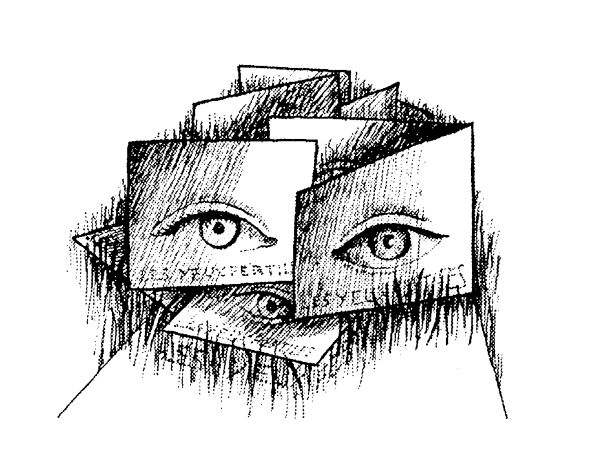
    The eighth of the nine children of the architect Lucien Parent, Marie Parent, known as Mimi, studied from 1942 to 1947 at the École des beaux-arts in Montreal, where she was taught by Alfred Pellan. She was expelled in 1947 for indiscipline, the year of her first solo exhibition, at the Dominion Gallery in Montreal. In 1948 she co-signed the manifesto Prisme d’yeux with thirteen other artists.

    Married to the sculptor Jean Benoît, she moved with him to Paris, where the couple lived and worked for many years. In 1959 she joined the Surrealist group. For the International Surrealist Exhibition devoted to Eros (1959-1960) she designed the poster and the layout of the catalogue, the Boîte alerte. Missives lascives, and took charge of the fetishism room.

    She went on to take part in the Surrealist exhibitions in Milan (1960), “L’Écart absolu” in Paris (1965), São Paulo (1967) and “The Pleasure Principle” in Prague (1968). After her death, Jean Benoît scattered her ashes at the Château de Lacoste, the former home of the Marquis de Sade.

    The work

    In her last decades Mimi Parent made picture-objects: black wooden boxes in which scenes are played out behind glass, in rich colours that heighten their strangeness. She combined found objects and painting, and sometimes used human hair, as in the whip Maîtresse (1996). She also left ink drawings.

    The gallery showed rare works by Mimi Parent in the exhibition “At the Sources of Convulsive Beauty” (September 2024).

    Exhibitions and collections

    • “La Femme et le surréalisme”, Musée cantonal des Beaux-Arts, Lausanne, 1987
    • “Féminin-masculin”, Centre Pompidou, Paris, 1995
    • Retrospective, Galerie 1900-2000, Paris, 1998
    • “Surrealism: Desire Unbound”, Tate Modern, London, 2001
    • Mimi Parent and Jean Benoît retrospective, Musée national des beaux-arts du Québec, 2004

    Looking back at their exhibitions

  • Christian d’Orgeix

    Christian d’Orgeix

    French painter, draughtsman and maker of objects, born in 1927 in Foix (Ariège).

    Life

    Christian d’Orgeix settled in Paris in 1946 and worked at first for an advertising agency and for a theatre designer. In 1948-1949 he assisted Hans Bellmer with the publication of Les Jeux de la Poupée (Éditions Premières, 1949), hand-colouring the silver prints.

    A trip to London in 1949 introduced him to the Pre-Raphaelites and William Blake. He spent 1950 in Spain, where his first drawings were made, including the series La Barrière de corail, then returned to Paris in 1951 and began assembling sculptures from scrap materials, in the spirit of Surrealism. He exhibited at the Salon des Surindépendants in 1953.

    Germany recognised him early: the Galerie Springer in Berlin gave him a solo exhibition in 1955, and he took part in documenta in Kassel in 1959 and 1964. He received the Paris Biennale prize in 1961 for a large canvas, Religieuse. In 1990 he left Paris for the south of France and settled in Alès.

    The work

    The gallery places him “at the crossroads of Surrealism and Lyrical Abstraction”. Alongside his canvases of the 1950s (Sous la colline, 1953; Cire humaine, 1954), he made object boxes (Éléphantisme, 1957) and assemblages, then, in the 1960s, figures composed of everyday materials, often inspired by mythological or historical characters.

    The gallery devoted the exhibition “The Metamorphoses of Christian d’Orgeix” to him in 2023, which included a large Sans titre (c. 1960, oil on canvas, 196 x 130 cm, provenance Daniel Cordier). It showed him again in “Surrealist Prelude” (2024), in its summer 2025 exhibition, with a Sans titre of 1960 (oil on canvas, 162 x 130 cm) and Béguine (c. 1960-1961, gouache and collage on paper, 27 x 35 cm), then in the gallery’s 25th anniversary exhibition (2026).

    Exhibitions and collections

    • Galerie Springer, Berlin, 1955
    • documenta II (1959) and III (1964), Kassel
    • Retrospectives: Galerie Michael Hasenclever, Munich, 2003; Musée de Cordes-sur-Ciel and Galerie Arnoux, Paris, 2006
    • Monograph: Ragnar von Holten and José Pierre, d’Orgeix, Le Musée de poche, 1975
  • Michel Nedjar

    Michel Nedjar

    French artist, maker of dolls, drawings and sculptures, born in 1947 in Soisy-sous-Montmorency (Val-d’Oise). He lives and works in Paris.

    Life

    The third of seven children, Michel Nedjar grew up in a Jewish family with Ashkenazi and Sephardic roots: his father, a tailor from Algiers, settled in Paris in 1921, and his mother, of Polish origin, arrived around 1923, fleeing the pogroms. Much of the family perished in the Nazi camps, of which he became painfully aware as a teenager.

    Fabric fascinated him very early on: as a child he secretly dressed his sisters’ dolls and helped his grandmother sell rags at the flea market. At fourteen he was apprenticed in a garment workshop. He later travelled in India, Asia and Mexico, where he discovered magic dolls, effigies and mummies dressed in their costumes.

    Jean Dubuffet noticed his dolls and brought them into his collection. Nedjar then set about seeking out other creators himself and co-founded the association L’Aracine with Madeleine Lommel and Claire Teller. The donation of this collection in 1999 led to the opening, at the LaM in Villeneuve-d’Ascq, of the first Art Brut museum in France. Thanks to the Daniel Cordier donation, he was also the first Art Brut author to enter the collections of the Musée national d’art moderne.

    The work

    On returning from his travels he created his first dolls, the “soul flesh” (chairs d’âme): rags, string, plastic bags, feathers, wood, straw or shells, plunged into baths of dye, earth and blood. From 1980 his work extended to wax drawing and painting, on salvaged supports (dyed rags, newspaper, kraft paper, cardboard), as well as statuettes and reliefs in plaster or papier-mâché. Burnt and mutilated bodies dominate this work.

    Exhibitions and collections

    • “Inner Worlds Outside”, Whitechapel Gallery, London, and Irish Museum of Modern Art, Dublin, 2006
    • Exhibition of his Purim dolls, Musée d’Art et d’Histoire du Judaïsme, Paris, 2009
    • “Introspective”, LaM, Villeneuve-d’Ascq, 2017
    • “The Beauty of Diversity”, Albertina Modern, Vienna, 2024
    • LaM, Villeneuve-d’Ascq; Musée national d’art moderne, Centre Pompidou; Collection de l’Art Brut, Lausanne; Musée d’Art et d’Histoire du Judaïsme, Paris; Albertina, Vienna