

Italian painter, born on 12 June 1905 in Rome, died in 1980 in Paris.
Life
From a family of the Roman aristocracy, Stanislao Lepri grew up in a flat overlooking Piazza Navona. True to family tradition, he embarked on a diplomatic career and became Italian consul in Monte Carlo, then in Brussels.
In 1942, in Monte Carlo, he met the painter Leonor Fini, who encouraged him to paint. The couple lived first in Rome, then moved to Paris in 1946: Lepri then left diplomacy to devote himself entirely to painting. In the early 1950s the Polish writer Konstanty Jeleński joined them; the three were never to part.
His paintings, supported notably by the dealers Alexandre Iolas and Jean Charpentier, were shown in Europe, New York and Cairo. Lepri also worked for the stage: he designed the costumes for Armida for the Maggio Musicale Fiorentino in 1950 and created sets for Cyrano de Bergerac’s Voyage aux états de la Lune.
The work
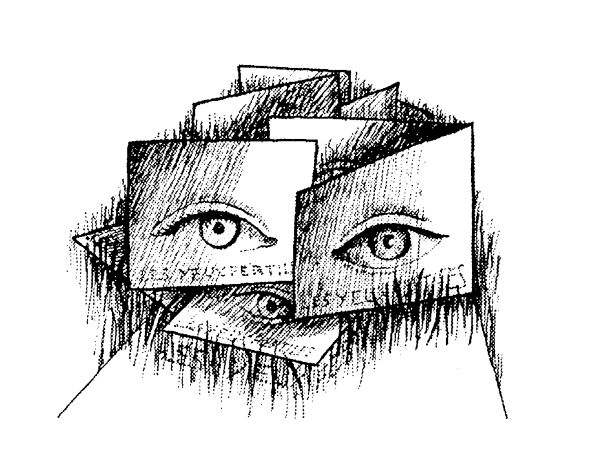
His painting composes a strange, metaphysical world in which skeletons, hooded figures, cats, monstrous beasts and putti inherited from the Renaissance meet. It deals with emotions, fears and desires with biting irony. Critics have seen in it the memory of Bernini’s sculptures on Piazza Navona and of the animals in the Villa Borghese zoo, and have invoked Hieronymus Bosch and Giorgio de Chirico.
The gallery showed his painting Survivre (1977, oil on canvas, 73 x 117 cm) in the exhibition “Visions” in November 2023.
Exhibitions and collections
- Museum of Modern Art, New York: Banquet (1945), shown in 1949 in the exhibition devoted to twentieth-century Italian art
- Musée d’Art moderne de la Ville de Paris; Galleria Nazionale d’Arte Moderna, Rome; Muzeum Sztuki, Łódź
- Retrospective of forty works, Galleria Tommaso Calabro, Milan, 2023