From 29 May to 25 July 2020
Galerie Les Yeux Fertiles, 27 rue de Seine, Paris 6e
After studying at the School of Fine Arts in Havana, he had a solo exhibition every year from 1954 to 1958 at the annual salon of the Museum of Modern Art in the Cuban capital. In 1960 the Ministry of Education awarded him a grant to study art in Paris. The journey proved decisive, for the artist decided to settle there and still lives there. In 1968 his first Paris exhibition, with a preface by Max Ernst, was held at the Galerie Le Point Cardinal, which from then on showed his work regularly.
“[…] As for the young, I pity them. How can they not feel that everything has been done before them? It is wrong to make gods of them before they have even had time to express themselves. One of them, Ferrer, is something of a discovery of mine. Far from Pop Art, Mec’Art and their substitutes, he seems to me profoundly authentic […]”
Max Ernst
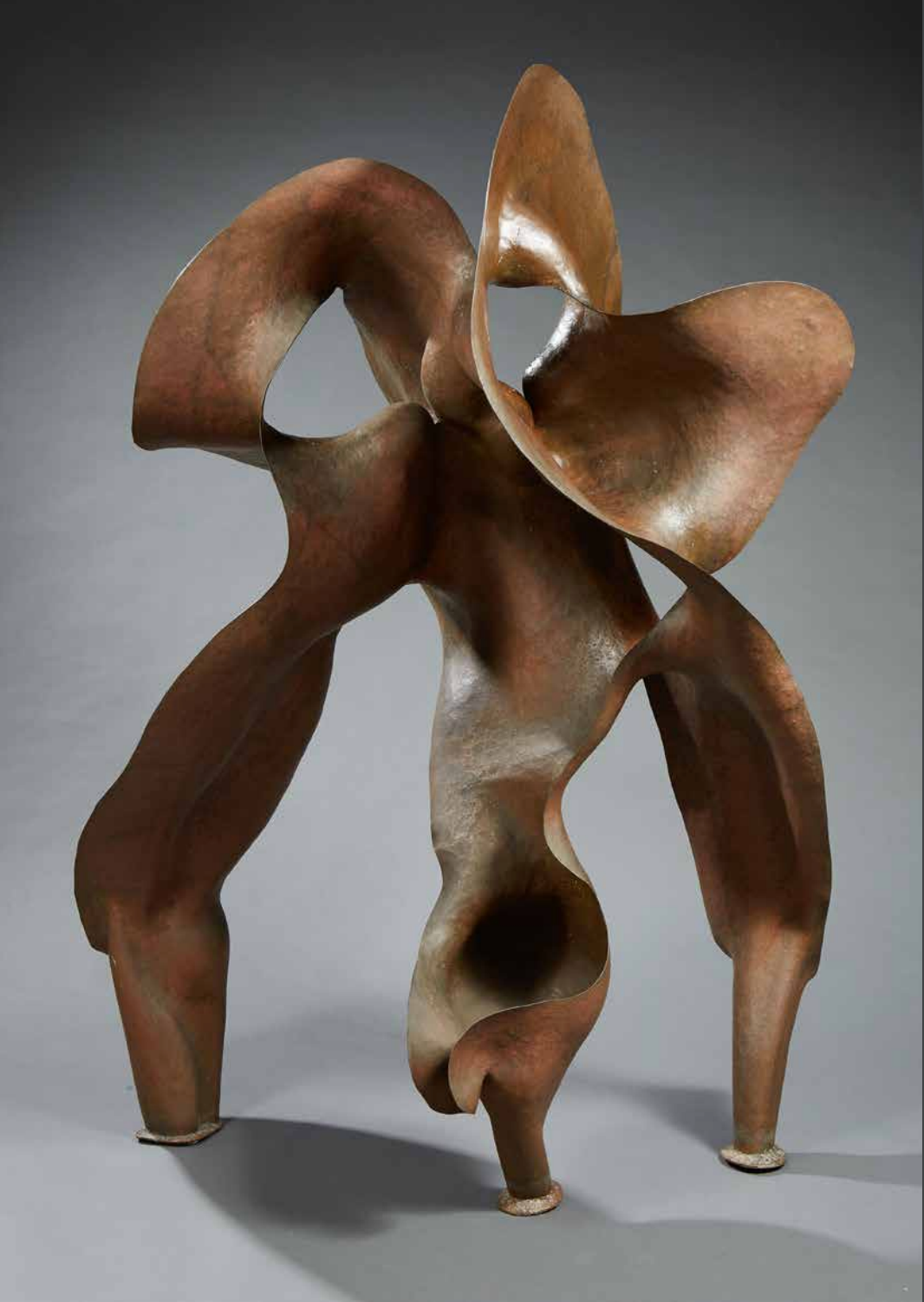
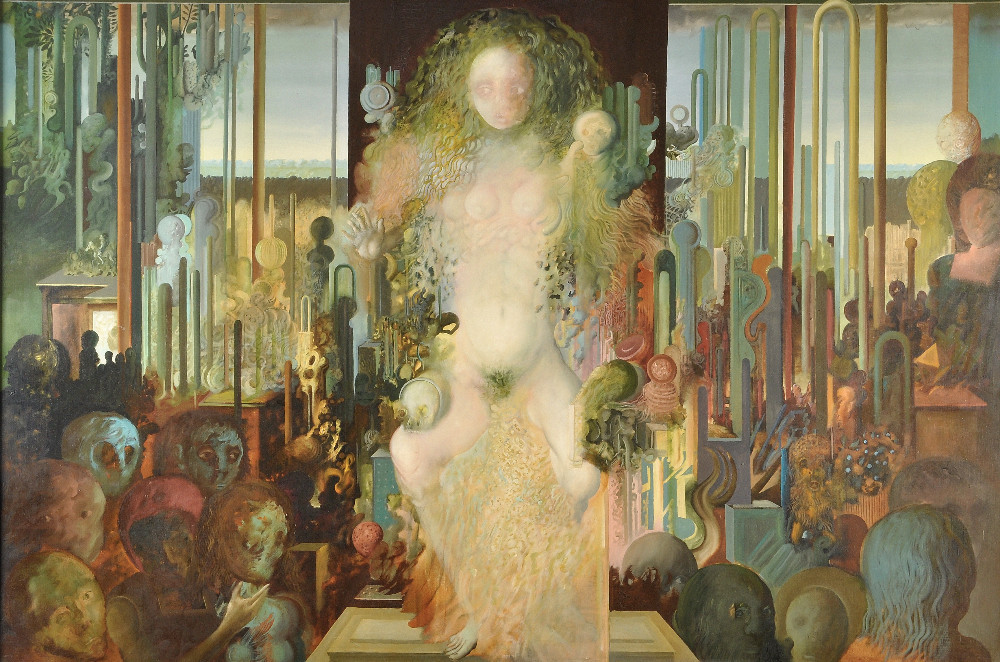
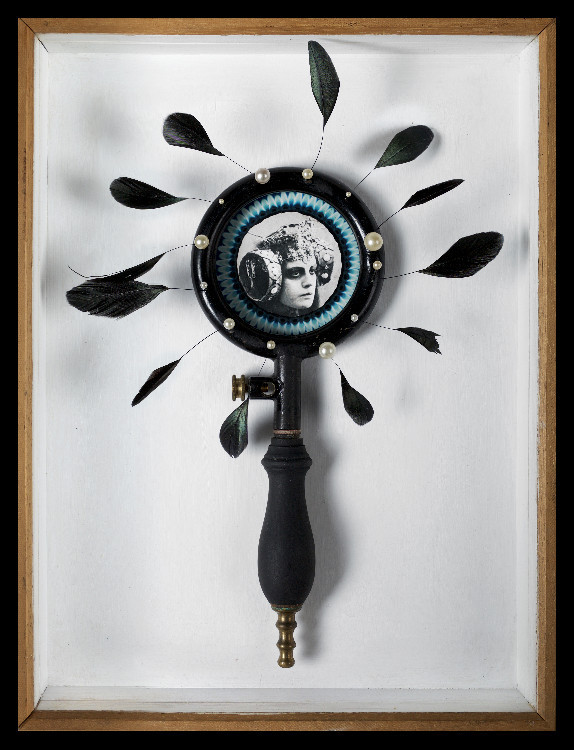
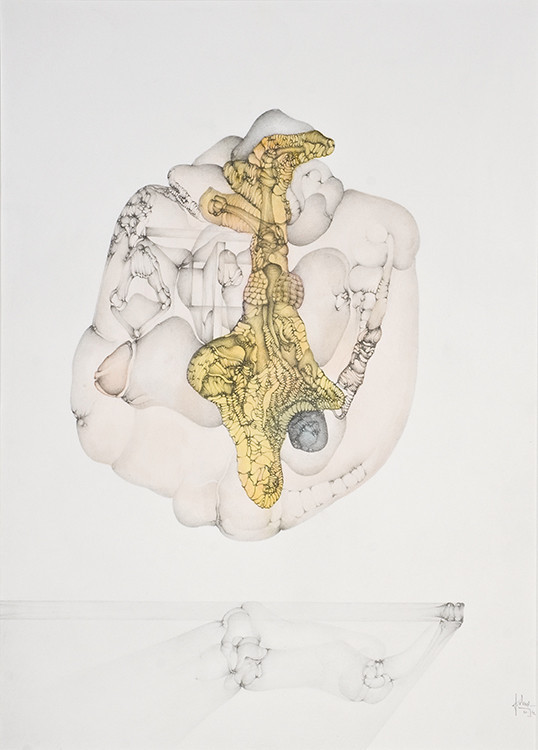
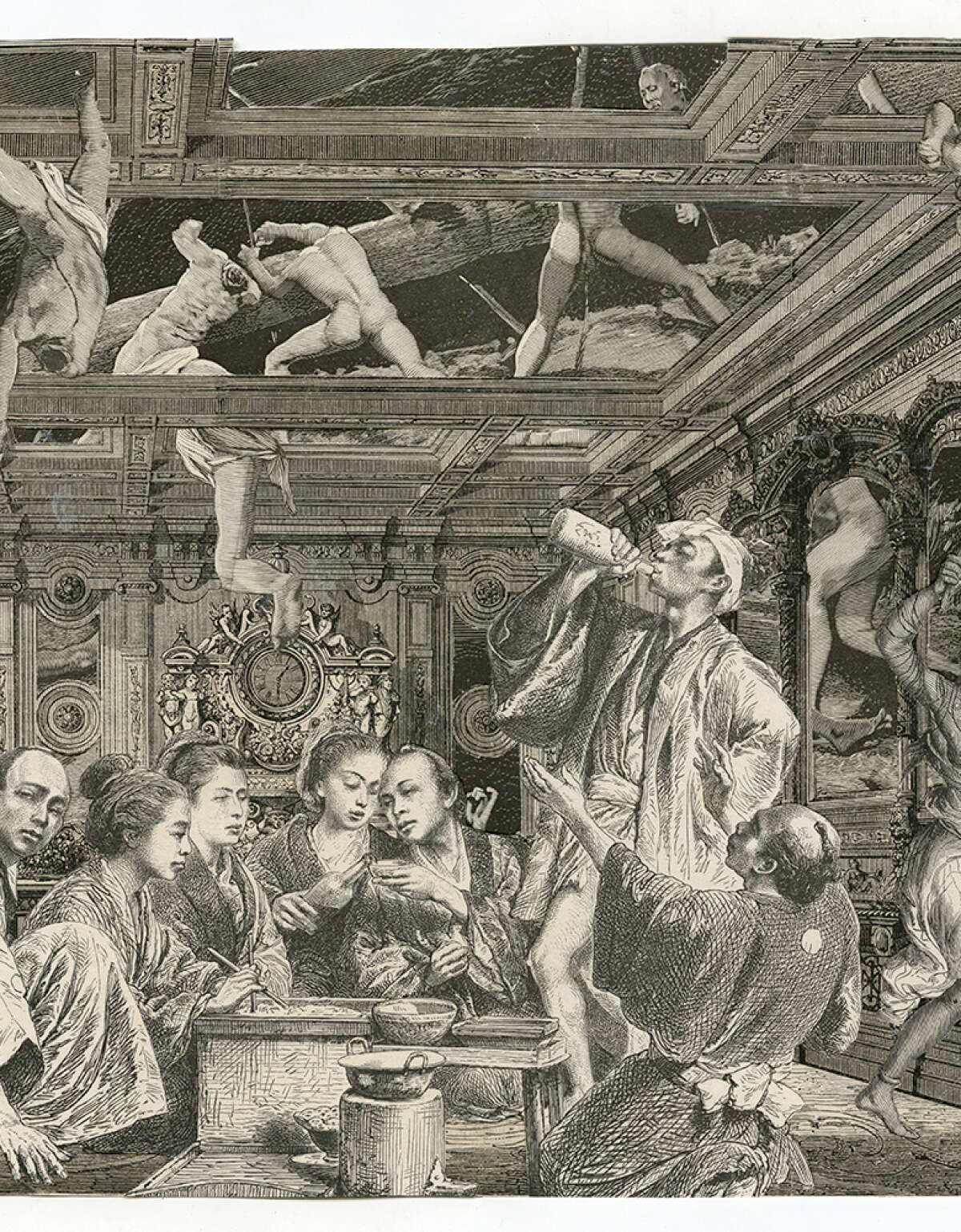
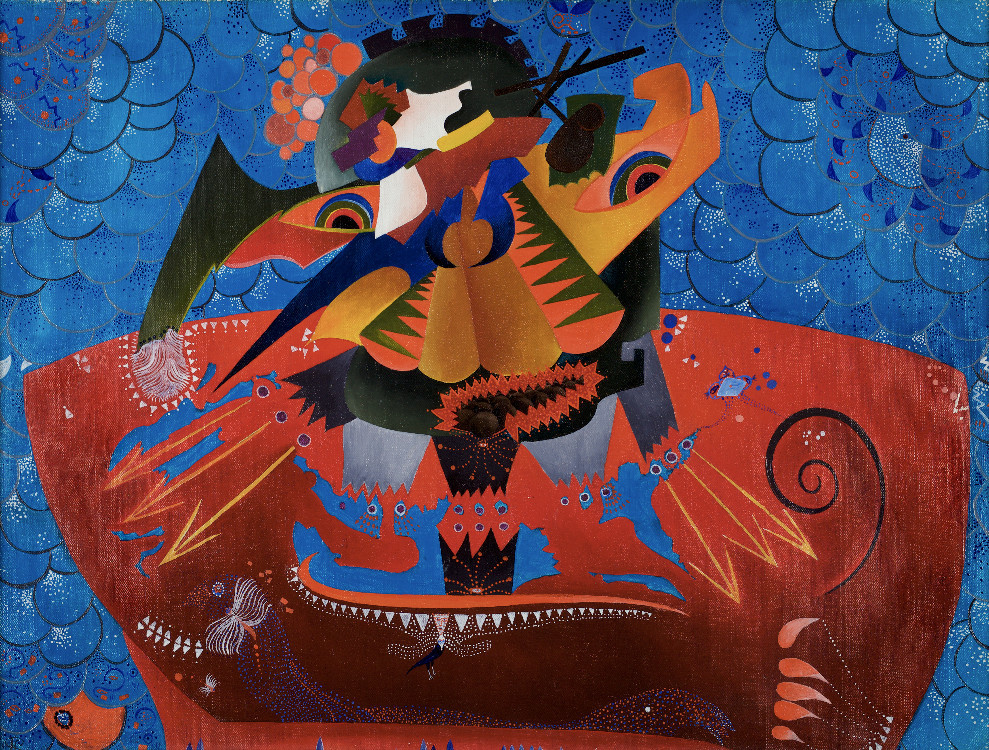
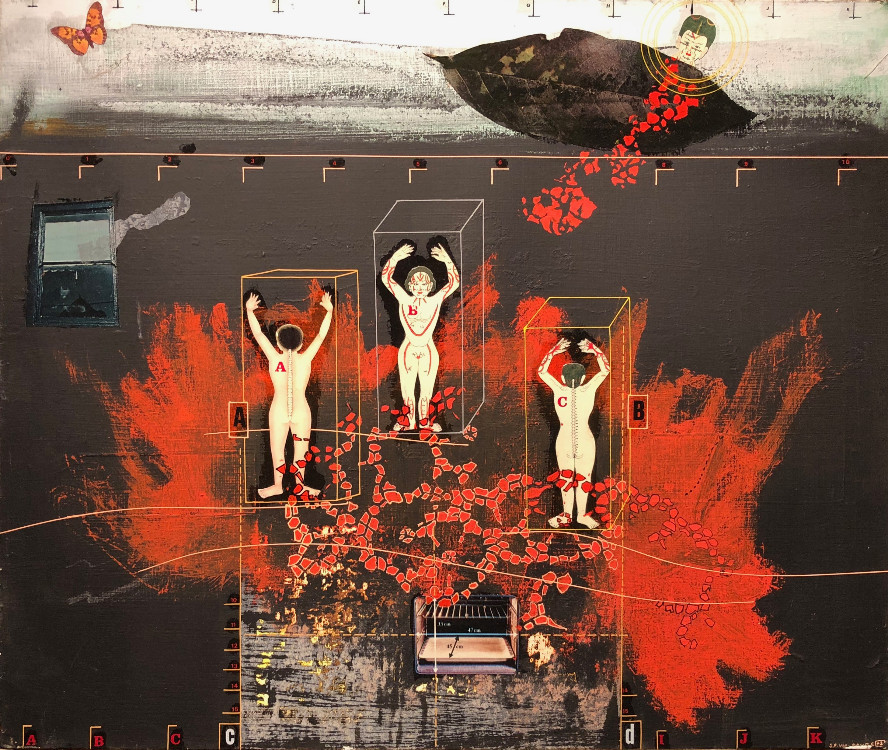
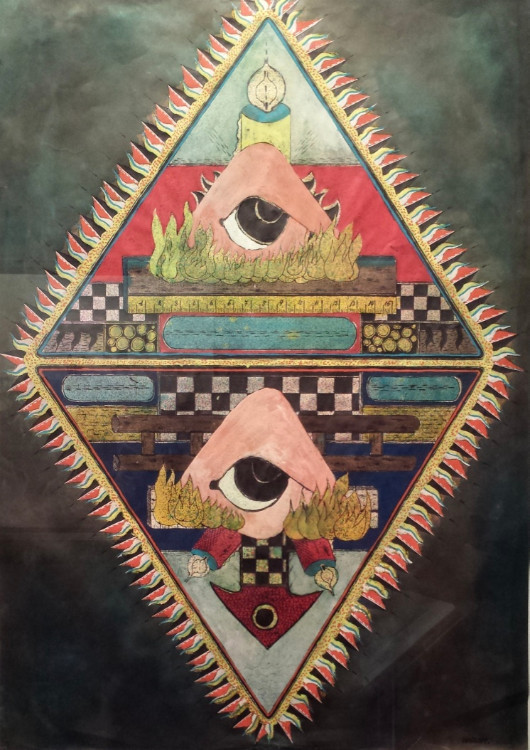
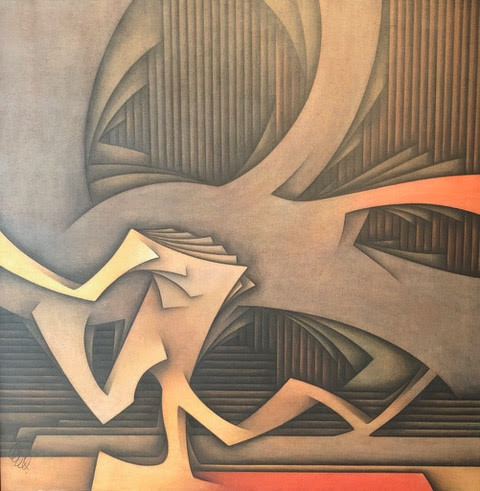
He has been exhibited in France at the Fondation Maeght and the Musée d’Art Moderne de la Ville de Paris, and elsewhere in Europe (Belgium, Switzerland…). Alongside his work as a painter, Joaquín Ferrer also developed a substantial body of work as a printmaker, illustrating many books by poets and writers. Joaquín Ferrer’s style tends towards lyrical abstraction, with figures built like puzzles that are not unreminiscent of the arts of Africa, Oceania and the Americas.
Biography
Birth (1928)
Joaquín Ferrer Marquines was born on 4 October 1928 in Manzanillo, a small fishing port on the eastern tip of Cuba. Owing to an administrative error, his date of birth is sometimes given as 4 July 1929. His father, Joaquín Ferrer Herrera, was a tailor, like his ancestors. His mother, Altagracía Marquinez López, raised a family of four children, two boys and two girls.
Youth (1930s-1940s)
The young Joaquín attended primary school and then the secondary school in Manzanillo. From a very young age he enjoyed drawing and copying paintings. The American presence in Cuba created a divide with the poorer rest of the population, but the children hardly suffered from it. His father wanted the boy to carry on the family tradition, but he was increasingly drawn to the arts. In 1948 he worked for the railway company. Fascinated by aviation, he took flying lessons but gave them up after his first practical attempts.
Havana (1950s)
With his uncle’s support, and against his parents’ wishes, he enrolled at the San Alejandro School of Fine Arts in Havana. He became friends with another student, Agustín Cárdenas. With a few other students, he was given board and lodging at the Castillo del Príncipe prison near the school, a facility reserved for penniless students. At that time, outside the school, he was already seeing another future painter, Jorge Camacho. Their elder, Wifredo Lam, advised him to give up the classes at the School of Fine Arts, which he considered of little use. Joaquín Ferrer took this advice. In 1954 he showed his work for the first time at the painting salon of the Museum of Modern Art in Havana, and in other Latin American capitals. He married Gina Pellón Blanco, from whom he separated, officially divorcing in 1971. His first solo exhibition was held in 1955 at the La Rampa gallery in Havana, followed in 1956 by the Lyceum gallery and in 1957 by the Color Luz gallery. He worked at the Museum of Modern Art with Cárdenas and Estopiñán, and in a small gallery, the Centro de Arte Cubano, opposite the cathedral. He made prints and, at the Museum of Modern Art, a mosaic whose signature is marred by a typo reading “Ferret”. The revolution of 1958-1959 in Cuba caused a great stir around the world. In 1959 he received a grant from the Ministry of Education to study abroad. Sailing on the Reina del Mar, he arrived at La Rochelle on 8 December and went on to Paris.
Paris (1960s)
In Paris the intellectual world was in a ferment of pro-Cuban enthusiasm. He lodged at the Cité universitaire; Lam and Cárdenas welcomed and advised him. The monthly grant of 100 dollars arrived irregularly, but the Maison de Cuba was tolerant. He eagerly visited the museums and galleries of Paris and took French lessons at the Alliance française. In 1961 he exhibited among the “Contemporary Cuban Artists” at the Galerie du Dragon and then at the Galerie Epona. The Maison des jeunes in Clichy showed “Cuba and Cubans”, and in 1962 he took part in the group exhibition “Latin American Art” at the Musée d’Art Moderne in Paris. In 1963 he took part in the 3rd Paris Biennale at the Musée d’Art Moderne. At a group exhibition at the Le Ranelagh cinema-gallery he had his first contacts with Surrealism. He moved into a studio in Pigalle. For almost two years a group of art lovers each gave him enough to live on. His first exhibition at the Galerie Maya in Brussels, and in the Netherlands. From then on he exhibited regularly at the Galerie du Dragon and in many group exhibitions and salons: Réalités Nouvelles, Grands et Jeunes d’Aujourd’hui, Comparaisons, etc. He often saw other Cubans in Paris, among them Alejo Carpentier. He met André Breton, Jean Benoît and Édouard Jaguer at the Galerie L’Œil during the exhibition “L’Écart absolu”. He met Alain Bosquet, through whom Max Ernst asked to meet him. In 1967, taking part in the exhibition “Artists in Solidarity with Israel”, he came into contact with the members of its honorary committee: Max Ernst, Joan Miró, André Masson and Marc Chagall. Ernst visited his studio and bought three paintings, then invited Jean Hugues, Alexandre Iolas and Bertie Urvater to his home. Hugues asked to see him the next day and offered him an exhibition at his gallery, Le Point Cardinal. The Point Cardinal exhibition was prefaced by a captioned drawing-collage by Max Ernst. The student revolts of that May did not hamper the commercial success of the exhibition. It was the beginning of a fruitful collaboration: he received a monthly stipend and was exhibited regularly for ten years. His daughter Monia was born in December 1968.
1970s-1980s
The painter’s life now became settled. Living on boulevard Brune from 1977, he married Anne Jézéquel (died 1993), the mother of his daughter, in 1978. In 1979 he became a French citizen. He developed a passion for non-European art. His days were spent in his studio or with his friends: Lam, Ernst, Camacho, Cárdenas, Matta, Miró, Luca, the ever-loyal Bosquet and many others. He travelled (Mexico, Italy, Belgium, Spain, the Netherlands) and often spent his summer holidays with Urvater in Palma de Mallorca. Solo exhibitions followed one another: at Le Point Cardinal, but also in Geneva (Engelberts), Brussels (Epsilon) and Lima (Camino Brent)…
1990s-2000s
His daughter Aïa was born in 1992. In 1996 he married Christiane Créteur, her mother.
The monograph Joaquín Ferrer, l’imaginaire absolu, with a text by Lionel Ray, was published in 2001 by éditions Palantines. A retrospective of Joaquín Ferrer’s work was organised on the initiative of the Maison de l’Amérique latine in 2016.
Artist: Joaquín Ferrer