
Russian biologist and painter, a figure of Art Brut, born on 3 December 1893 in Moscow, died on 5 April 1979 in Haar, near Munich.
Life
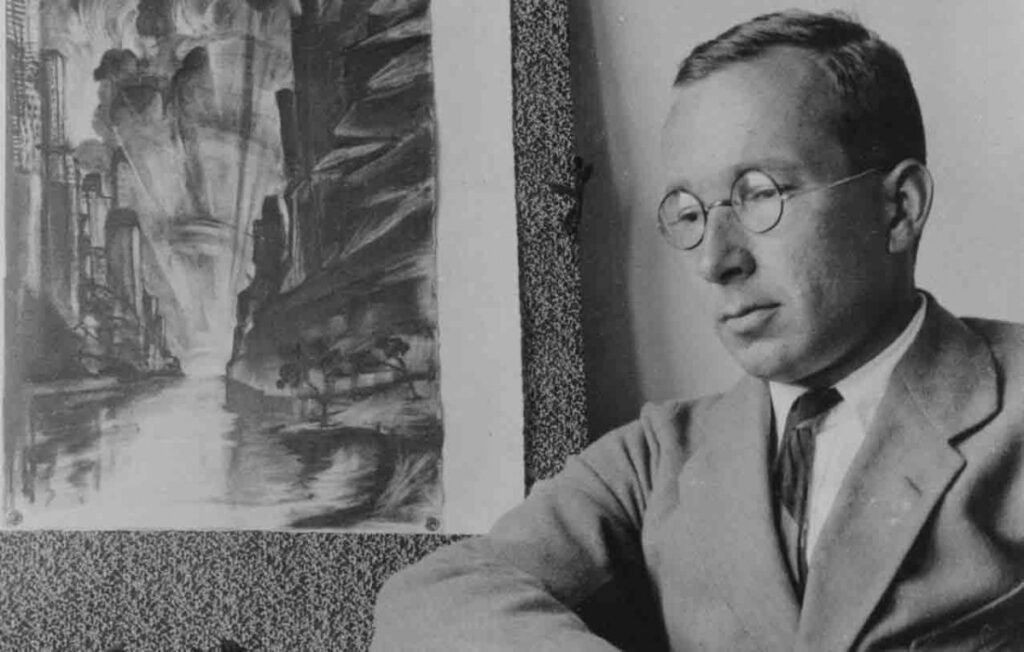
The second of five children, he grew up in a well-to-do scientific milieu. His father, Georg Gabritschevsky (1860-1907), an internationally renowned bacteriologist, had worked with Louis Pasteur in Paris and Robert Koch in Germany, and founded the first institute of epidemiology and microbiology in Moscow. The children were taught by some twenty private tutors. According to his brother Georg, Eugen was already drawing when he could barely read and write.
In 1913 he entered Moscow University to study biology, heredity and entomology. He left the Soviet Union for good in 1924 and arrived in New York in January 1925 to work at Columbia University with Thomas Hunt Morgan, then at the Woods Hole laboratory in 1926. From 1927 to 1929 he pursued his research on insect mutations at the Institut Pasteur in Paris, under Professor Roux. Invited to the University of Edinburgh in 1931, he had to stop in October of that year: his mental health was deteriorating.
Committed in 1931 to the Eglfing-Haar psychiatric hospital, he spent the rest of his life there, apart from a few stays with relatives. Jean Dubuffet discovered his work in 1948 through his doctor. In 1960, at Dubuffet’s instigation, the Vence gallerist Alphonse Chave travelled to Germany and acquired more than 5,000 sheets. Much of this later passed to the Galerie Daniel Cordier.
The work
Over some thirty years he produced thousands of works on paper, mainly in gouache and watercolour, but also in pencil, charcoal and pastel. He used many techniques: frottage, dabbing, scraping, folding, sponge, rag, decalcomania. He painted on salvaged supports: tracing paper, X-ray films, magazine pages, calendars, the hospital’s administrative documents.
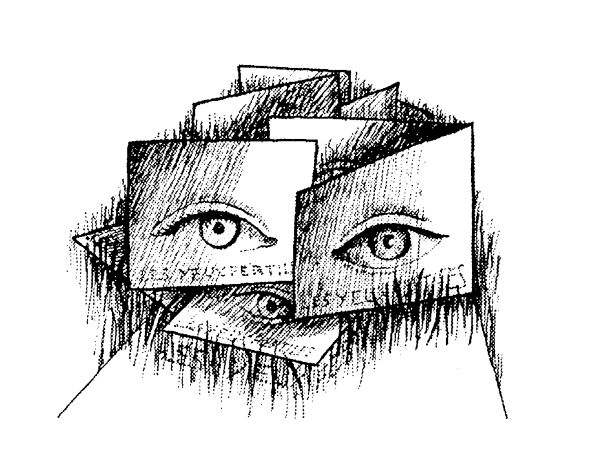
They include peopled or deserted landscapes, cities and crowds, night scenes (carnivals, festivities, concerts), mutating bodies, hybrid beings and bestiaries of fabulous creatures. Max Ernst bought five paintings from him in 1972.
Exhibitions and collections
- 2016: retrospective at La maison rouge, Paris (some 250 works), shown again at the Collection de l’Art Brut, Lausanne (2016-2017) and the American Folk Art Museum, New York (2017)
- Collection de l’Art Brut, Lausanne (works acquired by Dubuffet for the Compagnie de l’art brut)
- Musée national d’art moderne, Centre Pompidou (Daniel Cordier donation, 1989), on deposit at Les Abattoirs, Toulouse
- At the gallery: Sans titre, 1960, watercolour and gouache on paper, 20 x 28.5 cm, shown in the exhibition “Art Brut” (June-July 2022); works shown in “Favourites: Art Brut, Naive Art, Art Singulier” (March-April 2024)