Category: The Independents

  • Jean-Pierre Vielfaure

    Jean-Pierre Vielfaure

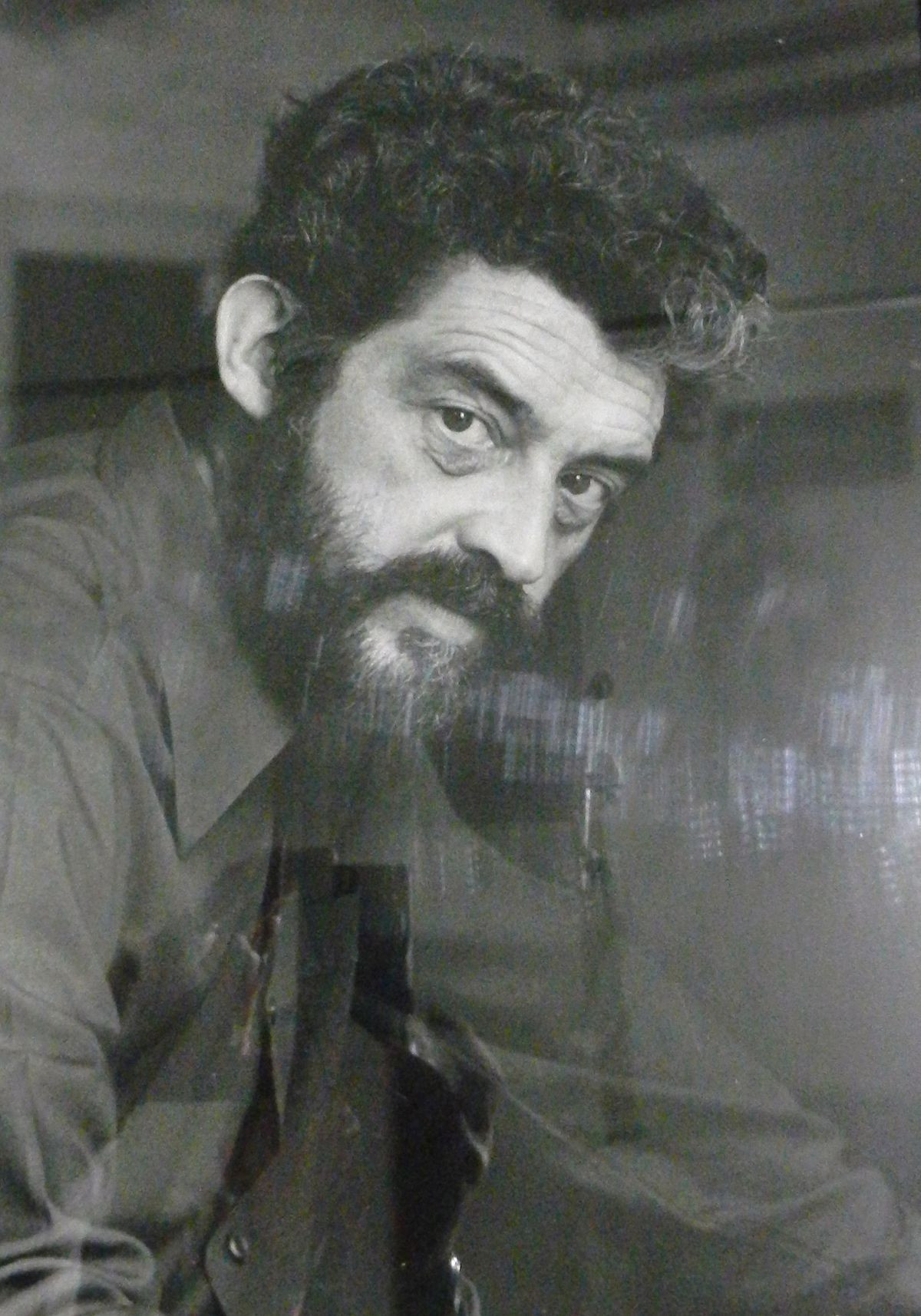
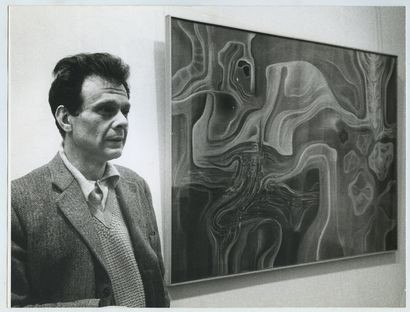
    French painter, printmaker, lithographer and filmmaker, born in 1930 in Algiers, died in 2015.

    Life

    Jean-Pierre Vielfaure was born in Bab El Oued, in Algiers, into a family of stationers, booksellers and publishers. In 1938 his parents settled in Rodez, where he began drawing on his own at around twelve. His first exhibition, in Rodez in 1950, brought together drawings of landscapes of the Rouergue.

    In 1952 he divided his life between Éméville (Oise) and Montmartre. In 1956 he met the German painter Carl Buchheister, whom he would call his “spiritual father” and whom he welcomed to Éméville six months a year until his death in 1964. Linked to Édouard Jaguer from 1958, he joined the Phases movement and contributed original prints to no. 10 of the review. In 1960 he signed the Manifesto of the 121; in 1961 he received the foreign art critics’ prize at the 2nd Paris Biennale.

    In 1965 he joined the Inter group, made up mainly of Scandinavian artists: the start of a long relationship with Copenhagen, of exhibitions and editions of his prints. From 1968 he stayed in Ibiza and Formentera. In 1977 a first long stay in New York and Canada produced the series Journal new-yorkais and a film of the same title, completed in 1979. At the end of 1988 he set up his studio in the former eyelet factory in Ivry-sur-Seine.

    The work

    From 1968 Vielfaure undertook Opéra Civilisation, a set of seventy-two paintings (collage, acrylic, mixed media) forming a single work some forty-two metres long; at the same time he was illustrating for Rock & Folk. Then came Les Portes d’Ibiza (1970-1973), more than fifty canvases shown in 1973 in Ibiza, Copenhagen and Helsinki, and, in 2007, the series L’Appel aux esprits, in which he evokes his spirituality: “Shamanism is my true religion.”

    “In art, meaning can only appear veiled, and its revelation can only take place in the fractures.” (Jean-Pierre Vielfaure, working notebook, 22 June 1998)

    Exhibitions and collections

    • Galerie du Fleuve, Paris, 1960; 2nd Paris Biennale, 1961; L’Appel aux esprits, Camille-Lambert contemporary art space, Juvisy-sur-Orge, 2007; contemporary art centre of the Château de Kerguéhennec, Bignan, 2018.
    • Centre Pompidou, Musée national d’art moderne: notably Herbes magie (1960), Le Passe-muraille (1962), Personnage aux deux soleils rouges and Le Prophète de l’abîme (15 October 1962); his archive is held at the Bibliothèque Kandinsky.
    • Other public collections: MAC VAL, Vitry-sur-Seine; Musée d’arts de Nantes; National Gallery of Art, Washington; Kunsthalle Bremen; ARoS Aarhus Kunstmuseum; Château de Kerguéhennec.
  • Paul-Émile Victor

    Paul-Émile Victor

    French polar explorer, ethnologist and draughtsman, born on 28 June 1907 in Geneva, died on 7 March 1995 in Bora Bora (French Polynesia).

    Life

    A student at the École centrale de Lyon, Paul-Émile Victor then served in the Navy and the air force. In 1934 he persuaded Jean-Baptiste Charcot to take him to Greenland aboard the Pourquoi-Pas ?; he spent a year with three companions among the Inuit of Ammassalik. In 1936 he crossed the ice sheet by dog sled with Robert Gessain, Michel Perez and Eigil Knuth: 825 kilometres in 44 days, from west to east.

    During the Second World War he served in the United States Air Force. In 1947 he founded the Expéditions polaires françaises, which would carry out some hundred and fifty missions in the Arctic and Antarctic, notably in Adélie Land. He later retired to Bora Bora, where he died.

    The work

    “Tell me what you draw, and I’ll tell you who you are”…

    So many pieces of the puzzle of his personality, his drawings carry within them what he was. Tender and never unkind, they exude humanity. Precise and lively, they prove his gift for observation. Colourful and teeming, they burst with his unfailing life force, the force he drew from within to pick himself up wherever he had fallen. Whimsical and even zany, they also show how well he knew not to take himself seriously.

    Inspired by other painters or wholly original, PEV’s drawings are the fruit of his insatiable curiosity and his constant openness to something else. Graphite pencil, ballpoint, pen and ink, dry or wax crayon, felt-tip, paint, raw ink, liquid glue…

    Try everything, attempt everything. To learn, to understand, but also to have fun… At the risk of going off in all directions, of which Paul-Émile Victor was perfectly aware: not without humour, he created an art movement (with himself as its only member) which he called “Acanthomism”, because “the acanthus leaf (known to everyone for its use in architectural ornament) is a plant with deeply cut leaves symbolising a multiple approach in every direction.”

    Exhibitions and collections

    • Galerie Les Yeux Fertiles, July 2023: Paul-Émile Victor’s Polynesian drawings.
    • Summer exhibition, Galerie Les Yeux Fertiles, 10 to 26 July 2025: “The ethnologist, explorer and pataphysician Paul-Émile Victor”.
  • Sir L

    Sir L

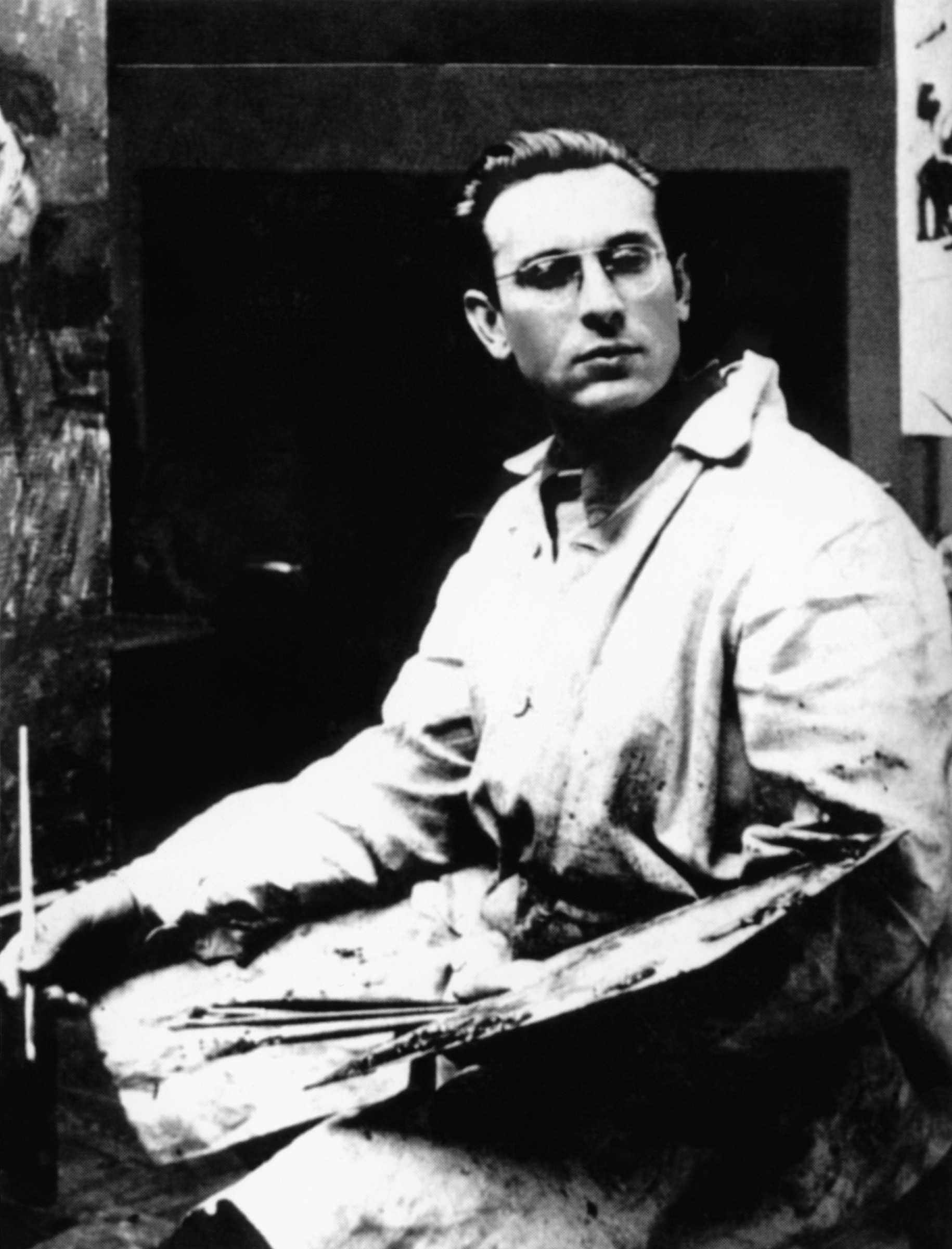
    French painter, draughtsman, pastellist and lithographer of Armenian origin, born Levon Aradian in 1932 in Beirut, died in Paris.

    Life

    Sir L. was born into an Armenian family in Beirut. His father, a survivor of the Armenian genocide, had enlisted in 1915 in the French Army of the Orient; his mother was born in New York. Taught by the Jesuits at the French lycée in Beirut, he came to Paris in 1951 to study at the Sorbonne.

    In the 1950s he moved in the literary and artistic circles of Saint-Germain-des-Prés, walked across France and Europe, took odd jobs and posed as a model at the École des beaux-arts. He passed through the studios of Jean Lurçat, Fernand Léger, Ossip Zadkine, Chana Orloff and Germaine Richier, as well as the Académie Julian. In 1972 he devoted himself entirely to drawing and painting.

    He exhibited at the Salon d’automne, Comparaisons, the Salon de mai, Figuration critique and the Salon de Montrouge. In the 1970s, at the Salon de la Jeune Peinture, he brought together the groups “La Peinture pour qui ?”, “Imaginaires de peintres et imageries populaires”, “Crises” and “Classicismes et Réalismes”. In the 1980s he gathered some fifty figurative painters around the “New Classicism” (Nouveau Classicisme).

    In 1990 he organised Couleurs de la vie, an exhibition of a hundred international artists in memory of the victims of the Armenian genocide and the genocides of the twentieth century, shown at the Bibliothèque nationale de France and then in Europe, notably in Madrid and at the National Gallery in Prague, at the invitation of Václav Havel.

    The work

    The New Classicism championed by Sir L. advocates a popular figurative painting, accessible to all, founded on feelings and fundamental emotions. His work celebrates the beauty of the world, of women and of nature, and holds art to be an antidote to contemporary horrors. He also designed artist’s rugs, shown at the 2005 World Expo in Aichi (Japan).

    Exhibitions and collections

    • More than three hundred group exhibitions and some thirty solo exhibitions.
    • Bibliothèque nationale de France; Musée de l’Érotisme, Paris; Musée Saint-Vic, Saint-Amand-Montrond.
  • Bernard Schultze

    Bernard Schultze

    German painter, draughtsman and sculptor, born on 31 May 1915 in Schneidemühl (now Piła, Poland), died on 14 April 2005 in Cologne.

    Life

    Bernard Schultze grew up in Berlin, where from 1934 to 1939 he studied at the Hochschule für Kunsterziehung, notably under Willy Jaeckel, before attending the Düsseldorf Academy of Fine Arts. Called up, he fought in Russia and Africa; all his earlier works were lost in the bombing of Berlin in 1944. After two years as a refugee in Flensburg, he settled in Frankfurt in 1947.

    In 1949 he met the painter Ursula Bluhm, whom he married in 1955; under the name Ursula, she was to share his studio for almost fifty years. A first stay in Paris in 1951, where he discovered André Masson, Wols and Jean-Paul Riopelle, proved decisive: he painted his first Informel canvases. In December 1952, in Frankfurt, he founded the Quadriga group with Karl Otto Götz, Otto Greis and Heinz Kreutz.

    The Galerie Daniel Cordier exhibited him in Paris in 1958 and 1962. In 1964 he installed a room of Migofs at documenta III in Kassel. He received the art prize of the City of Cologne (1969), joined the Academy of Arts in Berlin (1972) and won the Lovis Corinth Prize (1986). A major retrospective toured Germany in 1980 and 1981. From 1995 he divided his time between Paris and Cologne.

    The work

    At first gestural and Informel, nourished by André Breton’s interest in the unconscious, his painting took on relief: plastic elements from 1954, straw, rags and string around 1957. The works then left the stretcher and hung from frameworks of wire mesh or branches. From 1961 came the “Migofs”, assemblages and collages which he later developed in bronze and in coloured plastic figures.

    The 1970s brought oils and watercolours with zoomorphic figures and pastel-toned landscapes; the 1980s and 1990s, very large canvases (up to 15 m²), the “tabuskri” (1991), bronzes and etchings. The painted sculptures and mobiles shown at Chaumont-sur-Loire in 2023 play on fluorescent greens, oranges, reds and blues.

    Exhibitions and collections

    • Museum Ludwig (Cologne), Tate (London), Museum of Modern Art (New York); Villa Hammerschmidt (Bonn).
    • Works on paper, Albertina, Vienna, 1984.
    • Painted sculptures and mobiles, 2023 art season of the Domaine de Chaumont-sur-Loire.
    • The Galerie Les Yeux Fertiles 25th anniversary exhibition, 22 May to 19 June 2026, with a Sans titre (1957, mixed media on paper laid down on canvas, 42 x 60 cm, reproduced in B. Schultze, Hirmer, 1991, p. 246).
  • Bernard Saby

    Bernard Saby

    French painter and draughtsman, born in 1925 in Paris, died in 1975 in Paris.

    Life

    After preparatory classes in mathematics in Lyon, where he met Pierre Boulez, Bernard Saby turned to musical composition. With Boulez he studied under René Leibowitz and moved towards serial music. He wrote for the Revue du Domaine musical, whose cover he also designed, and in post-war Paris spent time with Pierre Joffroy, Armand Gatti and Henri Michaux.

    In 1956 Michaux published in Misérable Miracle a text by Saby, “L’image privilégiée”, an account of his experience of mescaline. Saby exhibited at the Galerie du Dragon (1955 to 1958, then 1974) and the Galerie de L’Œil (1963, with a text by Michel Butor, 1965, 1967), as well as at the Salon de Mai. In 1965 he was included in the exhibition “Le Surréalisme et l’art fantastique” at the 8th São Paulo Biennial.

    Eleven years after his death, in 1986, the Musée d’Art moderne de la Ville de Paris devoted a retrospective to him, curated by André Berne-Joffroy. Stéphane Gatti (died 2025) later did much to bring his work back to light.

    The work

    Oils, gouaches, charcoals, washes: Saby’s abstraction draws on his serial research, his experiences with mescaline and hashish, and his study of lichens and ancient Chinese texts. He told Alain Jouffroy he wanted to “build a trap for fascination” and to practise a “painting of the possible”.

    “One day a depth began to appear in my paintings, and I went into it, I threw myself headlong into exploring it.” (Bernard Saby, conversations with Michel Butor, 1963)

    Patrick Waldberg saw him as the most fearless “skirter of abysses” of his generation; Pierre Boulez, as a personality “torn between the forces of irrationality” and the need to order them. Claude Roy summed it up: “One must be Klee, Wols, Saby or nothing!”

    Exhibitions and collections

    • Musée national d’art moderne, Centre Pompidou: five drawings acquired in 2012 from the gallery’s exhibition devoted to his drawings, including a Sans titre (1951, charcoal on paper, 76 x 108 cm).
    • Musée d’Art moderne de la Ville de Paris: acquisitions at the time of the 1986 retrospective, then two more in 2008.
    • Château de Rochechouart, contemporary art centre of the Haute-Vienne (gift of J. de la Casinière); Musée de l’Hospice Saint-Roch, Issoudun (Zao Wou-ki donation); Musée Unterlinden, Colmar (Person donation).
    • Seventh exhibition at the Galerie Les Yeux Fertiles, 13 March to 18 April 2026, in tribute to the artist and to Stéphane Gatti, including a Sans titre (c. 1955, black casein gouache, 65 x 81 cm) and a Sans titre (1966, oil on canvas, 97 x 130 cm).
  • Edgard Pillet

    Edgard Pillet

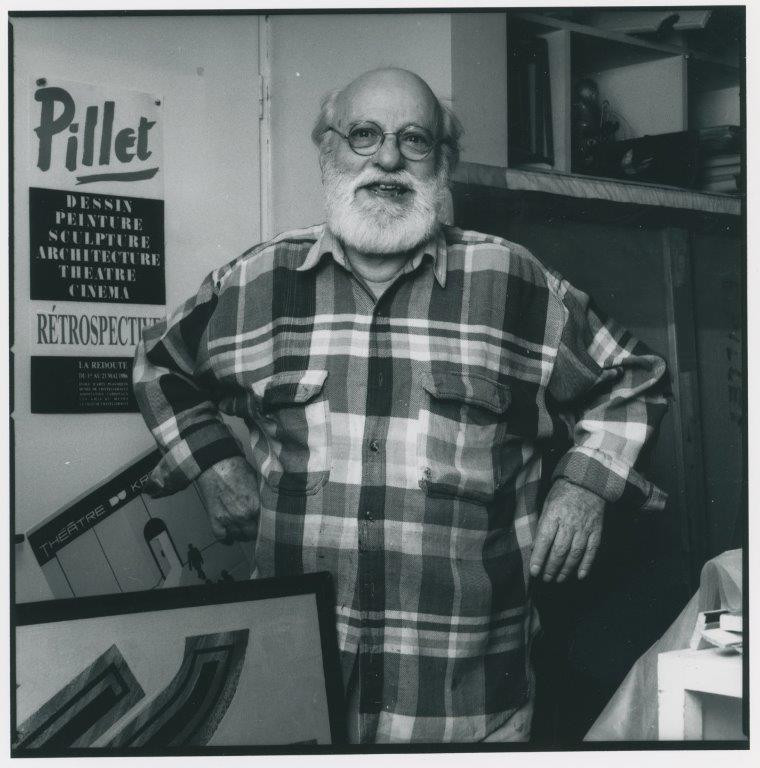
    French painter, sculptor and printmaker, born on 29 July 1912 in Saint-Christoly-de-Médoc (Gironde), died on 9 September 1996 in Paris.

    Life

    Edgard Pillet entered the École des beaux-arts in Bordeaux in 1928, then the Beaux-Arts in Paris in 1931. At first Neo-Cubist, his painting turned towards abstraction around 1948; he was among the first champions of geometric abstraction.

    After the war he was general secretary of the review Art d’aujourd’hui, which supported abstract art, and contributed to the Gazette des lettres. In 1950, with Jean Dewasne, he founded the Atelier d’art abstrait at the Académie de la Grande Chaumière, and in 1951 he took part in founding the Espace group. The same year he made an abstract film and a film on Alberto Magnelli.

    He later taught painting in the United States, at the University of Louisville (Kentucky), then at the Art Institute of Chicago, before returning to Paris.

    The work

    His abstract canvases rest on a rhythmic play of colours, shapes and curved lines, with the circle as a recurring motif. Back in Paris, he combined astrological figures with geometric compositions. Painter, sculptor, printmaker, muralist and tapestry designer, he also conceived many reliefs integrated into architecture, notably for the lecture theatre of the Faculty of Sciences in Grenoble and for the Mame printing works in Tours (some 500 m²). He is also the author of the series of reliefs Les Creusets. He published Onze planches couleur (1952) and Idéogrammes (1954).

    Exhibitions and collections

    • Musée national des beaux-arts du Québec
    • Catalogue raisonné in preparation; Véronique Auriol, Edgard Pillet. Du village natal à l’abstraction, 2018
  • Christian d’Orgeix

    Christian d’Orgeix

    French painter, draughtsman and maker of objects, born in 1927 in Foix (Ariège).

    Life

    Christian d’Orgeix settled in Paris in 1946 and worked at first for an advertising agency and for a theatre designer. In 1948-1949 he assisted Hans Bellmer with the publication of Les Jeux de la Poupée (Éditions Premières, 1949), hand-colouring the silver prints.

    A trip to London in 1949 introduced him to the Pre-Raphaelites and William Blake. He spent 1950 in Spain, where his first drawings were made, including the series La Barrière de corail, then returned to Paris in 1951 and began assembling sculptures from scrap materials, in the spirit of Surrealism. He exhibited at the Salon des Surindépendants in 1953.

    Germany recognised him early: the Galerie Springer in Berlin gave him a solo exhibition in 1955, and he took part in documenta in Kassel in 1959 and 1964. He received the Paris Biennale prize in 1961 for a large canvas, Religieuse. In 1990 he left Paris for the south of France and settled in Alès.

    The work

    The gallery places him “at the crossroads of Surrealism and Lyrical Abstraction”. Alongside his canvases of the 1950s (Sous la colline, 1953; Cire humaine, 1954), he made object boxes (Éléphantisme, 1957) and assemblages, then, in the 1960s, figures composed of everyday materials, often inspired by mythological or historical characters.

    The gallery devoted the exhibition “The Metamorphoses of Christian d’Orgeix” to him in 2023, which included a large Sans titre (c. 1960, oil on canvas, 196 x 130 cm, provenance Daniel Cordier). It showed him again in “Surrealist Prelude” (2024), in its summer 2025 exhibition, with a Sans titre of 1960 (oil on canvas, 162 x 130 cm) and Béguine (c. 1960-1961, gouache and collage on paper, 27 x 35 cm), then in the gallery’s 25th anniversary exhibition (2026).

    Exhibitions and collections

    • Galerie Springer, Berlin, 1955
    • documenta II (1959) and III (1964), Kassel
    • Retrospectives: Galerie Michael Hasenclever, Munich, 2003; Musée de Cordes-sur-Ciel and Galerie Arnoux, Paris, 2006
    • Monograph: Ragnar von Holten and José Pierre, d’Orgeix, Le Musée de poche, 1975
  • Edo Murtić

    Edo Murtić

    Croatian painter, born on 4 May 1921 in Velika Pisanica, near Bjelovar, died on 2 January 2005 in Zagreb.

    Life

    Having moved to Zagreb with his family as a child, Edo Murtić attended the school of arts and crafts from 1935 to 1939 and held his first exhibition as early as 1935. In 1939 he entered the Academy of Fine Arts in Zagreb, under Ljubo Babić and Krsto Hegedušić, and in 1940 studied under Petar Dobrović in Belgrade.

    Active in the anti-fascist movement, he joined the liberation forces in the spring of 1944, designing posters and books for them; at that time he illustrated Ivan Goran Kovačić’s poem Jama with lithographs. In 1951 a stay in the United States and Canada introduced him to Abstract Expressionism. His 1953 exhibitions in Zagreb and Belgrade were among the first in the socialist world to show abstract painting.

    A co-founder of the Zagreb group Mart in 1956, in 1958 he took part in the Venice Biennale, the Carnegie Prize in Pittsburgh and documenta in Kassel. A member of the Yugoslav (now Croatian) Academy of Sciences and Arts, he divided his life between Zagreb and Vrsar, in Istria, with his wife, the artist Goranka Vrus Murtić. He donated more than 1,500 works to the City of Zagreb.

    The work

    At first figurative, his painting evolved towards a personal abstraction nourished by his travels in France, Italy and the United States: expressive gesture, lyrical charge, intense colour. In the early 1960s Tachist and Informel accents appeared, with his dark masses sliding over light grounds. Then came the cycles Les Yeux de la peur (1981-1984), Feux (1985-1990), born of a voyage in the southern Adriatic, and Montraker (1992-1995), inspired by a Roman quarry near Vrsar.

    Murtić also designed theatre sets, murals, mosaics (Zagrepčanka building, 1975), tapestries (Vatroslav Lisinski Concert Hall), enamels, sculptures and ceramics.

    Exhibitions and collections

    • Venice Biennale and documenta, Kassel, 1958
    • Retrospective, Moderna galerija, Zagreb, 2003
    • “Kroatische Malerei des 20. Jahrhunderts”, Kunsthistorisches Museum, Vienna, 2004
    • “Murtić 100”, Meštrović Pavilion (HDLU), Zagreb, 25 May to 18 July 2021
    • Museum of Contemporary Art, Zagreb (Murtić donation)
  • Didier Mazuru

    Didier Mazuru

    French painter and printmaker, born in 1953 in Paris, based in Stockholm.

    Life

    Didier Mazuru studied architecture at the École des beaux-arts in Paris. In 1976, at the Galerie Bernier, he discovered printmaking; his copperplates are printed at the René Tazé workshop in Paris. The Galerie Bernier gave him his first solo exhibitions, from 1984. Based in Stockholm, he exhibits regularly in France and Sweden.

    Since 2012 he has devoted himself entirely to painting. In 2019 the Fondation Taylor awarded him the Madeleine Couderc painting prize.

    The work

    Coming from printmaking, Mazuru is associated by the gallery with Visionary Art and Surrealism. According to the artist, his catalogue comprises 222 paintings on canvas or panel, 880 drawings and paintings on paper, and 63 copper engravings.

    The gallery devoted the exhibition “The Ineffable” to him (March-April 2023), then “Surrealist Fragmentations” (5 June to 4 July 2025), which included Léda ancienne et moderne (1991, oil on canvas laid down on wood, 162 x 144 cm). It showed “the visionary eye of Didier Mazuru” again in its summer exhibition (10-26 July 2025), then in the gallery’s 25th anniversary exhibition (22 May to 19 June 2026).

    Exhibitions and publications (as listed by the artist)

    Solo exhibitions

    1984 Galerie Bernier, Paris
    1986 Galerie Bernier, Paris
    1986 Galerie Saint-Anne, Montluçon
    1987 Galerie Bernier, Paris
    1987 Galerie L, Saint-Étienne
    1989 Institut Français, Stockholm
    1989 Galerie L, Saint-Étienne
    1990 Galerie Michèle Broutta, Paris
    1990 Galleriet i Holmby, Sweden
    1992 Galleriet i Holmby, Sweden
    1993 Galerie L, Saint-Étienne
    1998 Galerie Michèle Broutta, Paris
    1998 Galerie Jan Linder, Stockholm
    2005 Café Baires, Stockholm
    2006 Galerie Paname, Stockholm
    2008 Galerie Paname, Stockholm
    2010 Galleri Nordens Ljus, Stockholm (March)
    2011 Galleri Duerr, Stockholm
    2016 Solo exhibition of paintings at the classical music festival “O/Modernt”, Stockholm
    2021 Studio/gallery Idungatan, Stockholm, 11 November.

    Group exhibitions:

    1983 Atelier Tazé, Sint-Niklaas, Belgium.
    1984 Maison des arts, Belfort, France
    1984 Galerie Michèle Broutta, Paris.
    1984 Digne-les-Bains Biennial.
    1984 Saalbau-Galerie, Darmstadt.
    1987 École de Médecine, Paris.
    1987 International Contemporary Art Fair, Lyon.
    1988 International Contemporary Art Fair, Stockholm
    1989 International Contemporary Art Fair, Stockholm
    1990 International Contemporary Art Fair, Stockholm
    1990 École de Médecine, Paris.
    1991 International Contemporary Art Fair, Stockholm
    1992 International Contemporary Art Fair, Stockholm
    1992 Museum of Contemporary Art, Chamalières.
    1992 Institut Français, Stockholm
    1992 Galerie Arts Multiples, Metz.
    1994 Centro culturale di esposizione e comunicazione, Venice, Italy
    1996 “Hyllning till Ilmar Laaban”, Liljevalchs Konsthall, Stockholm
    1998 7th Saint-Hilaire-de-Brens Biennial.
    1999 “10 graveurs français”, Galerie Flamingo, Falkenberg, Sweden.
    2002 “Terra grafica”, Galleri infra, Upplands Väsby, Sweden
    2003 “Aqua di colori”, Galleri infra, Upplands Väsby, Sweden
    2004 Grafiska sällskapet, Stockholm.
    2004 “Métal”, prints, sculptures, drawings, Maison des jeunes et de la culture, Dieppe
    2006 Atelier Grognard, “Les visionnaires – Au-delà du surréalisme”, Rueil-Malmaison, France
    2006 “Les visionnaires – Au-delà du surréalisme”, Galerie Michèle Broutta, Paris
    2006 “Corps humains”, Hôtel de ville, Saint-Ouen-l’Aumône.
    2012 Moreh Collection, Museum of Contemporary Art, Chamalières
    2012 “Les visionnaires”, Grafiskkunst der Gegenwart aus Frankreich, Panorama Museum, Germany
    2012 “10 artistes visionnaires”, Galerie Michèle Broutta, Paris
    2014 Surrealist works on paper, Galerie Les Yeux Fertiles, Paris.
    2014 Galleri Duerr, Stockholm
    2014 Affordable Art Fair, Stockholm, with Galleri Duerr
    2016 “Voyage dans l’imaginaire”, Galerie Les Yeux Fertiles, Paris.
    2018 Estampe en Yvelines, 2nd print biennial, La Tannerie, Houdan
    2019 Winner of the Madeleine Couderc painting prize awarded by the Fondation Taylor, Paris

    Publications:

    1983 “L’atelier Tazé”, exhibition catalogue
    1984 “Dédale”, catalogue of the exhibition at the Galerie Bernier
    1984 Catalogue of the Digne-les-Bains Biennial
    1987 Catalogue of the Lyon international fair
    1988 Catalogue of small-format prints, Chamalières
    1988 Catalogue of the Stockholm international contemporary art fair
    1989 Catalogue of the Stockholm international contemporary art fair
    1992 Catalogue of the Stockholm international contemporary art fair
    1991 “L’art visionnaire”, by M. Random, Éditions Philippe Lebaud (pp. 112-113)
    1992 “L’art visionnaire”, catalogue of the exhibition at the Museum of Contemporary Art, Chamalières
    1993 “Le dessin, art des origines”, by Robert Moran, Éditions Fleurus (p. 160)
    1994 “Du fantastique au visionnaire”, exhibition catalogue, Venice (pp. 70-71)
    1996 “La gravure contemporaine”, by M. Solvit, Pierre Zech éd. (pp. 260-261)
    1997 “Dans l’ossuaire des songes”, by D. Mazuru, Éditions C.D.G. Création
    1998 “Hyllning till Ilmar Laaban”, catalogue of the exhibition at the Liljevalchs Konsthall, Stockholm (p. 57)
    1999 Konstvärlden & disajn no. 4 1999, Sweden
    2006 “Les visionnaires – Au-delà du surréalisme”, exhibition catalogue, Atelier Grognard, France
    2012 Exhibition “Visionnaires, Grafiskkunst der Gegenwart aus Frankreich”, Panorama Museum, Germany (pp. 212-227)
    2016 Illustrations for the catalogue of the classical music festival “O/Modernt”, Stockholm
    2018 Catalogue of the exhibition “Estampe en Yvelines”, Houdan
    2021 Grekisk Mytologi i vardags livet 2021 (in Swedish), texts by Véronique Mazuru and Didier Mazuru
    2021 Konst och Identitet (in Swedish)
    2021 Art et Identité, Didier Mazuru, texts and paintings
    2022 Struktur (in Swedish)
    2022 Structure, Didier Mazuru, texts and paintings
    2022 Arbre de vie, Didier Mazuru, texts and paintings
    2023 Cheminement intérieur, Didier Mazuru, texts and paintings
    2023 Ineffable, Didier Mazuru, paintings 2015 – 2022, Venus d’ailleurs éditeurs


    Articles:

    1984 Les nouvelles de l’estampe no. 75 (p. 23)
    1986 Les nouvelles de l’estampe no. 86
    1986 Les cahiers de la galerie Ste-Anne
    1989 Cultural programme of the Institut Français de Stockholm, September
    1990 Artension no. 13, January-February
    1990 Skånska Dagbladet, 24 April, Sweden
    1998 Pariscope, January
    1998 La Gazette des arts plastiques et décoratifs no. 6, February
    1998 Art & Métiers du livre no. 207
    1998 Arts Actualités Magazine no. 82, February
    1998 Résidences Décoration no. 20, March-April
    1999 Svenska Dagbladet, 7 November, Sweden
    2014 Text by D. Mazuru: catalogue of Doaré’s engraved work
    2014 Art & Métiers du livre no. 300, article by D. Mazuru on Doaré
    2019 Fondation Taylor: 2019 catalogue (p. 41)

    To date he has produced 222 paintings on canvas or panel, catalogued H1 to H222, 880 drawings and paintings on paper and card, catalogued D1 to D880, 63 copper engravings with many proofs heightened or entirely reworked in ink, watercolour or acrylic, and some ten sketchbooks.

    Stockholm 2023

  • Isabelle Jarousse

    Isabelle Jarousse

    French draughtswoman, born in 1964.

    The work

    Isabelle Jarousse draws in Indian ink on paper she makes herself, from pure rag pulp. The Centre Pompidou holds several of her works, which entered the collection in 2010 with Daniel Cordier’s donation and are on deposit at Les Abattoirs in Toulouse, including a Sans titre dated 31 May 2005 (Indian ink on pure rag paper pulp, 14 x 14 x 2 cm).

    She describes her work as follows:

    “My drawings are made up of animals, plants, human beings, but also abstract forms such as strokes, dots and curves, a graphic alphabet that evolves over time. I make the paper on which I draw meticulously, slowly, with a brush full of black ink. On this white matter, a knotted, hollow or flat matrix, I inscribe my writing, I structure my language, I obey creation. Immaculate white, slightly glossy, wet folds, voluptuous matter. To exist for an instant, in the desire to be reborn, to live despite the ‘failures’. New drawings cover the older ones; several layers are thus added to the original support, palimpsests of a writing repressed, rejected, corrected, worked to saturation.” (Isabelle Jarousse)