
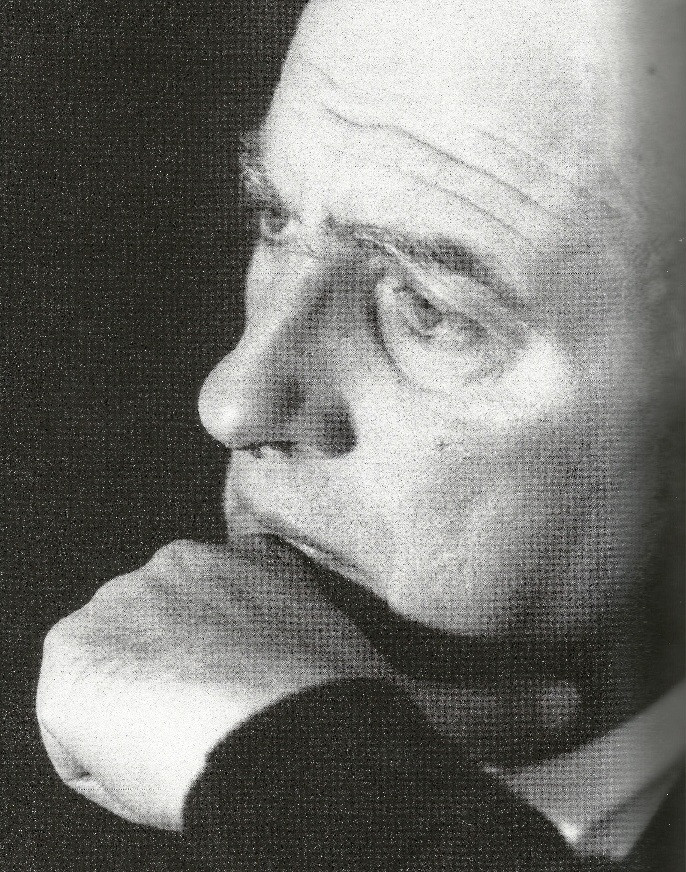
Czech draughtsman, born in 1907 in Berlin, died in 1988 in Kadaň (Bohemia).
Life
He grew up in a family of artists: his father, Karel Havlíček, was a painter and theatre designer, and his cousin, the architect Josef Havlíček, was connected with the Prague Surrealists. After school in Berlin he followed his parents to Prague in 1923, finished secondary school, then the law faculty of the German University in Prague, where he obtained his doctorate in 1934.
From 1936 to 1949 he was a lawyer and police official in several Bohemian towns, and headed the regional police in Kadaň. Removed after the Prague coup of 1948, he was arrested twice by the secret police between 1949 and 1955. He then worked as a draughtsman and painter in a porcelain factory in Klášterec nad Ohří (1949-1955), then as a labourer in ceramics, a quarry and construction until 1970.
In 1945 he decided to devote his life to drawing and from November imposed on himself a daily practice, in the evenings, which he kept up for decades. The theorist Karel Teige devoted a long analysis to him; the exhibition he was preparing for him in 1948 was banned. Under the Communist regime his work was hardly shown, championed by a few close friends such as Teige, Vratislav Effenberger and Ivo Pondělíček. His first solo exhibition took place in 1963, at the Mánes hall in Prague. The municipal gallery in Kadaň now bears his name.
The work
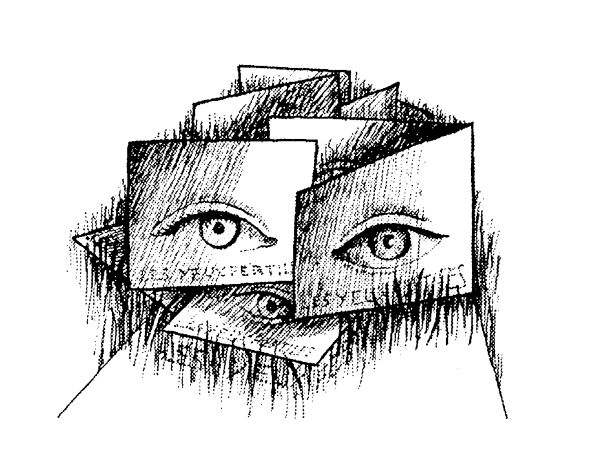
He drew mostly in black and white, in pencil and graphite, sometimes in coloured pencils: one dominant motif per sheet, with titles that steer the meaning of the image. In them he deployed a personal mythology of dreamlike creatures, plants and monsters, on the side of the monstrous and the grotesque. Teige partly likened his work to Art Brut. An exhibition at the Wilhelm Lehmbruck Museum in 1998 presented his drawings under the title Imaginäre Skulpturen (imaginary sculptures).
Exhibitions and collections
- 1963: first solo exhibition, Mánes hall, Prague
- 1980: Museum moderner Kunst, Vienna; 1983 and 1985: Museum Ludwig, Cologne; 1991 and 1998: Wilhelm Lehmbruck Museum, Duisburg
- 2002: “L’art brut tchèque”, Halle Saint-Pierre, Paris; 2004: “abcd, une collection d’art brut”, Pavillon des arts, Paris
- Collections: Muzeum umění Olomouc; Centre Pompidou, Musée national d’art moderne (Bruno Decharme donation, 2021)