
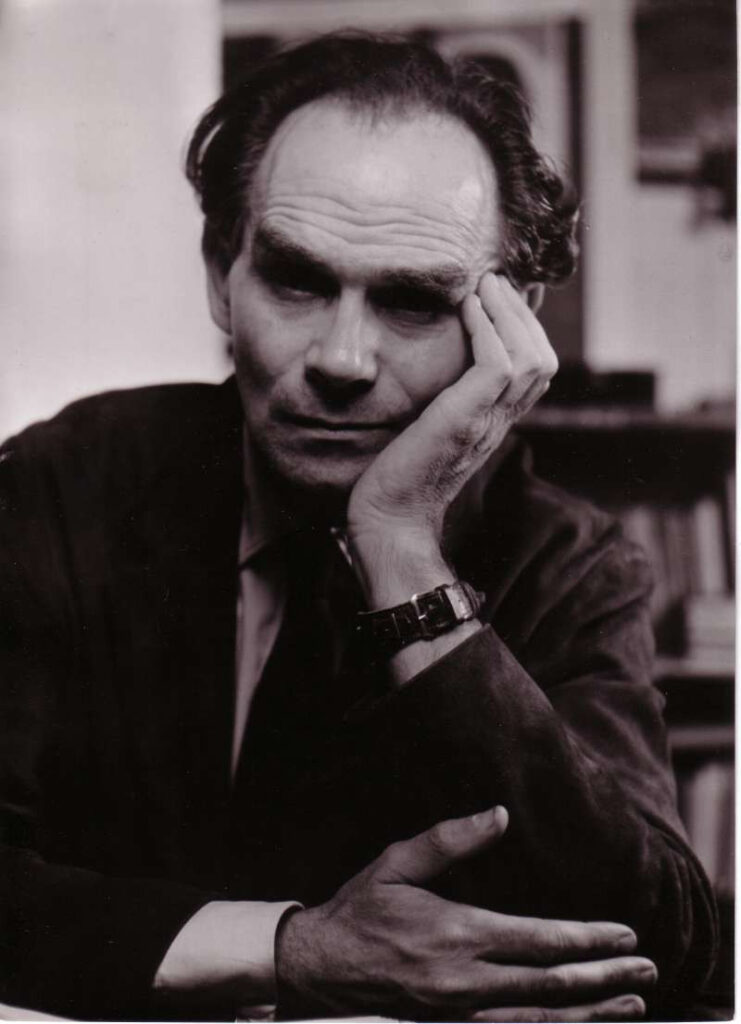
Hungarian painter and printmaker, born on 27 October 1914 in Budapest, died on 3 May 1986 in Budapest.
Life
Endre Bálint grew up in a family of Jewish intellectuals in Budapest; his father, Aladár Bálint, was an art critic. From 1930 to 1934 he studied commercial graphic design at the School of Applied Arts in Budapest, then in 1935 and 1936 attended the private studios of János Vaszary and Vilmos Aba-Novák. There he met Lajos Vajda, with whom he formed a decisive friendship. For a time he was associated with the artists gathered in Szentendre.
A first three-month stay in Paris, at around twenty, introduced him to modern painting. In 1938 his first solo exhibition, at the Tamás gallery in Budapest, caught the attention of the critic Ernő Kállai. In 1945 he was among the founders of the European School group. In 1947, with André Breton’s help, he took part in Paris in the International Surrealist Exhibition and the Réalités nouvelles salon.
Later classed among the banned artists, he could no longer exhibit in Hungary until 1956. After the uprising he lived in Paris from 1957 to 1962; there in 1959 he produced a set of more than a thousand illustrations for the Bible. Back in Hungary he gradually gained recognition and, in the last decade of his life, received many honours, including the Kossuth Prize.
The work
His early work combines Surrealism, Constructivism and references to Hungarian folk art. His work draws on Dada, Surrealism and abstraction. As well as painting, he practised collage, montage, linocut, plaster engraving (a series devoted to Don Quixote), theatre design and illustration. He also published several volumes of writings and memoirs.
Exhibitions and collections
- International Surrealist Exhibition, Paris, 1947
- Ferenczy Museum, Szentendre (some ten works)
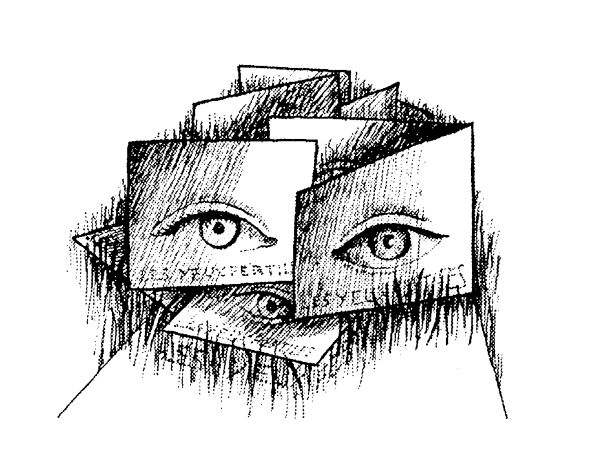
- Surrealist Prelude, Galerie Les Yeux Fertiles, Paris, 7 June to 6 July 2024
At the gallery
- Surrealist Prelude 2024